New Zealand 2011/12
Deutsch | English
By bike from Christchurch to Auckland, over the South and North Islands
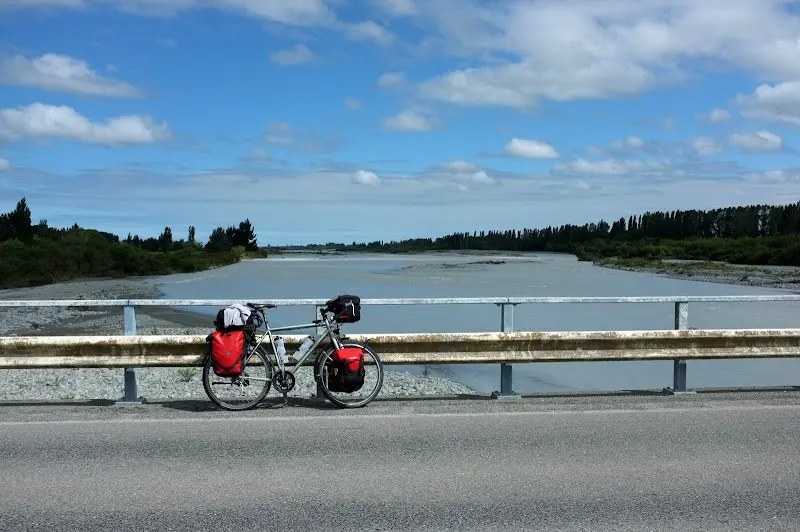
Mid-December 2011 to the end of January 2012: about seven weeks by bicycle through New Zealand. From Christchurch it went over the Southern Alps and the deep south with Fiordland, Queenstown and the West Coast to the north, by ferry from Picton to Wellington and through the North Island with volcanoes, hot springs and the Coromandel Peninsula to Auckland. The detailed report with all the pictures comes in eight parts (buttons above and sidebar); here is the trip in numbers, a few highlights and short remarks on weather, animals, roads, food and campsites.
The trip in numbers
| Period | Mid-December 2011 to the end of January 2012 (about 7 weeks) |
| Distance | 5750 km from Christchurch to Auckland |
| Islands | South Island and North Island, by ferry from Picton to Wellington |
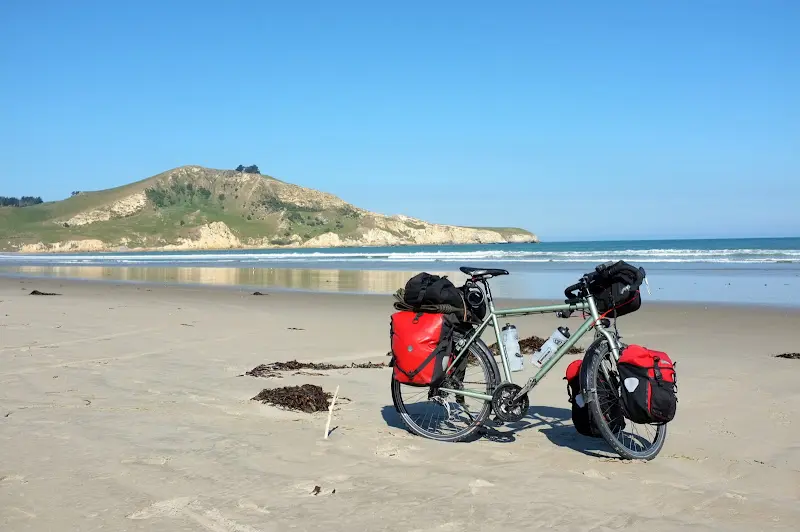
| On the road | with a tent, on simple Department of Conservation sites and on “motor camps” |
| Highest pass | Cardrona Pass near Wanaka, about 1120 m |
| Report | 8 parts with 26 stops |
Highlights of the trip
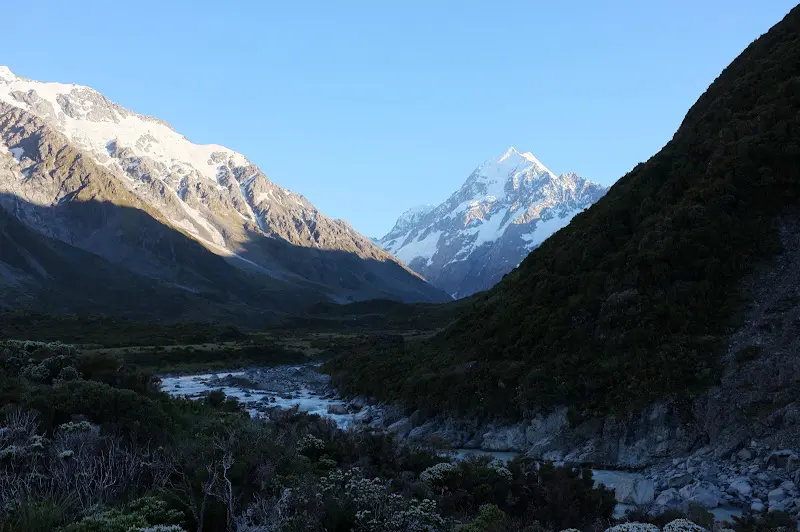
| Mount Cook National Park | dead end along Lake Pukaki to the highest mountain in New Zealand (3754 m) | Part 1 |
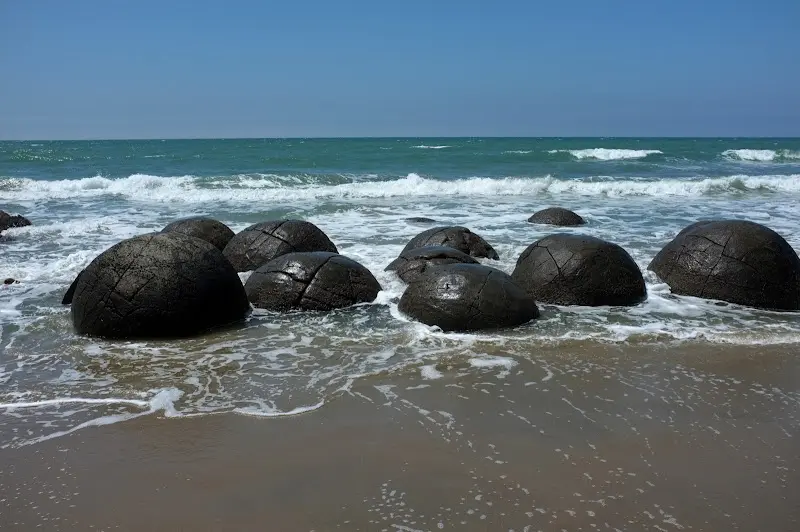
| Moeraki Boulders | spherical stones on a sandy beach on the east coast | Part 2 |
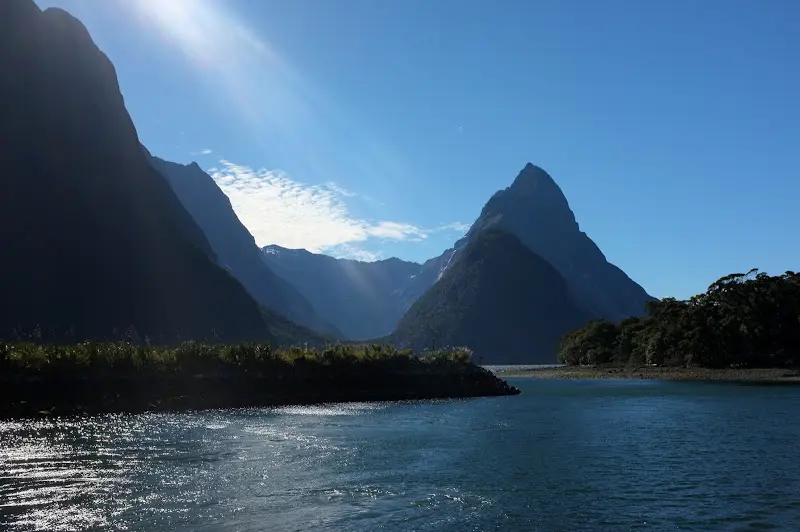
| Milford Sound | boat trip of just under three hours through the fjord out to the ocean | Part 3 |
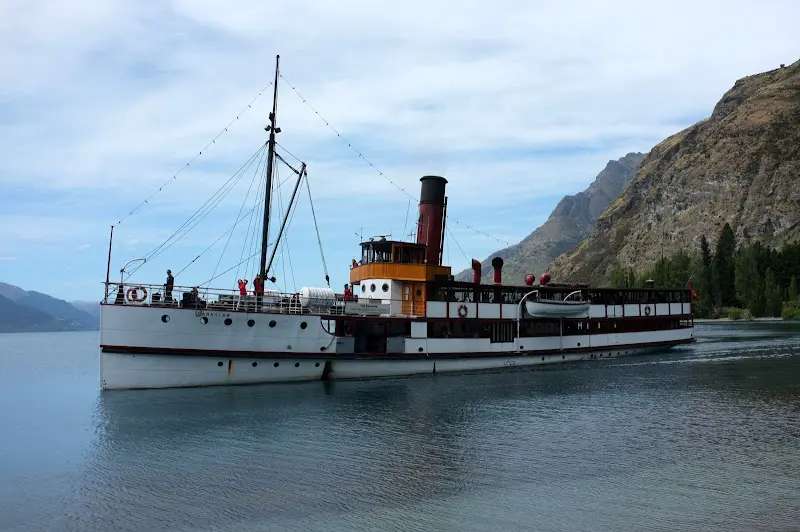
| Queenstown | by the steamship TSS Earnslaw across Lake Wakatipu | Part 3 |
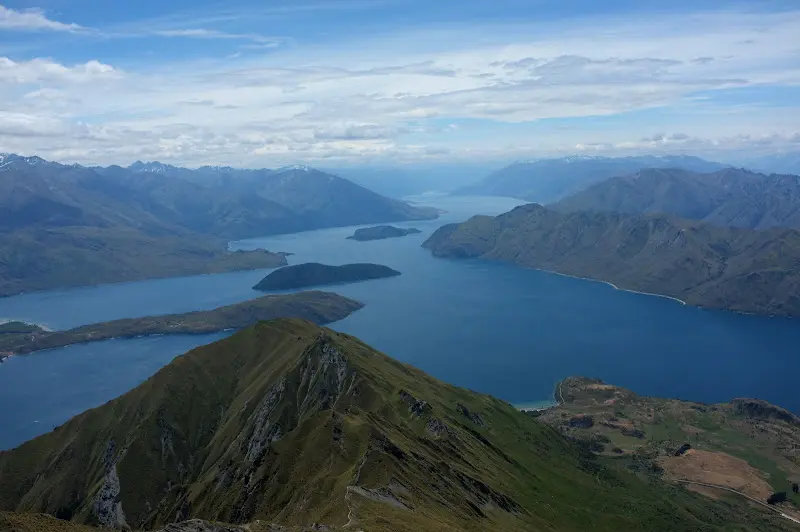
| Lake Wanaka | Cardrona Pass and Roys Peak (1578 m) | Part 3 |
| Franz Josef Glacier | cold rainforest and the hike to the glacier | Part 4 |
| Punakaiki | the Pancake Rocks on the West Coast | Part 4 |
| Abel Tasman | in the far north of the South Island, lonely and “at the end of the world” | Part 5 |
| Wellington | cable car, Te Papa national museum and a lot of rain | Part 5 |
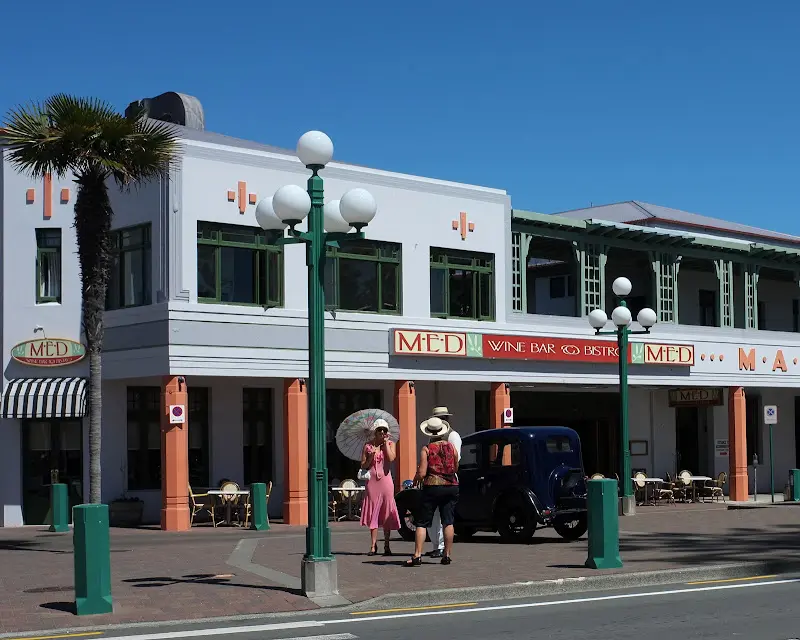
| Napier | Art Deco town, rebuilt after the 1931 earthquake | Part 6 |
| Tongariro National Park | New Zealand’s oldest national park with three active volcanoes | Part 7 |
| Hobbiton | in the Shire of the hobbits near Matamata | Part 7 |
| Coromandel | coastal scenery and unpaved roads up to Cape Colville | Part 7 |
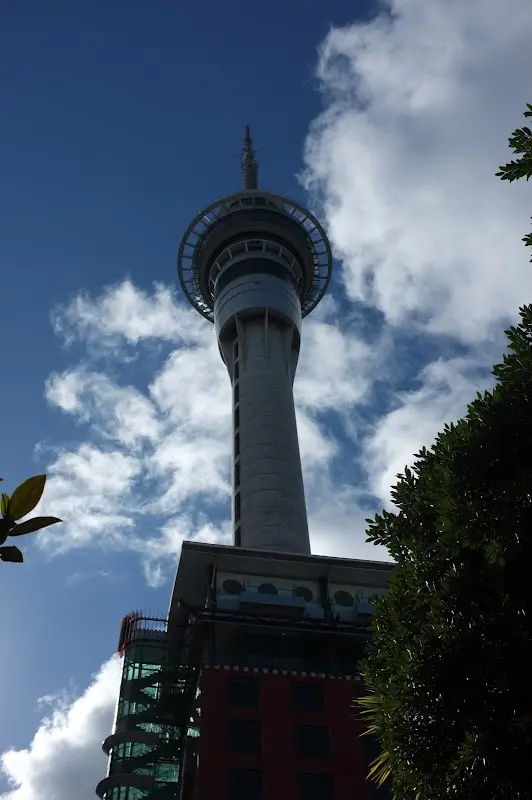
| Auckland | volcanoes within the city and an excursion to the island of Rangitoto | Part 8 |
Weather and animals
The weather was quite splendid even in Fiordland on the South Island; down there it rains on about 200 days/8000 mm of precipitation per year, but a local road cyclist remarked: Fiordland without rain is like the Mona Lisa without her smile.
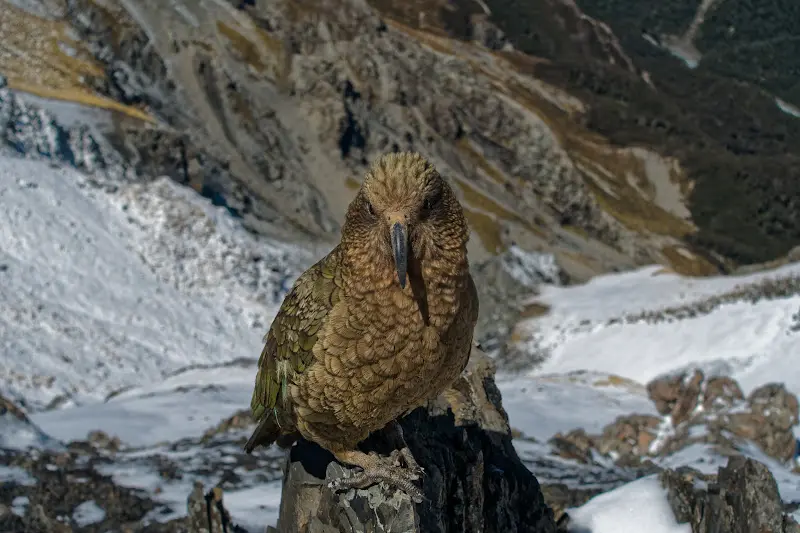
There are actually no dangerous or poisonous animals in New Zealand; at most I feared that a Kea would cut itself an entrance to my tent with its sharp beak...
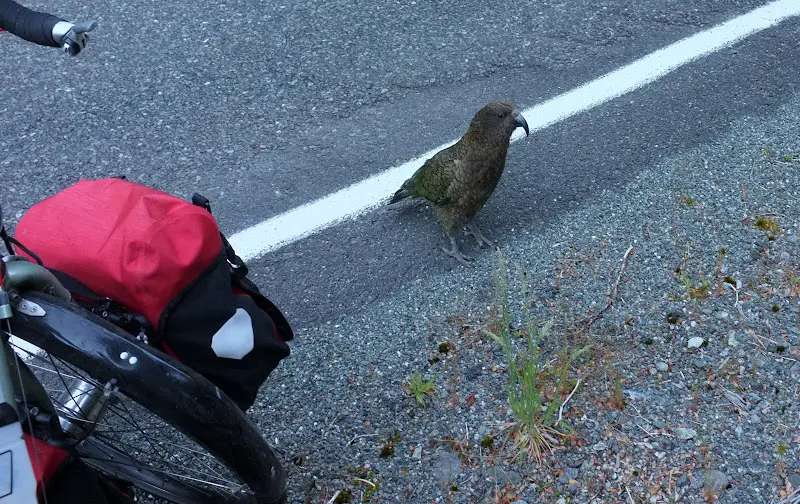
Other animals in New Zealand are of course sheep, as well as fish of all sizes, and occasionally, judging by the driving of some cars and lorries that overtook me very closely, I suspect that there was no human at the wheel...
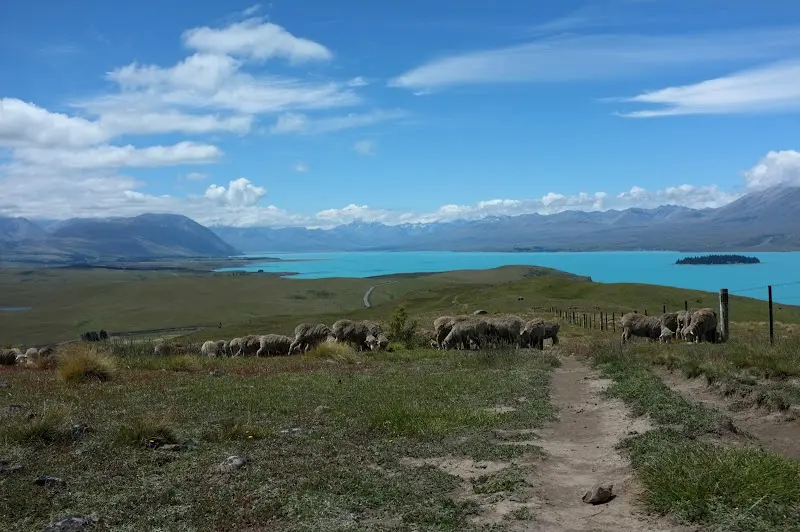
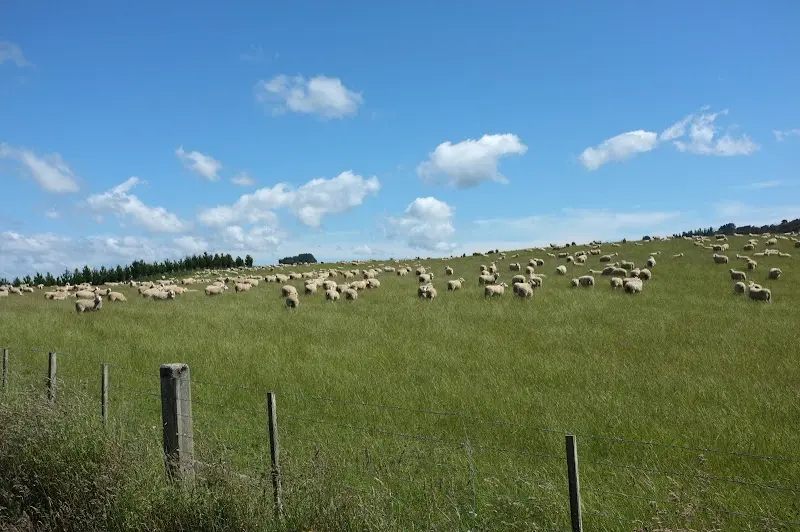
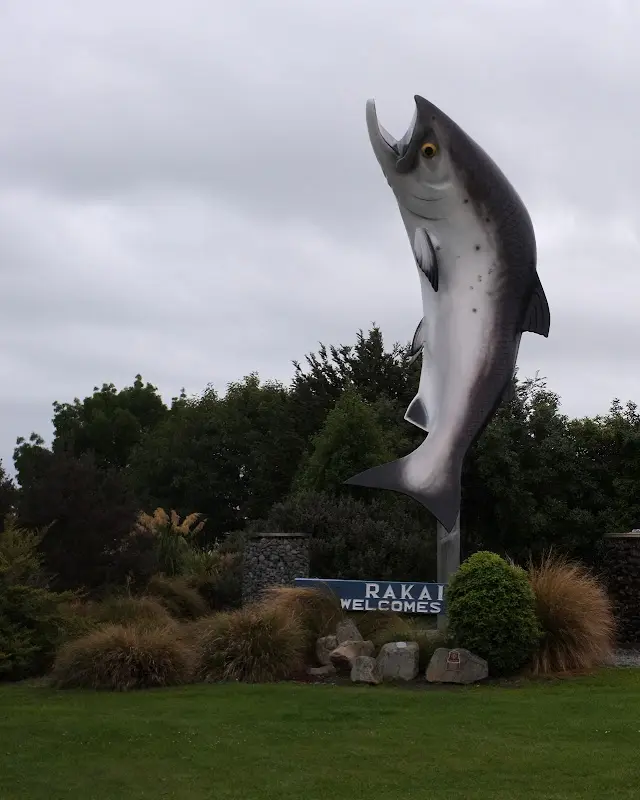
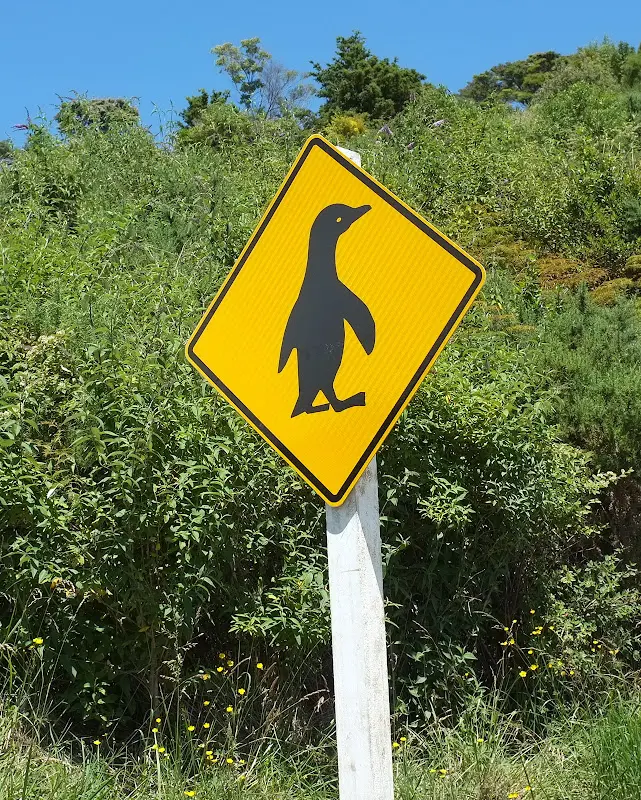
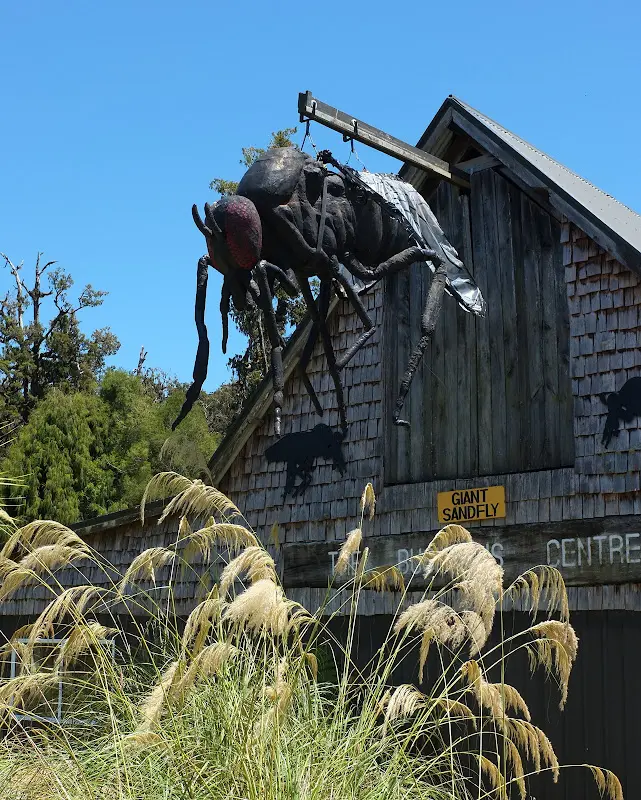
In some places penguins run across the road, and then there is the unpleasant wildlife: the quite bitey and sometimes numerous sandflies.
Hiking
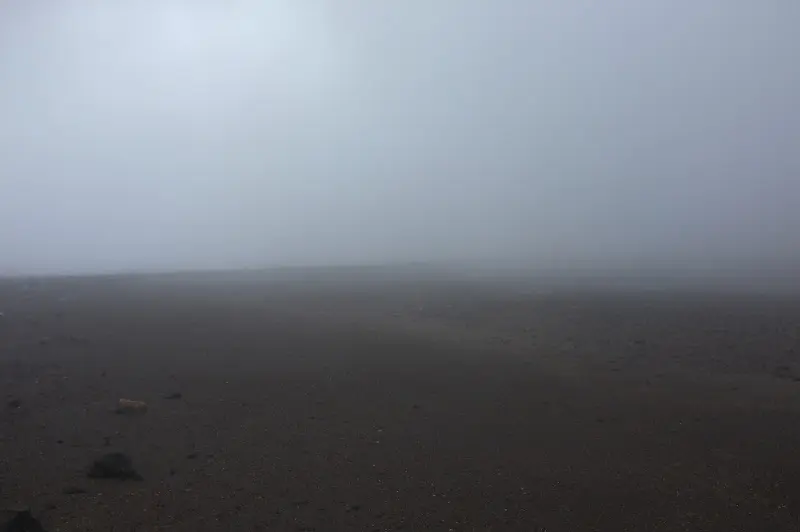
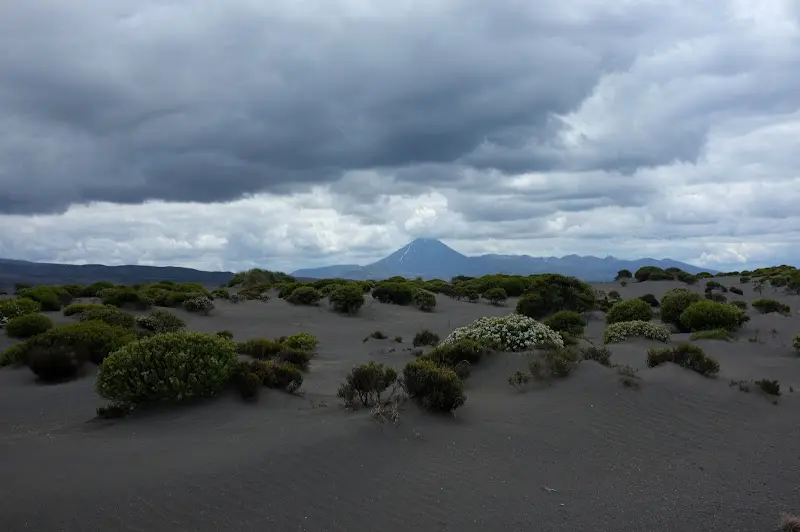
I had my mountain boots with me and did numerous small hikes, among others near Mt Cook, at the Fox and Franz Josef glaciers, at Lake Wanaka and on the North Island in Tongariro National Park; not always was I rewarded with a dazzling view on these outings.
Roads and tyres
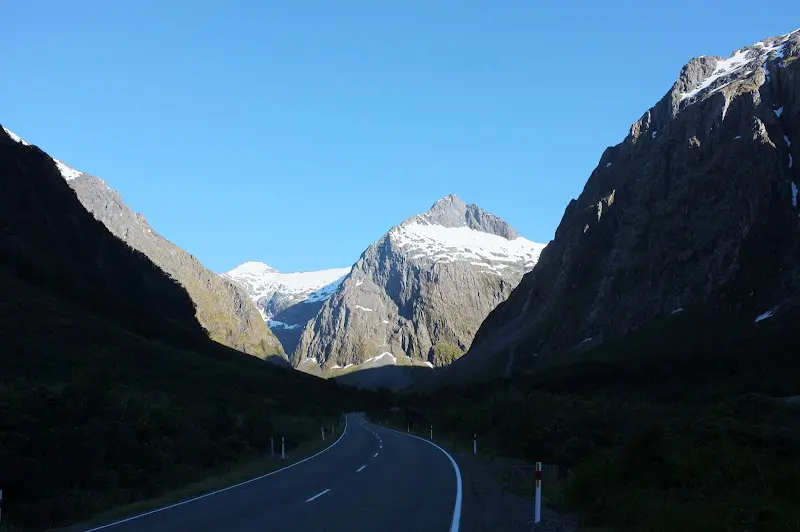
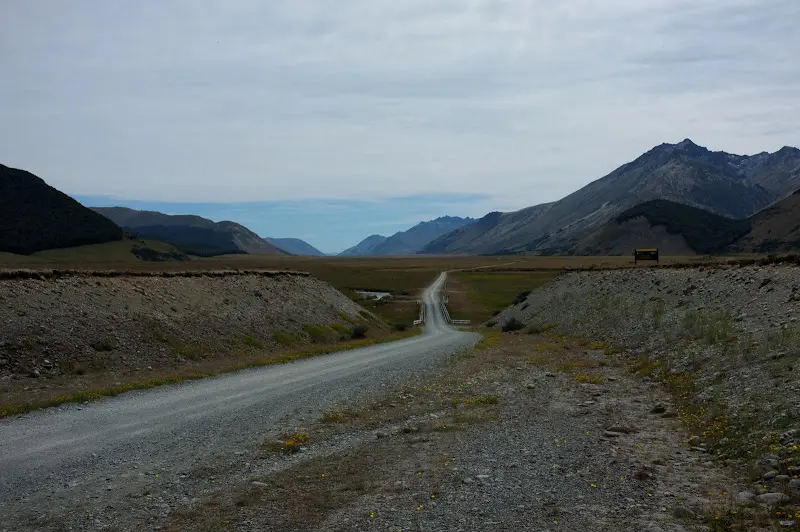
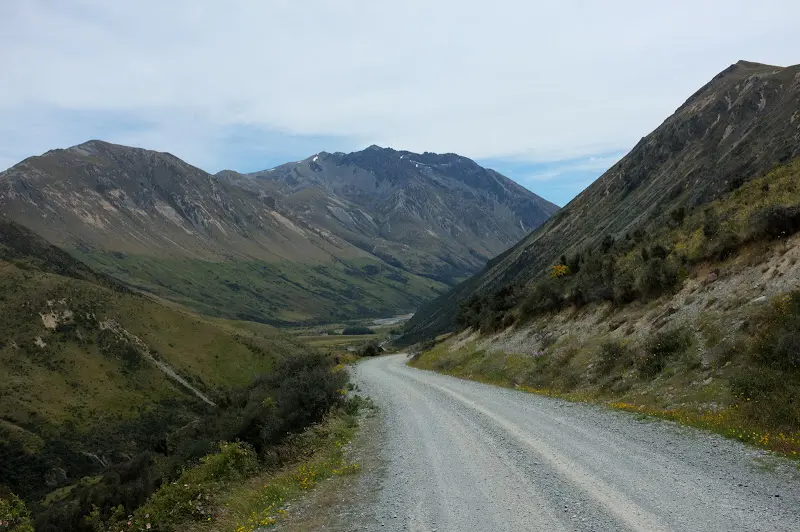
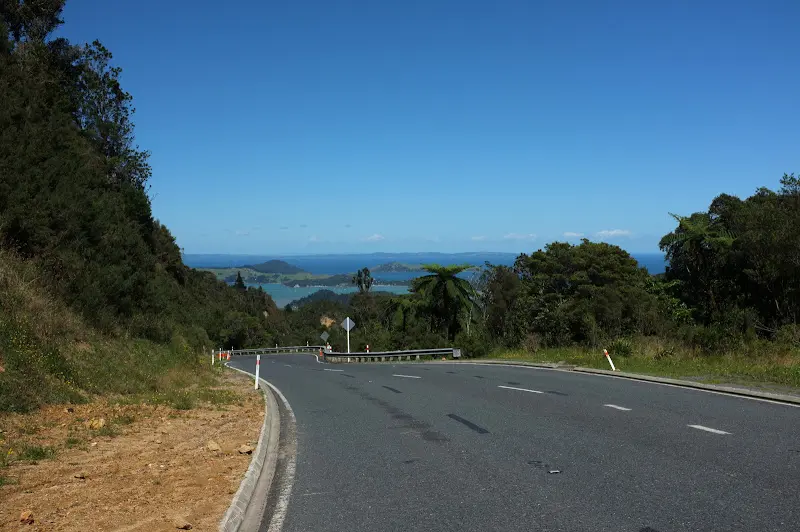
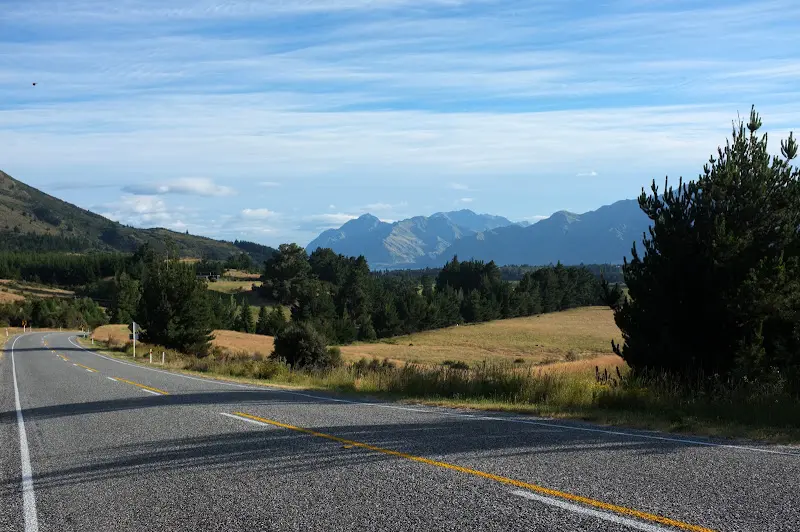
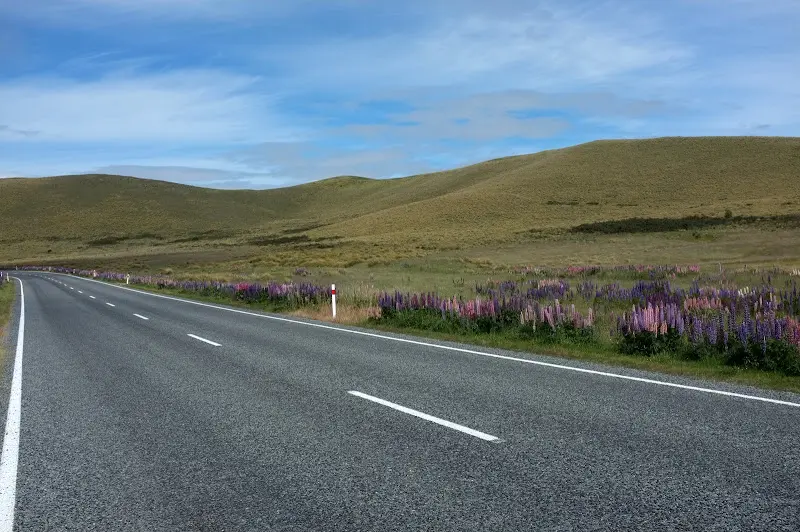
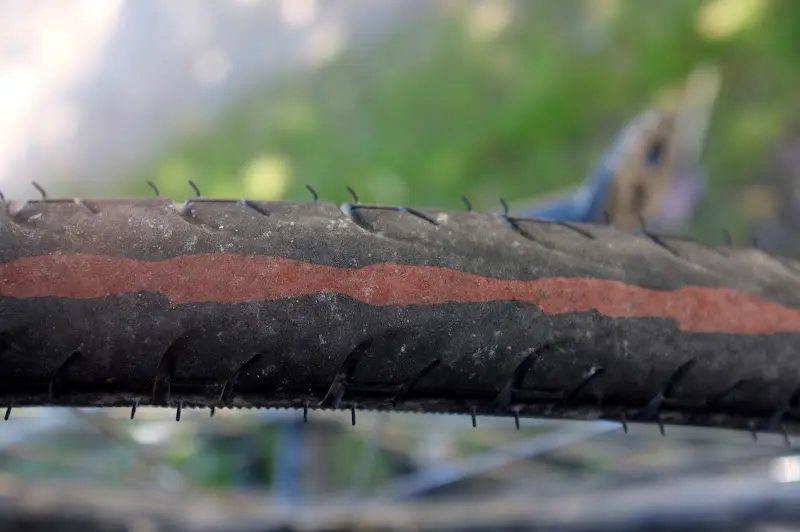
The asphalt in New Zealand is rather coarse and sharp-edged, and I rode many kilometres on unpaved roads. Because of the strict import controls on entry I had also fitted new tyres (Vittoria Randonneur Pro); the rear tyre lasted only 2.5 weeks, or about 2500 km...
Food and campsites
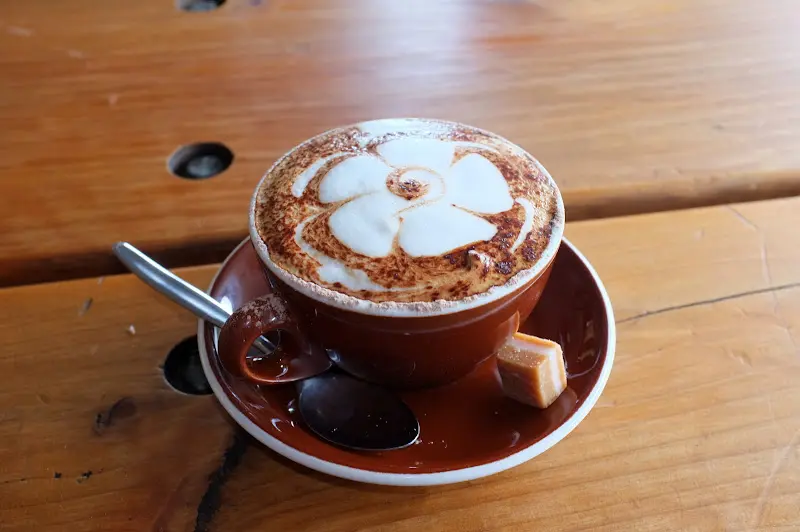
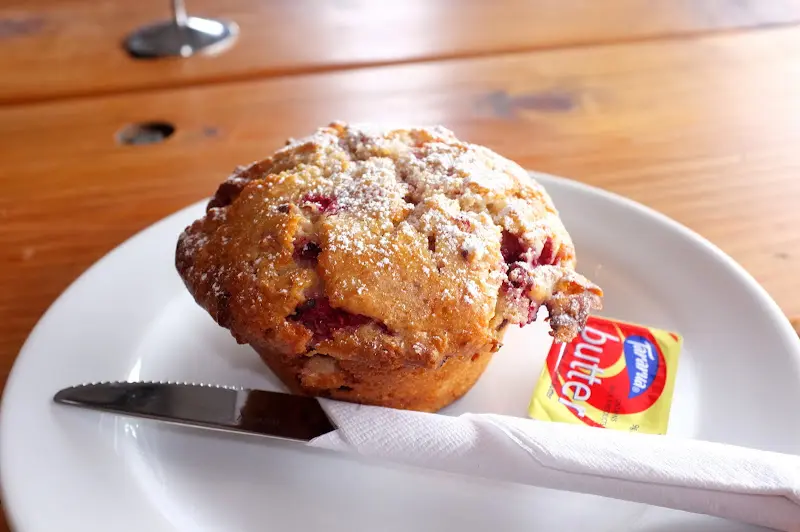
A great joy for me was the mostly very good coffee and muffins, cake or biscuits for breakfast. Fish & chips are very cheap, while dairy products such as cheese or yoghurt are considerably more expensive than in Germany.
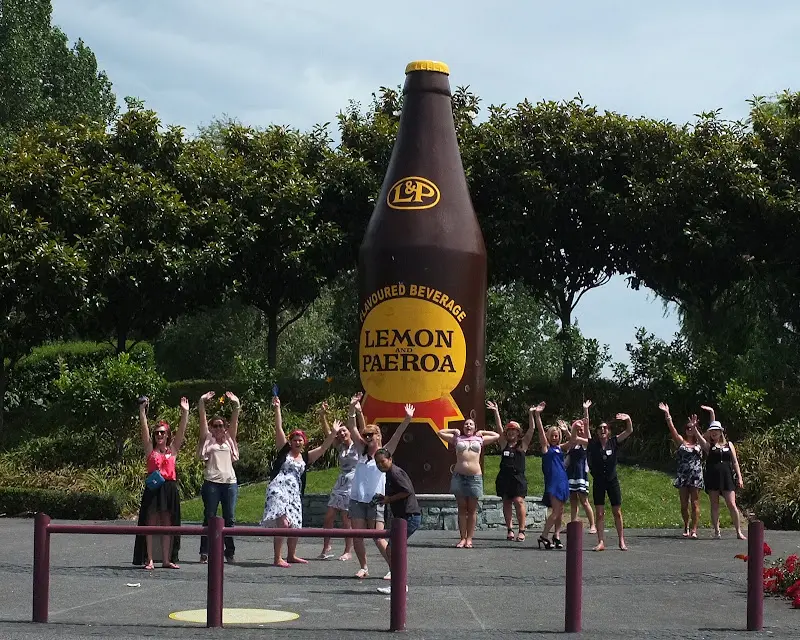
Lemon & Paeroa has meanwhile been bought by the Coca-Cola company and is world-famous in New Zealand.
The campsites in New Zealand are equipped to varying standards, from simple Department of Conservation sites to the “motor camps” with kitchen, washing machines, TV rooms and wifi access.
Water and vegetation
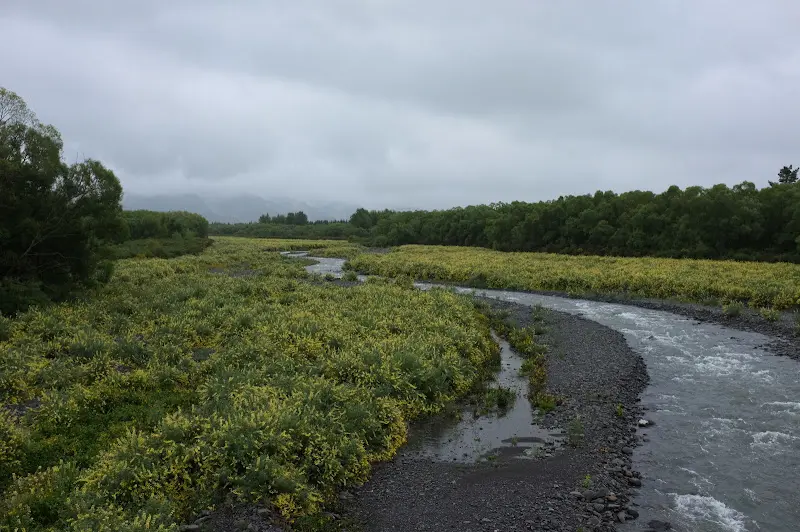
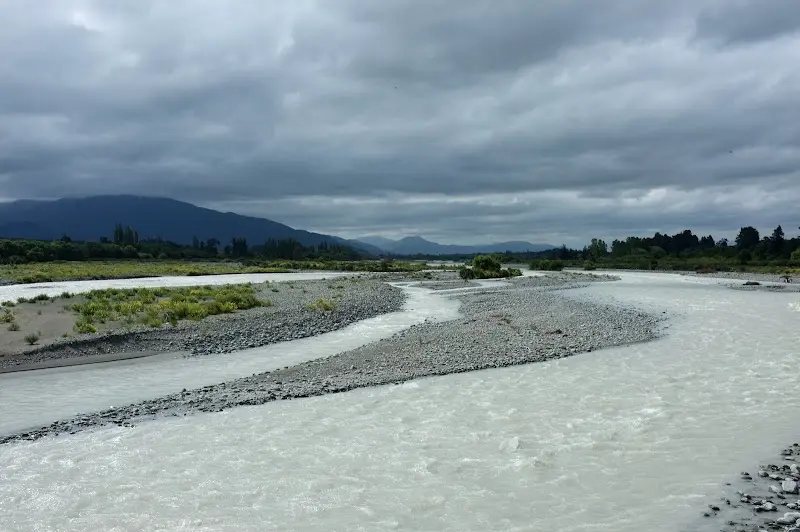
New Zealand is definitely not a dry country, from the cold rainforests, many rivers, waterfalls and lakes to the Pacific, which is never far away
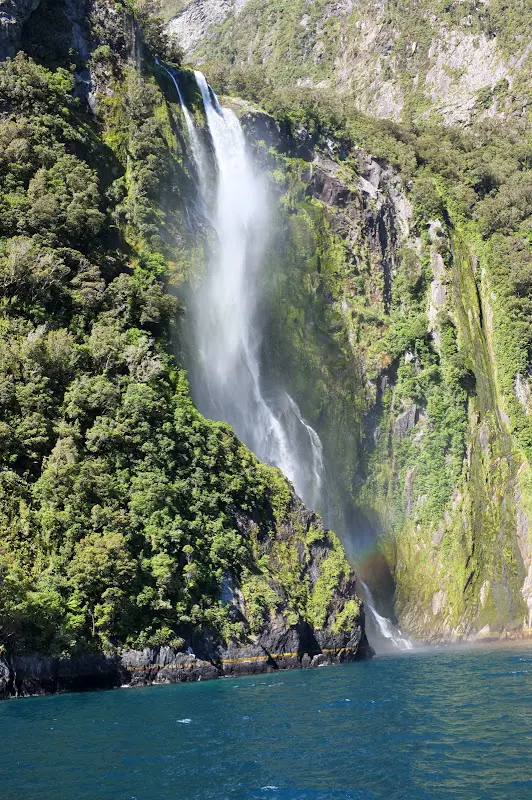
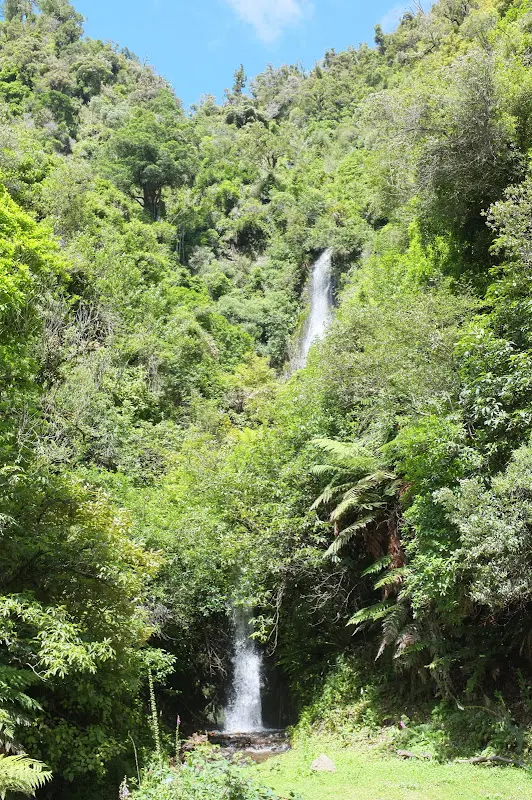
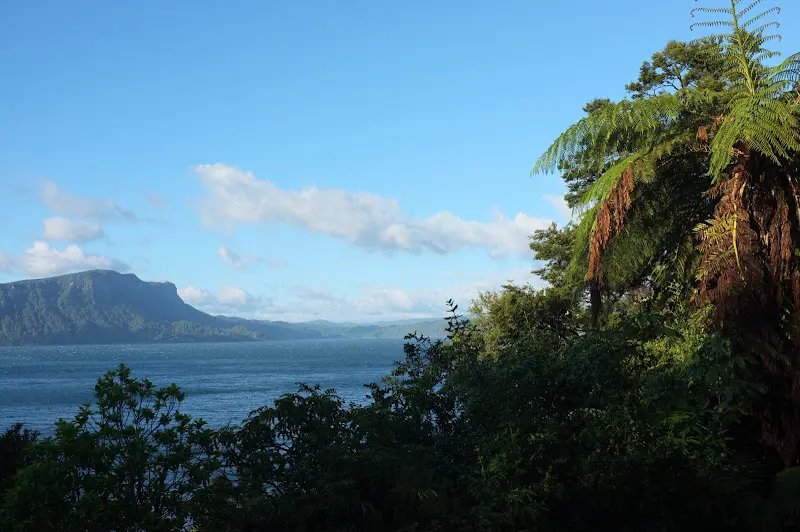
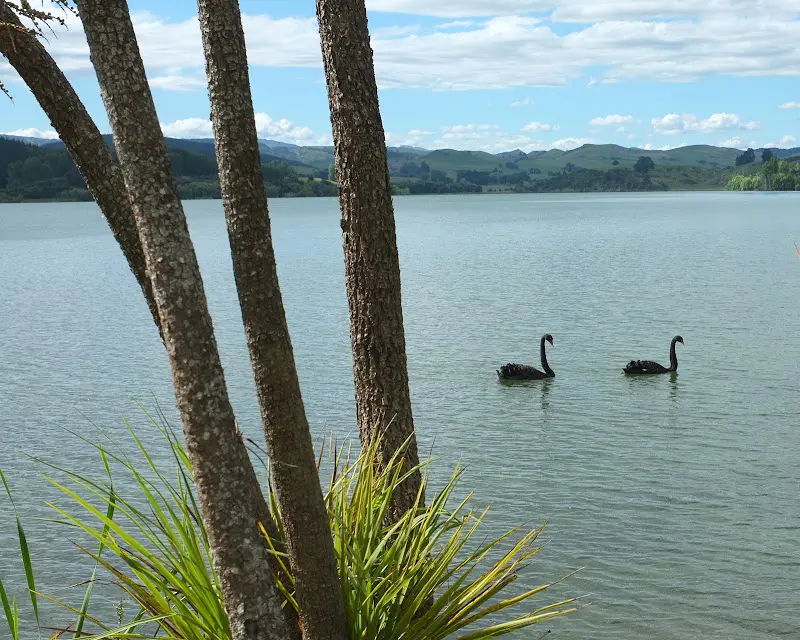
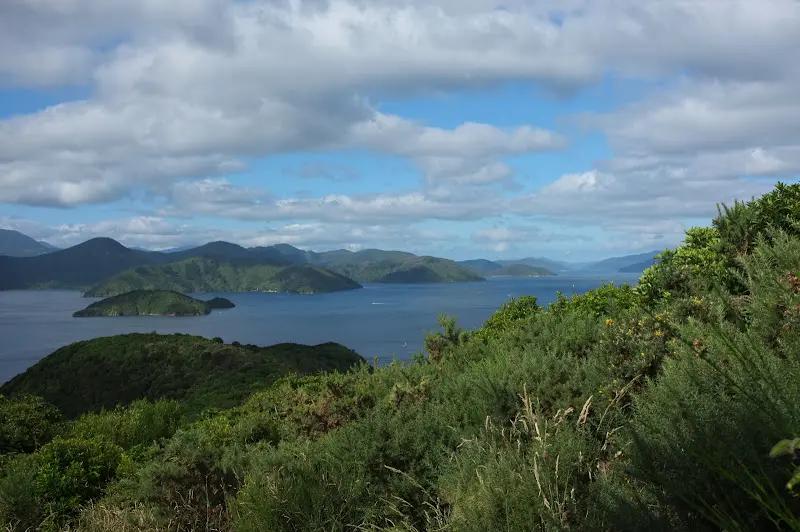
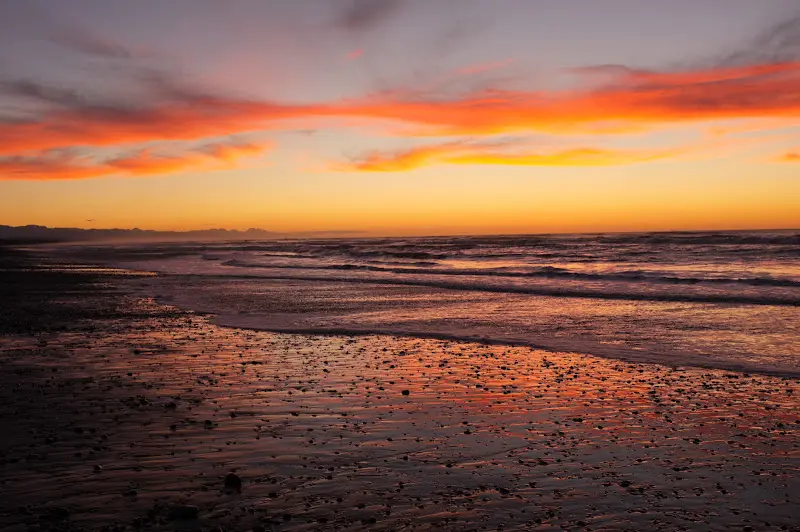
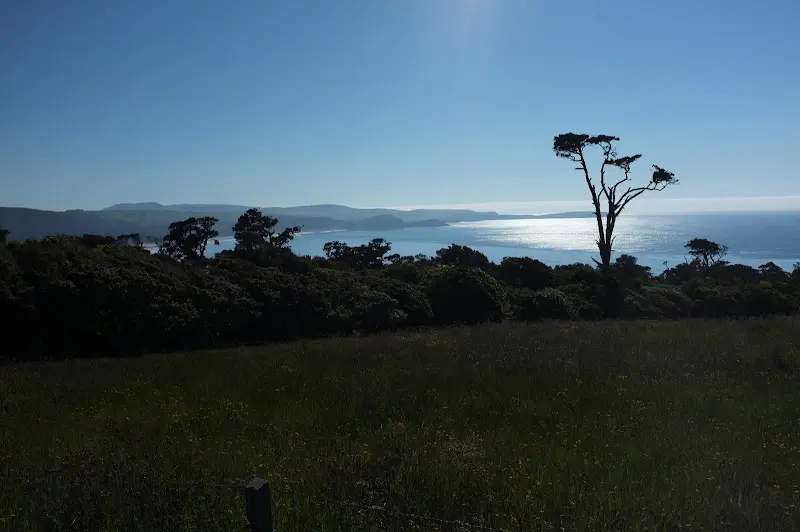
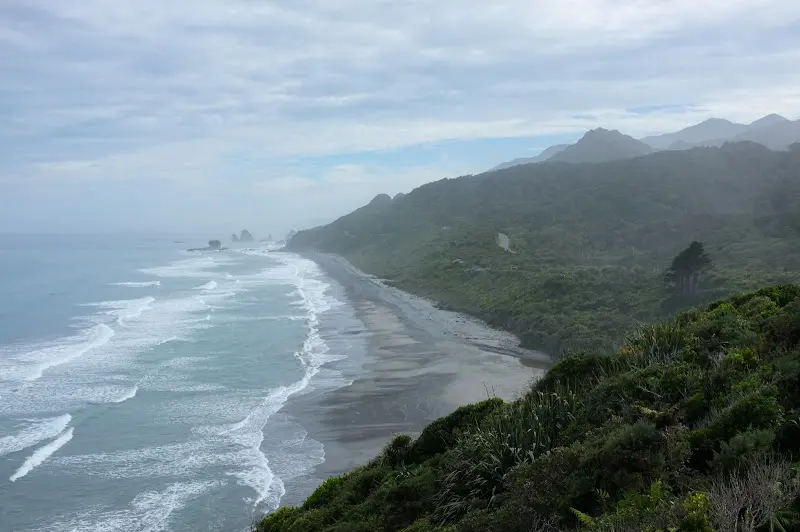
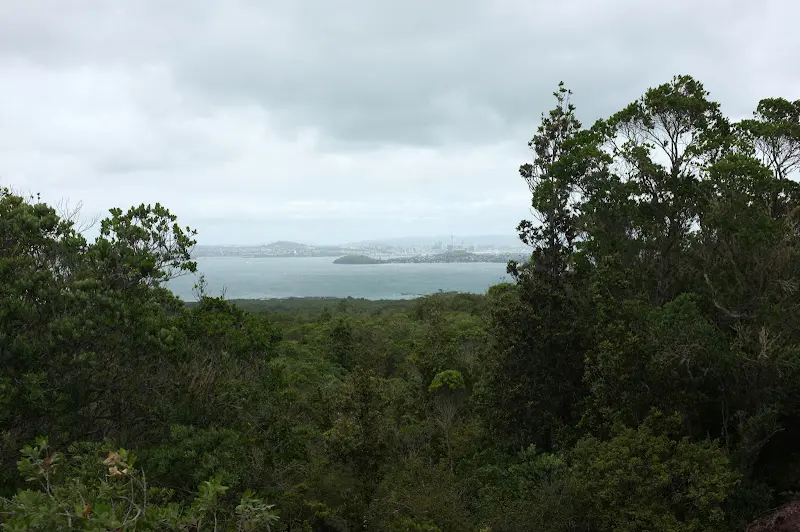
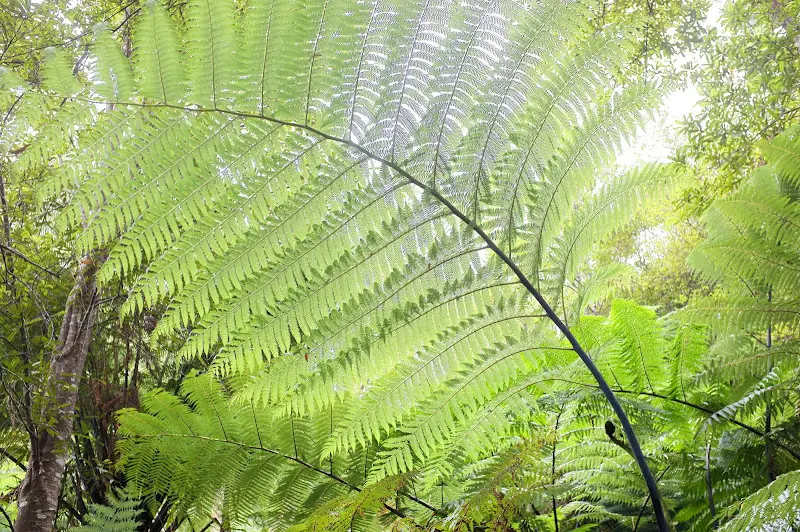
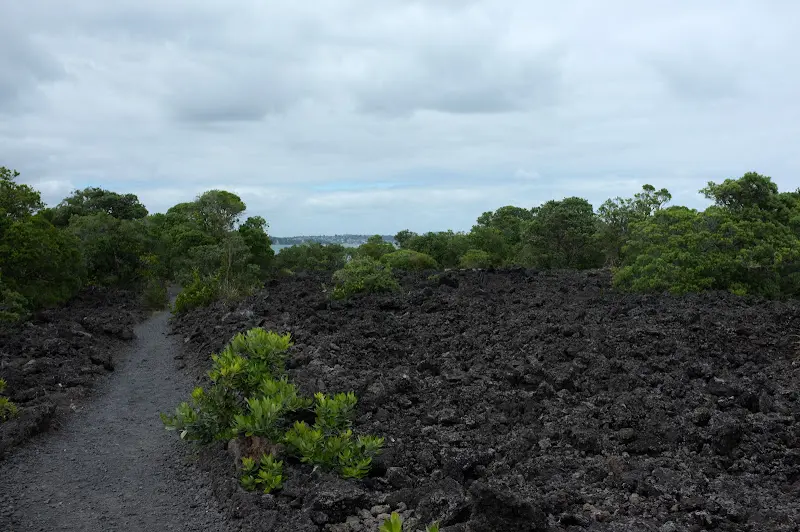
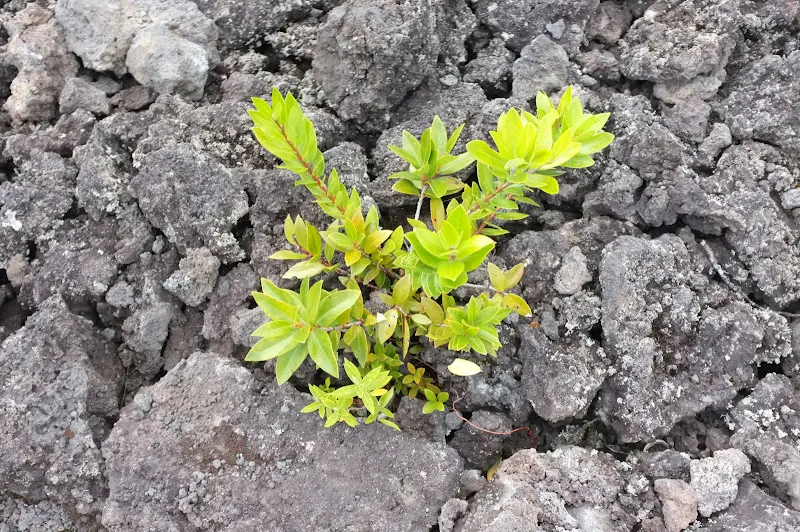
The mild and humid climate has led, for example, to lush vegetation having grown on the volcanic island of Rangitoto near Auckland after only about 600 years.
Snapshots
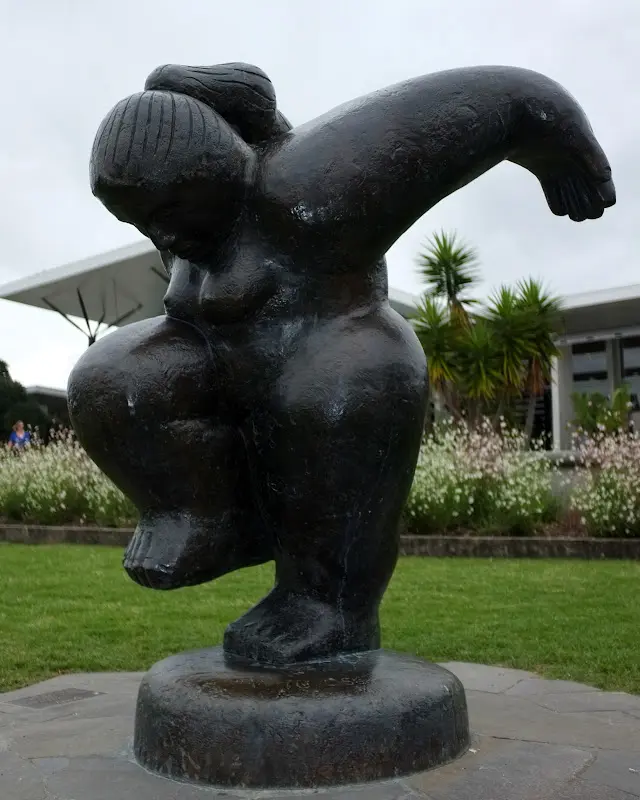
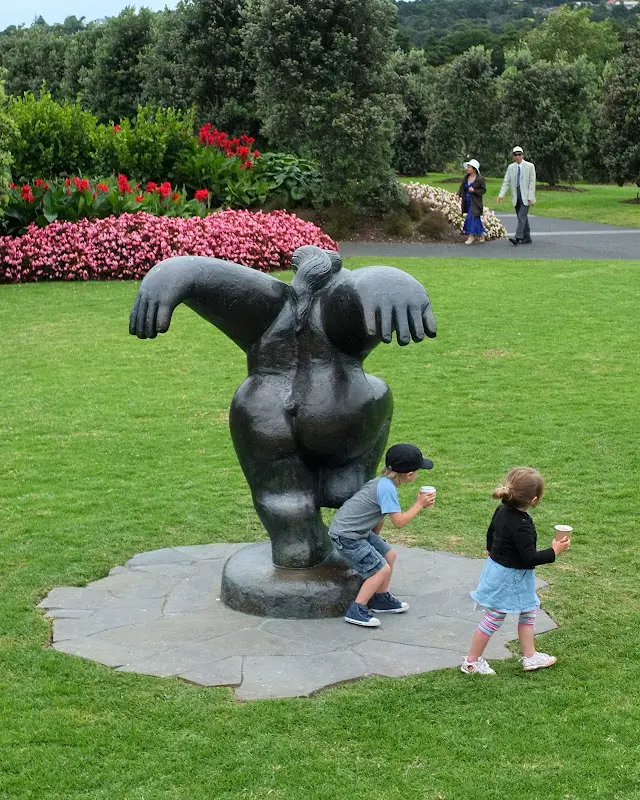
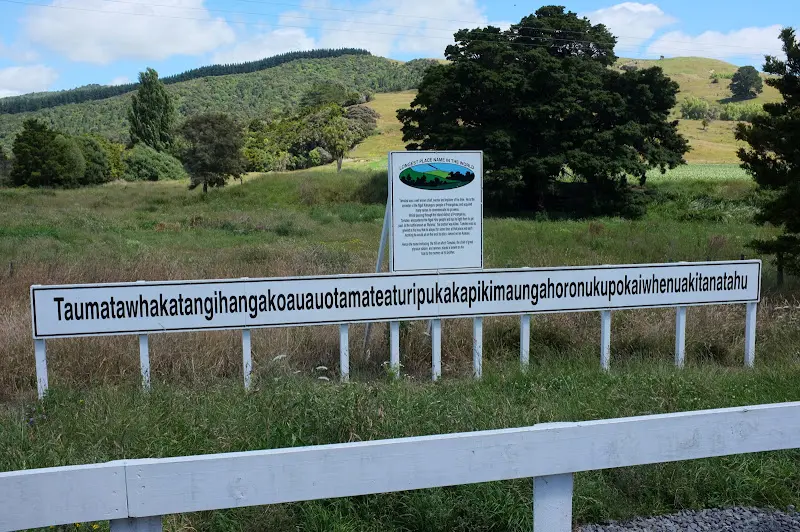
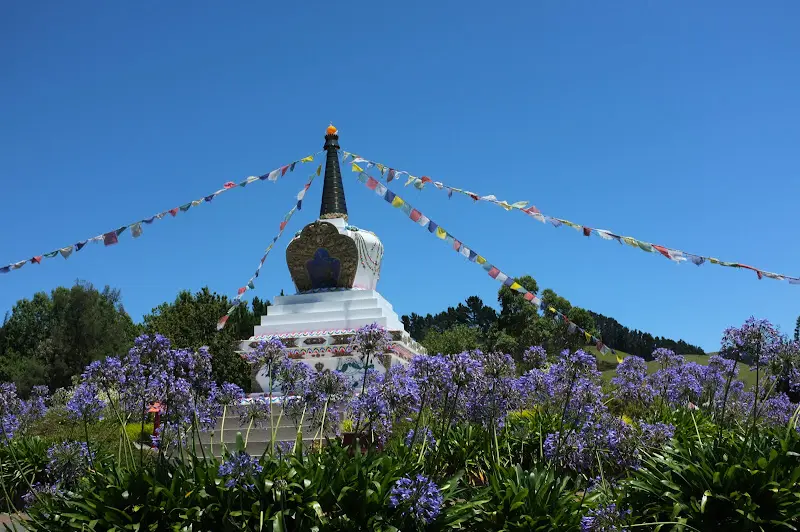
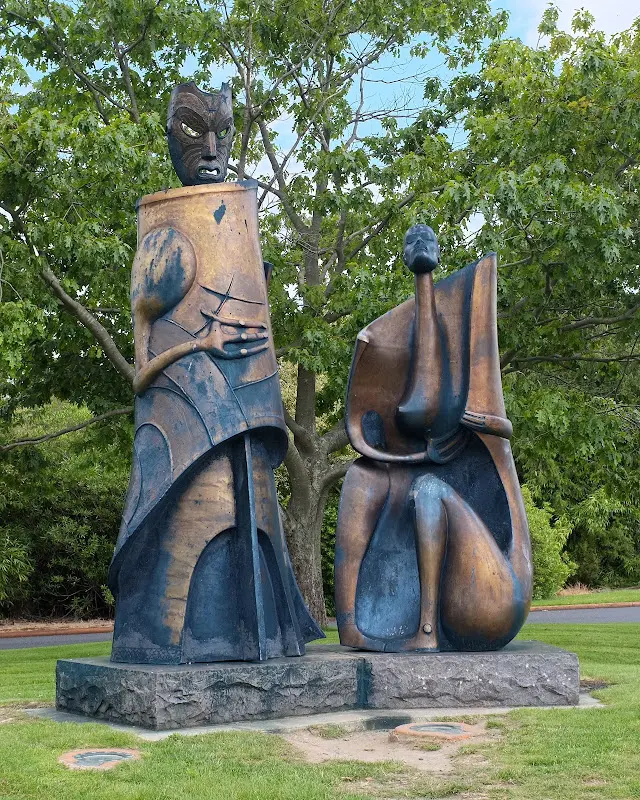
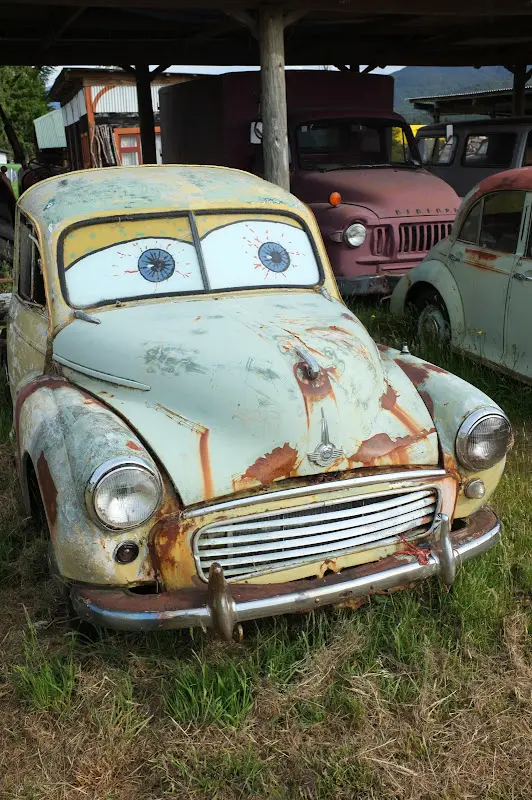
Finally a few snapshots along the road, among them the longest place name in the world, some sculptures (title “butterfly”), the steamboat that takes you across the lake at Queenstown and impressions from Napier, Rotorua and Auckland.