Biking and Hiking New Zealand - 05 Rotorua
Table of Contents (click to expand)
- 01 First Days in Auckland
- 02 Whangārei, Waitangi, Gum-diggers
- 03 Cape Reinga, Ninety Mile Beach, Tane Mahuta
- 04 Coromandel Peninsula
- 05 Matamata, Rotorua, Ōpōtiki
- 06 East Cape, Tolaga Bay, Gisborne, Wairoa
- 07 Lake Waikaremoana Track
- 08 Taupo, Palmy, Marlborough Sounds
- 09 Nelson, Golden Bay
- 10 Abel Tasman Track
- 11 Lake Rotoiti, Westcoast, Arthurs Pass
- 12 Mountains and Kea Attack
- 13 Christchurch
- 14 Akaroa to Lake Tekapo
- old versions yet to be converted
- Ocean2Alps
- Otago Central Rail Trail and a real pushbike
- Two Great Walks within one week
- Hollyford Valley and Milford Sound
- Mavora Lakes, Lothlorien and Wanaka
- Alps2Ocean - West Coast
- SuperMario and Rainbow Road
- Wellington
- Art Deco and Gannets
- Rivers and Mountains
- Mt Taranaki
- Volcanoes and Forgotten World Highways
- The Endless Summer
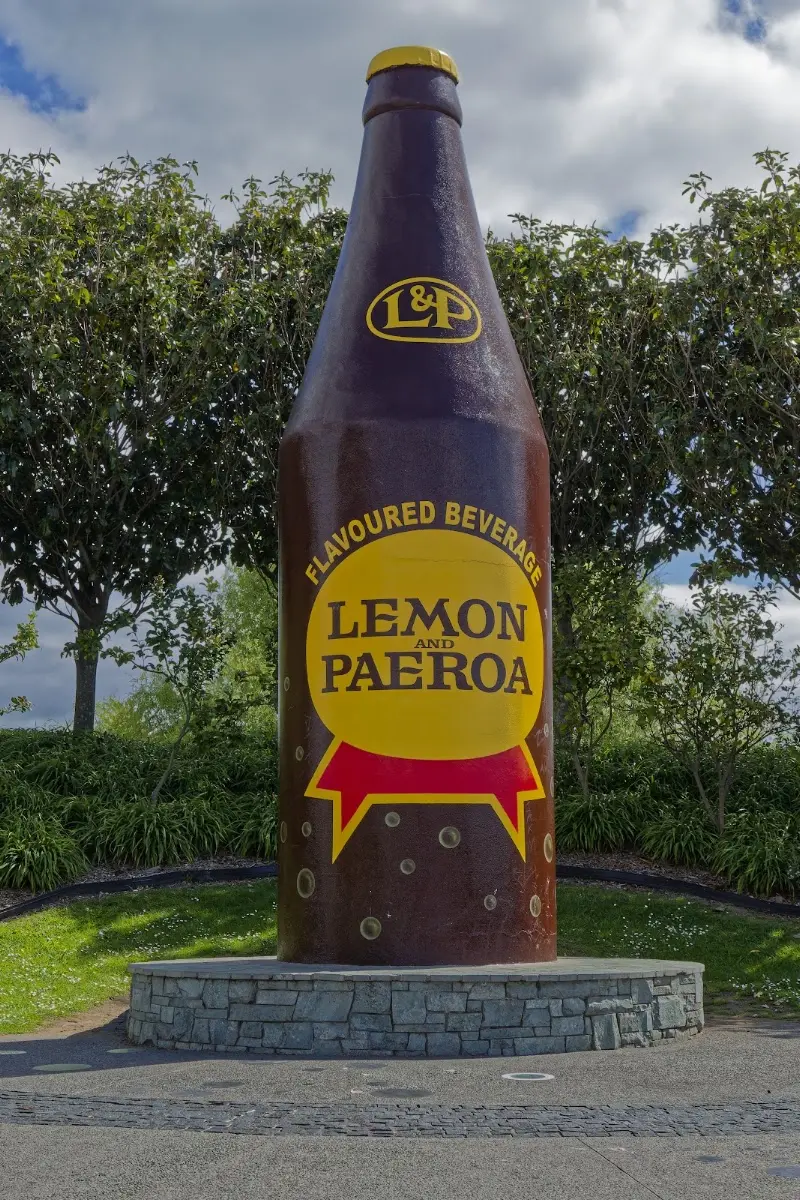
In the coffee shop this morning they told me it wasn't a sandwich but a panini, which made it more expensive :). A few hills along the cost passing by Pauanui to the gold digger town of Waihi, following the so-called Rail Trail through the Karangahake Gorge to Paeroa. This is the world famous place with the big bottle. My neighbors at the campground in Te Aroha told me to do the Hobbit Tour. 151 km in 7:52 minutes.


Pauanui, Whangamatā, and Waihi
Pauanui, meaning "big pāua" in Māori, is a town on the east coast of New Zealand's Coromandel Peninsula, located at the mouth of the Tairua River opposite the town of Tairua. Situated 30 kilometers east of Thames, Pauanui is a popular holiday destination, especially for the elite and wealthy, with a summer population exceeding 15,000. The town is approximately a one-hour and 50-minute drive from Auckland.
Known for its recreational activities, Pauanui features an airstrip for light aircraft and offers opportunities for game fishing, diving, surfing, and enjoying its excellent beach. Developed in the late 1960s with a family-friendly focus, the area introduced unique features like red-colored roads to enhance pedestrian visibility.
Whangamatā is a town on the southeast coast of New Zealand's Coromandel Peninsula, located 30 kilometers north of Waihi. Known for its scenic beauty, the town's population swells to over 25,000 during New Year's celebrations, although it decreases shortly after. The area features two safe ocean beaches ideal for swimming and surfing, as well as a safe boating harbor and estuary.
Offshore islands, such as Hauturu (Clark Island) and Whenuakura (Donut Island), are popular for summer activities like rock-pool fossicking and kayaking. Whenuakura Island is notable for its collapsed blowhole, forming a small beach inside. The town's name, Whangamatā, derives from Māori words meaning "bay" and "hard stone," referencing the obsidian found on its beaches. Nearby beaches include Whiritoa, Onemana, and Opoutere.
Waihi, located in New Zealand's Hauraki District at the foot of the Coromandel Peninsula, is renowned for its rich history as a gold mining town. The town is situated near the western end of the Bay of Plenty, with the Kaimai Ranges to the west and access through the scenic Karangahake Gorge. Despite its warm climate, Waihi experiences unusually high rainfall for the east coast.
The town's mining history began with the discovery of gold in 1878, leading to the establishment of the Martha Mine, one of the world's most significant gold and silver mines. By 1908, Waihi was the fastest-growing town in Auckland Province. The town was also a center of union unrest, notably during the 1912 miners' strike, which resulted in violence and the death of unionist Fred Evans.
Mining operations ceased in 1952 but later resumed, contributing significantly to the local economy. The Golden Cross mine in the nearby Waitekauri Valley also played a role in the region's mining history. Waihi's mining legacy continues with ongoing investments to extend the mine's economic life.
The town's railway history includes the opening of a branch line in 1905, which evolved into the East Coast Main Trunk Railway. Although the line through Waihi became redundant in 1978, the Goldfields Railway was established to preserve a section of it, now serving as a popular tourist attraction.
In the 1970s, Waihi attracted a wave of hippies seeking alternative lifestyles, bringing cottage industries that supplemented the local economy. The Nambassa festivals, held between 1975 and 1982, drew large crowds and boosted the town's revenue, temporarily increasing the population by tens of thousands during the events.


Karangahake Gorge
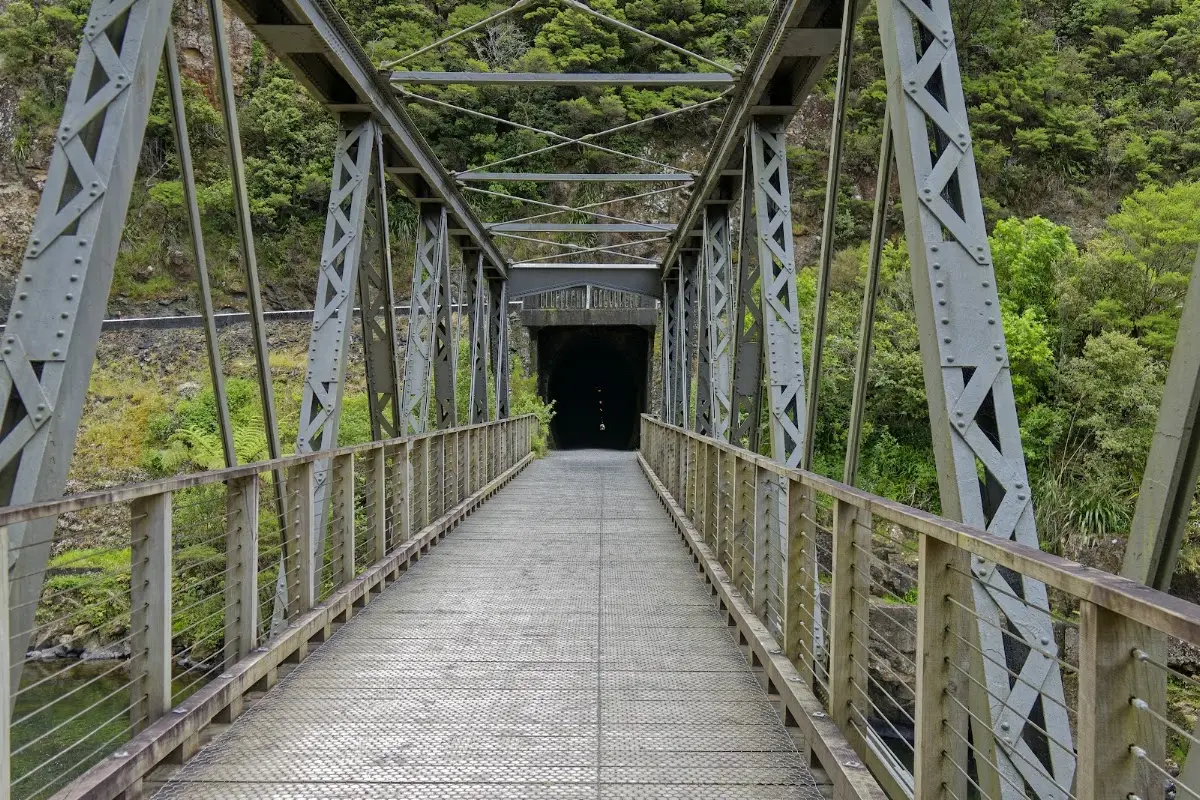
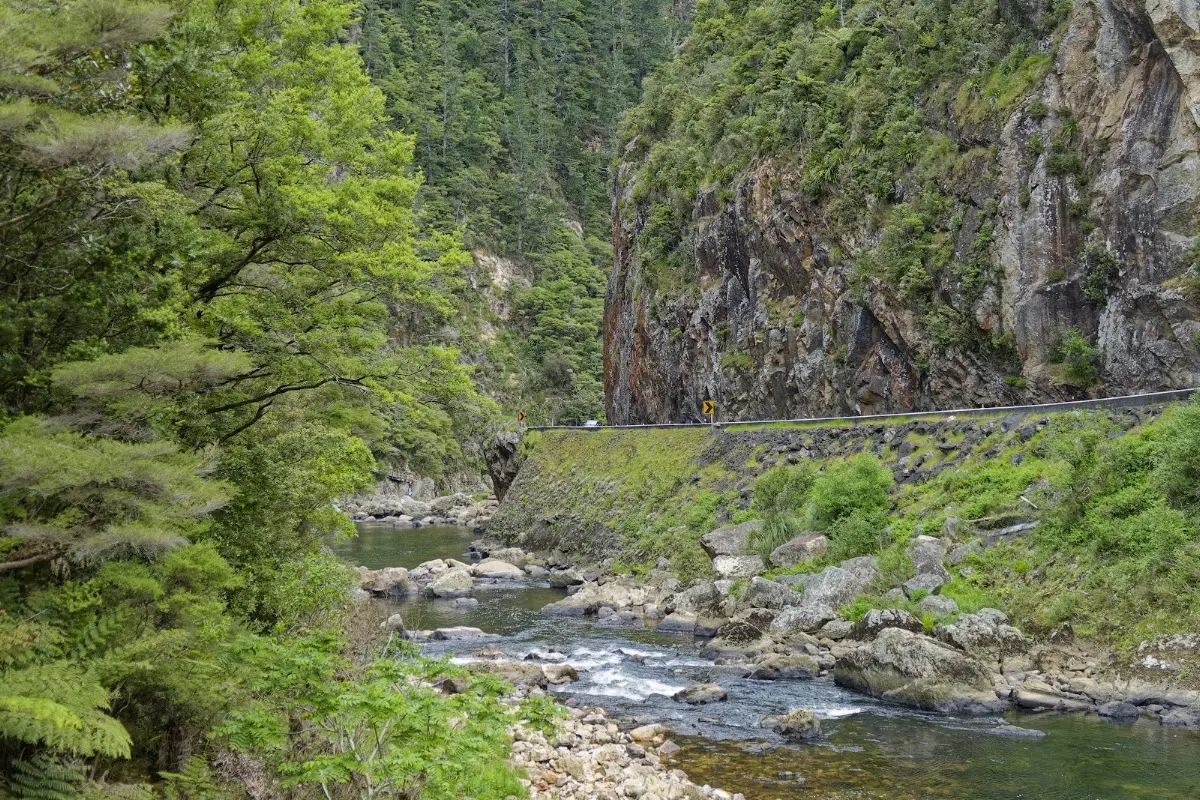
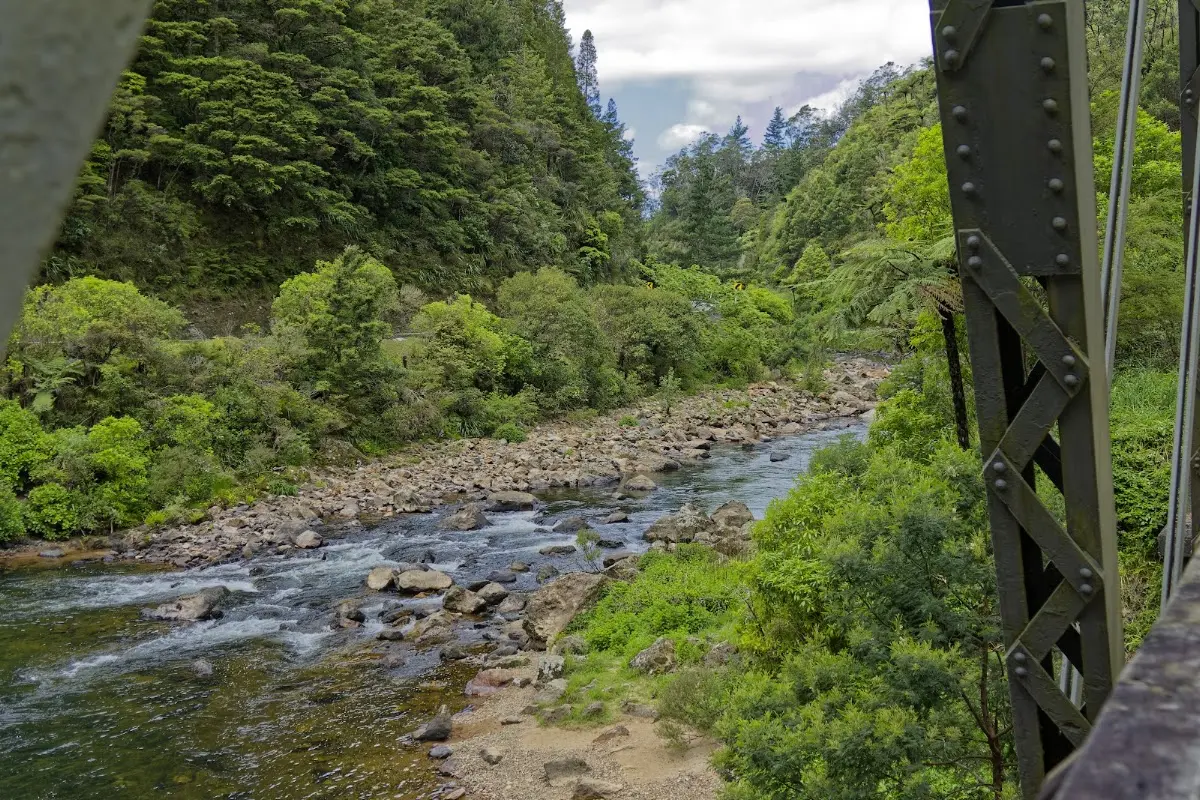
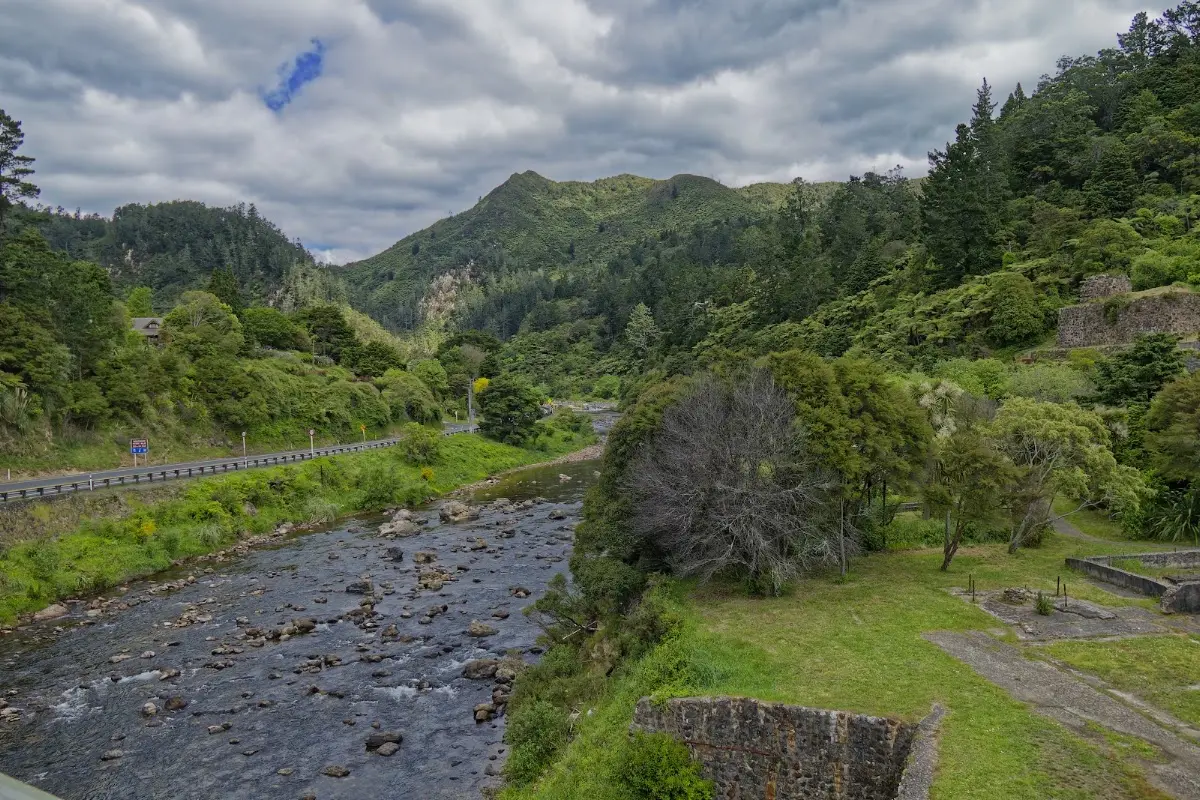
The Karangahake Gorge, situated between the Coromandel and Kaimai ranges at the southern end of New Zealand's Coromandel Peninsula, is a scenic canyon formed by the Ohinemuri River. State Highway 2 runs through the gorge, connecting the Waikato region with the Bay of Plenty. The area is a popular destination for both its natural beauty and historical significance.
Historically, the gorge was a major gold mining area, with significant operations from the 1880s to the 1950s. The Talisman, Crown, and Woodstock stamping batteries are notable remnants of this era, located at the confluence of the Waitawheta and Ohinemuri Rivers. At its peak, the area produced 60% of New Zealand's gold. Today, mining continues on a smaller scale with less invasive methods.
The gorge offers several walking tracks, including the "Windows Walk," which takes visitors through old gold mining tunnels, across suspension bridges, and along the Crown Tramway Track. The walk features "windows" in the cliff face, used historically to tip mining tailings into the gorge. Visitors can explore tunnels inhabited by glowworms and cave weta.
The East Coast Main Trunk Railway once passed through the gorge but was bypassed by the Kaimai Deviation. The former railway line is now part of the Hauraki Rail Trail, a combined walkway and cycleway that attracts tourists. The railhead at the Waikino end is preserved as part of the Goldfields Railway to Waihi.


Lemon & Paeroa
Lemon & Paeroa, commonly known as L&P, is a popular lemon-flavored soft drink from New Zealand, considered a part of Kiwiana. Originally made by combining lemon juice with naturally carbonated mineral water from Paeroa, it is now produced by Coca-Cola. The drink's origins date back to around 1908, and it has become a cultural icon in New Zealand.
The drink was initially made using water from a spring in Paeroa, discovered near the Ohinemuri and Waihou rivers. The spring water, rich in magnesium bicarbonate, was believed to have medicinal benefits. Commercial bottling began in 1909, and by 1915, the Paeroa Natural Mineral Water Company was producing Lemon & Paeroa. Over the years, the brand changed ownership several times, eventually becoming part of Coca-Cola in 1989.
In the 1970s, the Paeroa factory was upgraded, and a new pipeline allowed public access to the spring water. However, by this time, the water used in L&P was artificially made to match the original taste. The Paeroa factory closed in 1980, and production moved to Auckland. Despite these changes, L&P remains a beloved New Zealand beverage.
A notable attraction in Paeroa is the 6.8-meter tall L&P bottle, one of New Zealand's most famous icons and a highly photographed location. Originally created from a Christmas promotion rocket in 1967, the bottle was permanently erected in 1969 near State Highway 2. Due to traffic hazards caused by photographers, it was moved to the Ohinemuri Reserve in 2002, where a park now surrounds it.
In 2013, a marketing campaign involving a Whittaker's delivery van staged to appear as if it had crashed into the bottle added to its fame. The campaign was part of a collaboration between L&P and Whittaker's to create an L&P-flavored chocolate, further cementing the bottle's status as a cultural landmark.


Te Aroha
Te Aroha is a rural town in New Zealand's Waikato region, with a population of 3,906 as of the 2013 census. Located 53 km northeast of Hamilton and 50 km south of Thames, it sits at the base of Mount Te Aroha, the highest point in the Kaimai Range. The town's name, derived from the mountain, means "love flowing inland," reflecting a longing for a homeland in Māori tradition.
The town's history began with the surveying of the Te Aroha Block in 1879, leading to rapid growth during the 1880s gold rush. George Lipsey, the first European settler, married the daughter of Māori chief Morgan Hou, who owned the land. Te Aroha became a popular tourist destination in the late 1890s, known for its spa, though its popularity waned by the 1930s.
Te Aroha's development included the establishment of a Borough Council in 1898 and the construction of a railway line, enhancing its appeal as a tourist destination. The town's infrastructure grew to include a school, post office, police station, and churches. However, a severe flash flood in 1985 caused significant damage, resulting in the loss of three lives.
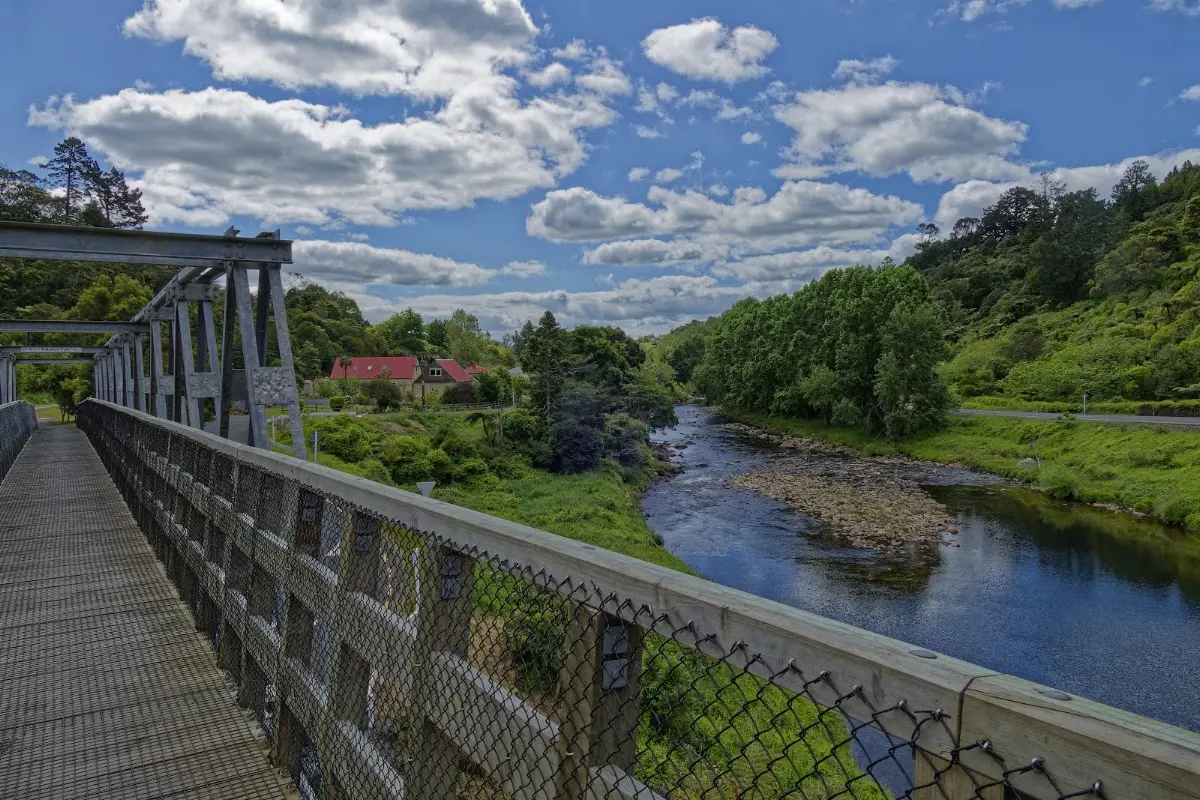
The town features several bridges, including the Coulter Bridge over the Waihou River, rebuilt in 1910 and 1928. The 1885 railway bridge, now a footbridge, was rebuilt in 1912. The Thames Branch railway reached Te Aroha in 1885, with the station opening in 1886, serving as a terminus until the line extended to Paeroa in 1895.
Te Aroha's railway station, opened in 1886, included facilities like waiting rooms, a stationmaster's office, and a goods shed. The station was described in 1902 as having a long asphalted platform and various amenities, reflecting its importance in the town's development.


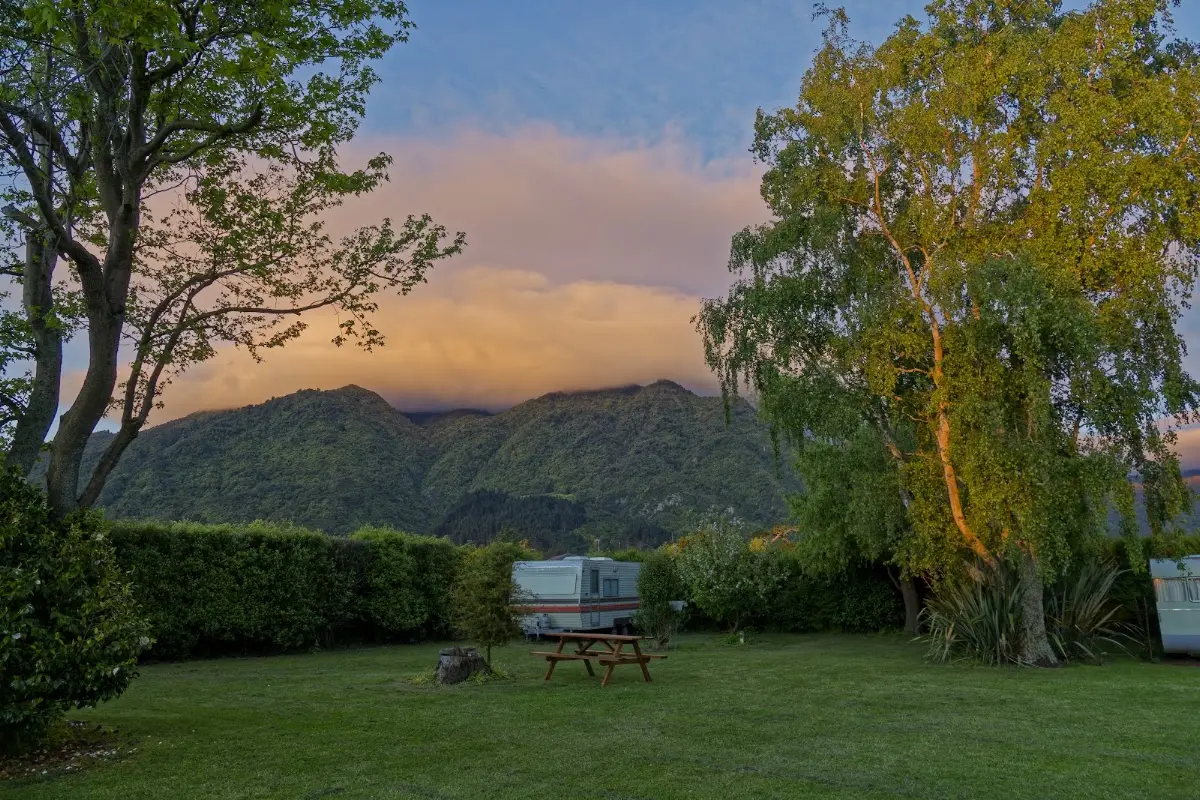
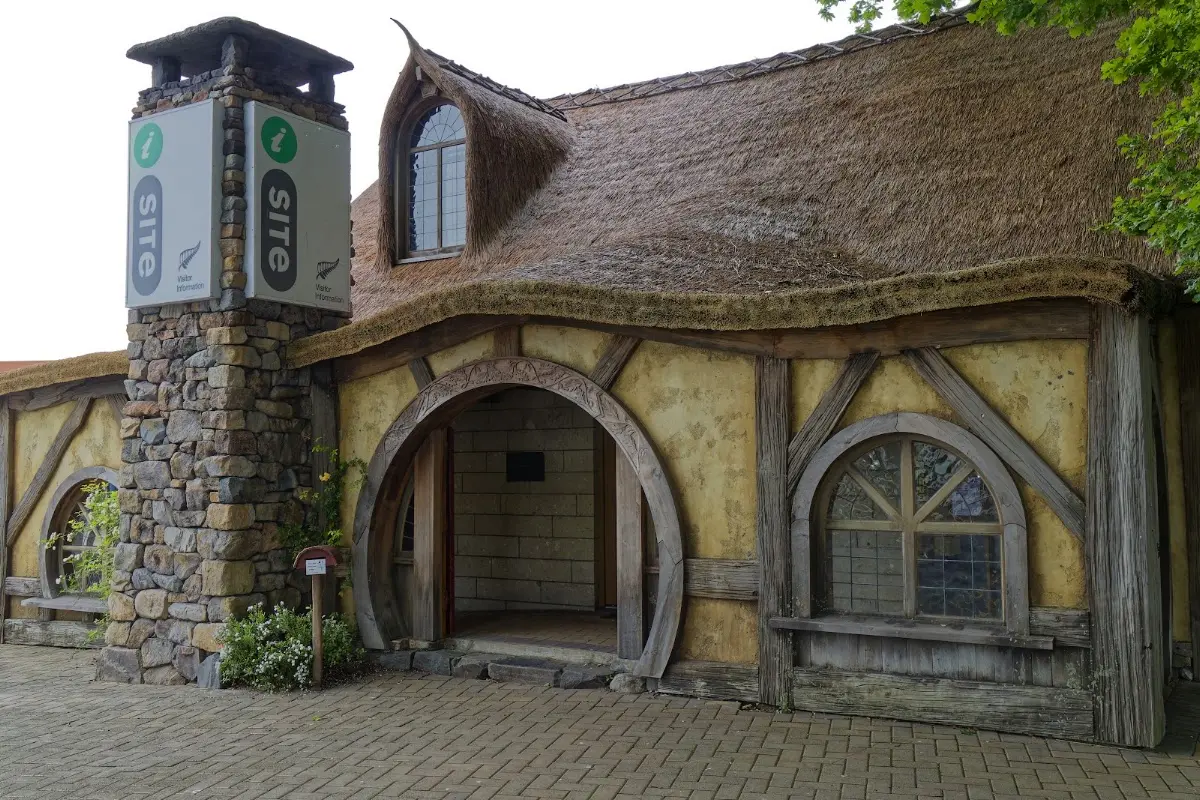
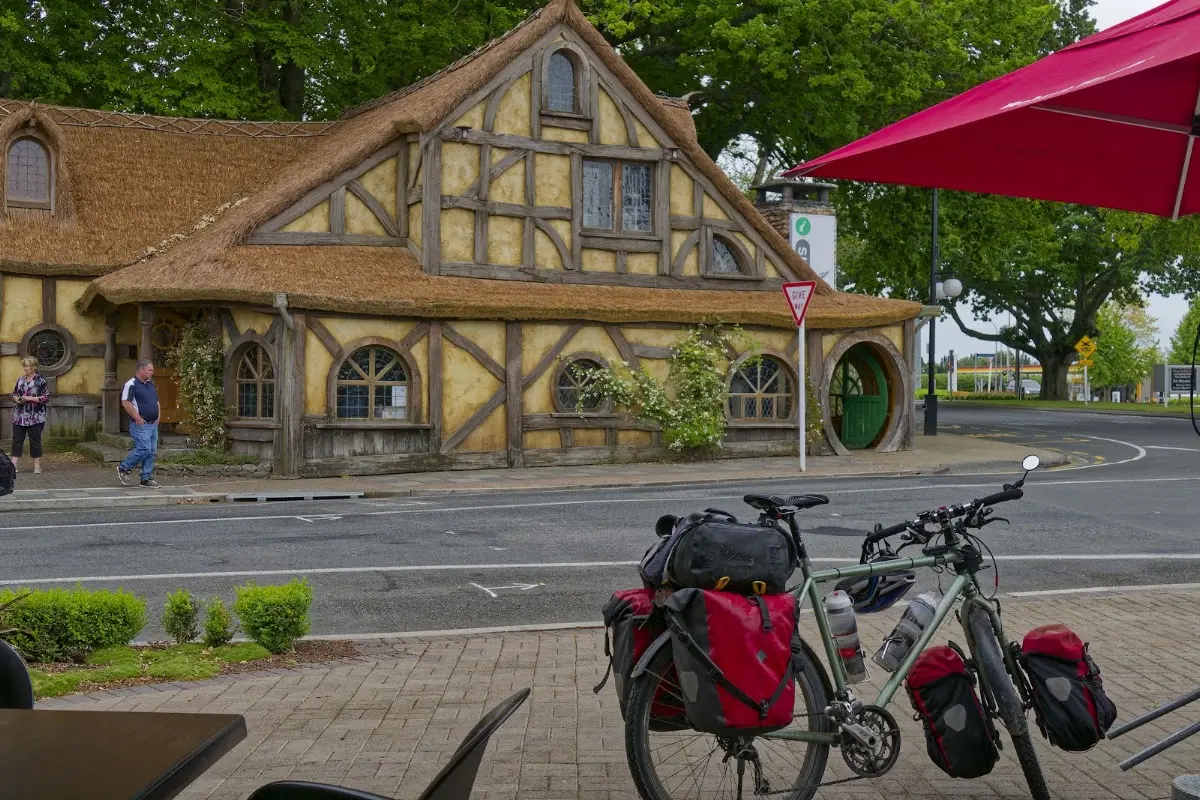
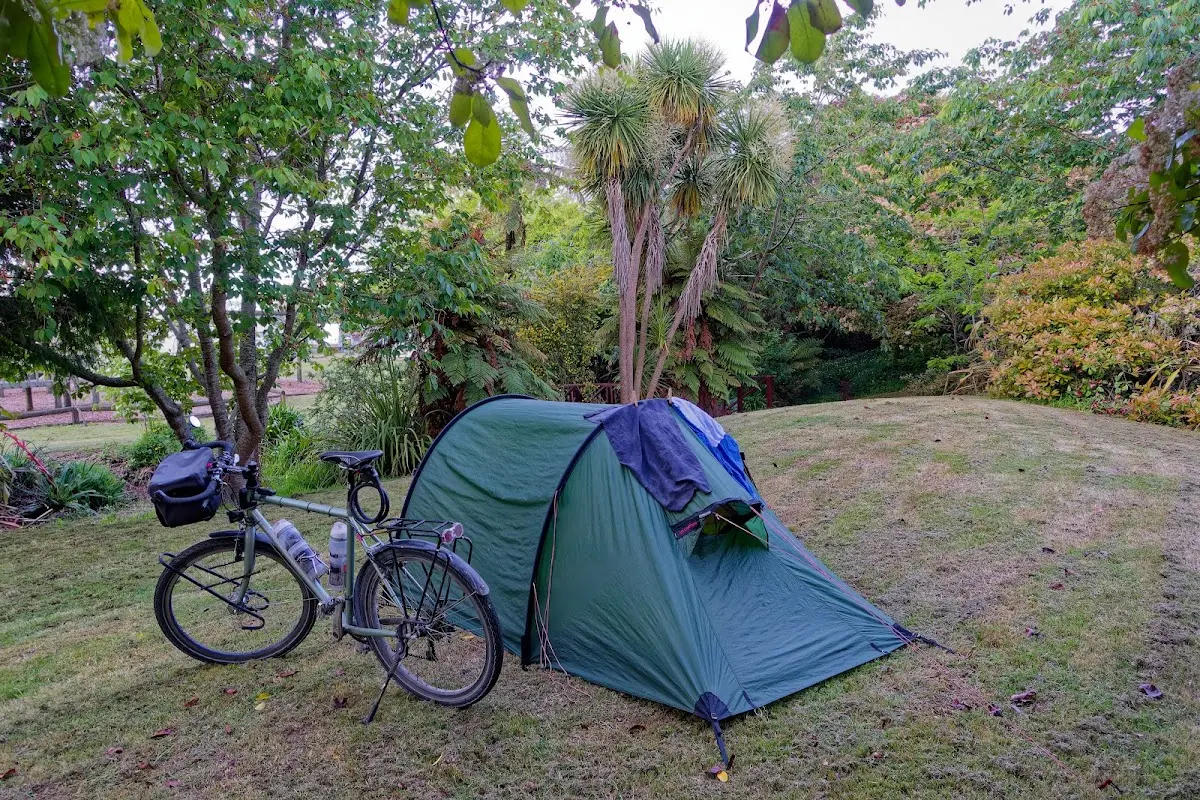
Matamata, Hobbiton on the way and coffee just opposite the Hobbit house. Some Wi-Fi there, cloudy with some raindrops, so I missed Te Waihou Blue Springs and climbed 560 meters to Rotorua. Campground at Holdens Bay, there were hot pots and a swimming pool. 112 km today in five hours and 20 minutes.


Matamata
Matamata is a town in New Zealand's Waikato region, situated near the base of the Kaimai Ranges. Known for its thriving farming community, the area is particularly noted for Thoroughbred horse breeding and training. Matamata is part of the Matamata-Piako District, which includes the surrounding rural areas and towns like Morrinsville and Te Aroha. The town is accessible via State Highway 27 and the Kinleith Branch railway, with a population of 9,610 as of June 2024.
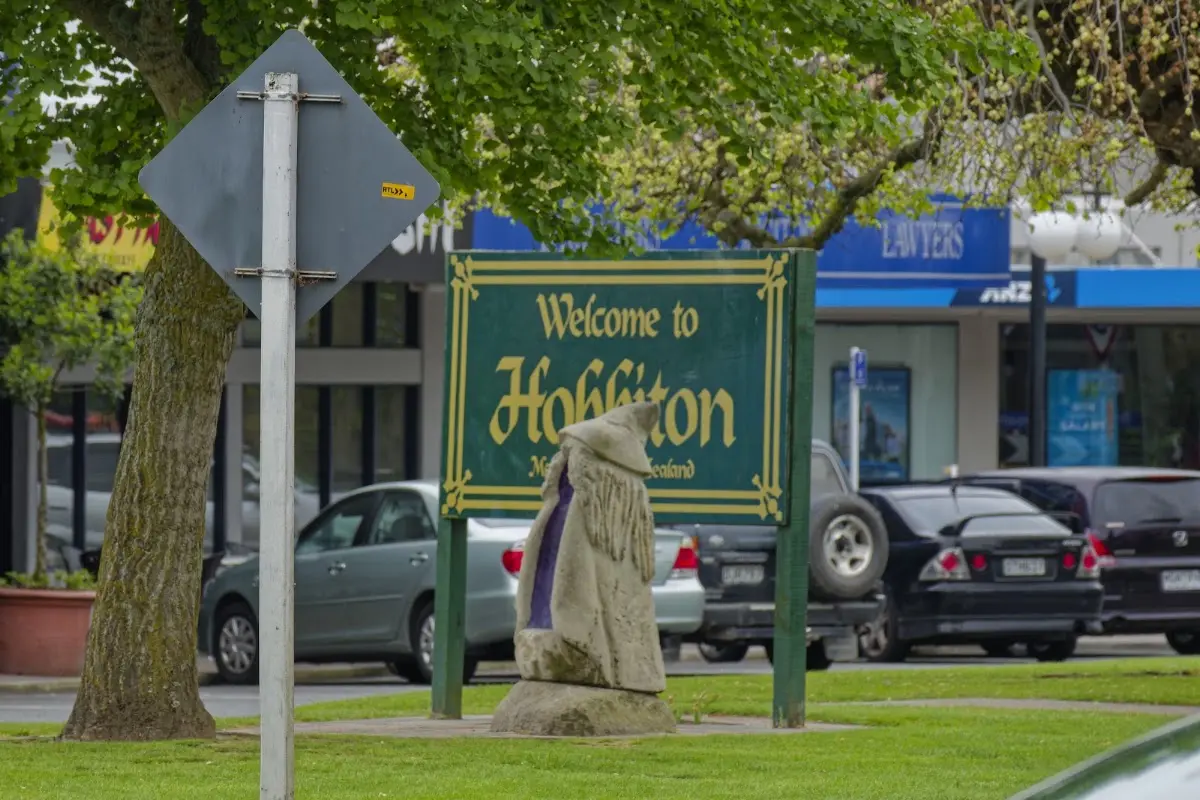
A nearby farm in Matamata gained international fame as the location for the Hobbiton Movie Set in Peter Jackson's The Lord of the Rings film series. The New Zealand government preserved the Hobbit holes as tourist attractions, allowing visitors to explore the set between filmings. A "Welcome to Hobbiton" sign greets visitors on the main road, and the site underwent preparations for The Hobbit film series in 2011.
New Zealand's stunning landscapes played a crucial role in the filming of The Lord of the Rings trilogy, showcasing the country's diverse natural beauty. The films' success boosted tourism, with fans flocking to iconic locations like Matamata's Hobbiton, Tongariro National Park's Mount Doom, and Fiordland's Fangorn Forest. The film industry in New Zealand has since flourished, with the country becoming a sought-after destination for filmmakers worldwide.


Rotorua
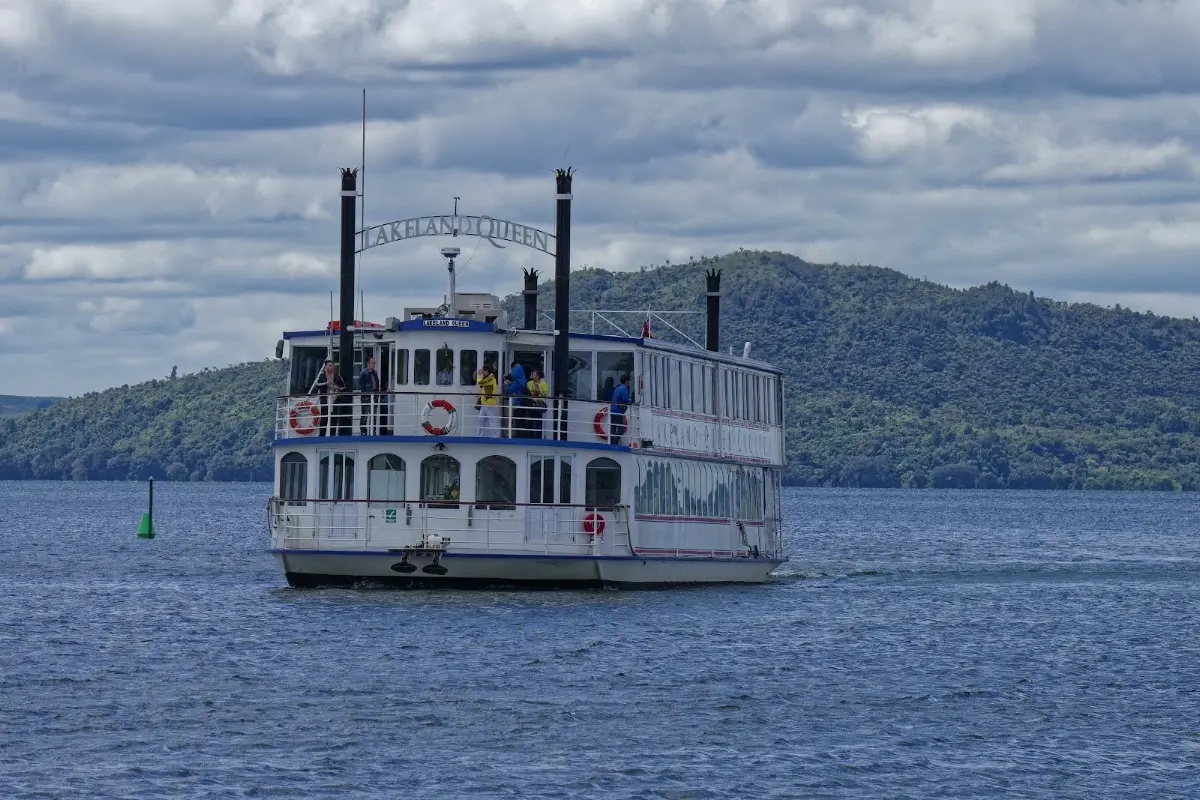
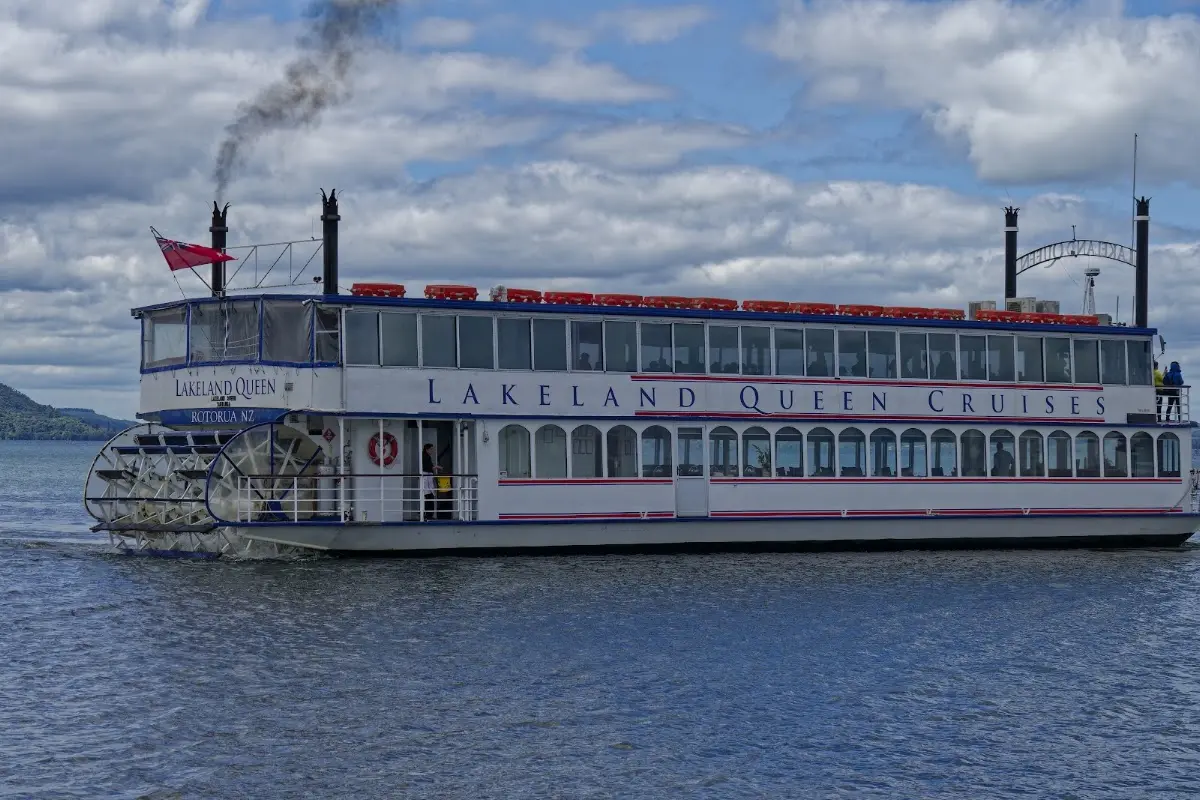
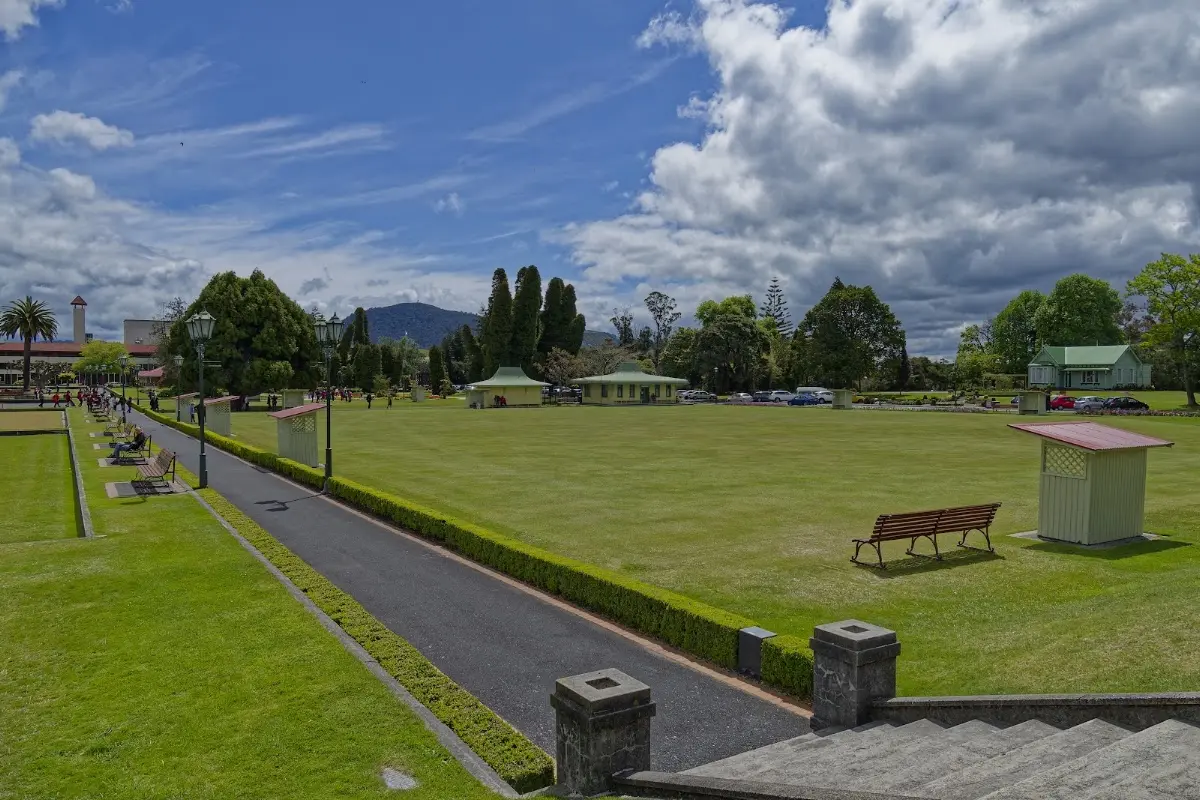
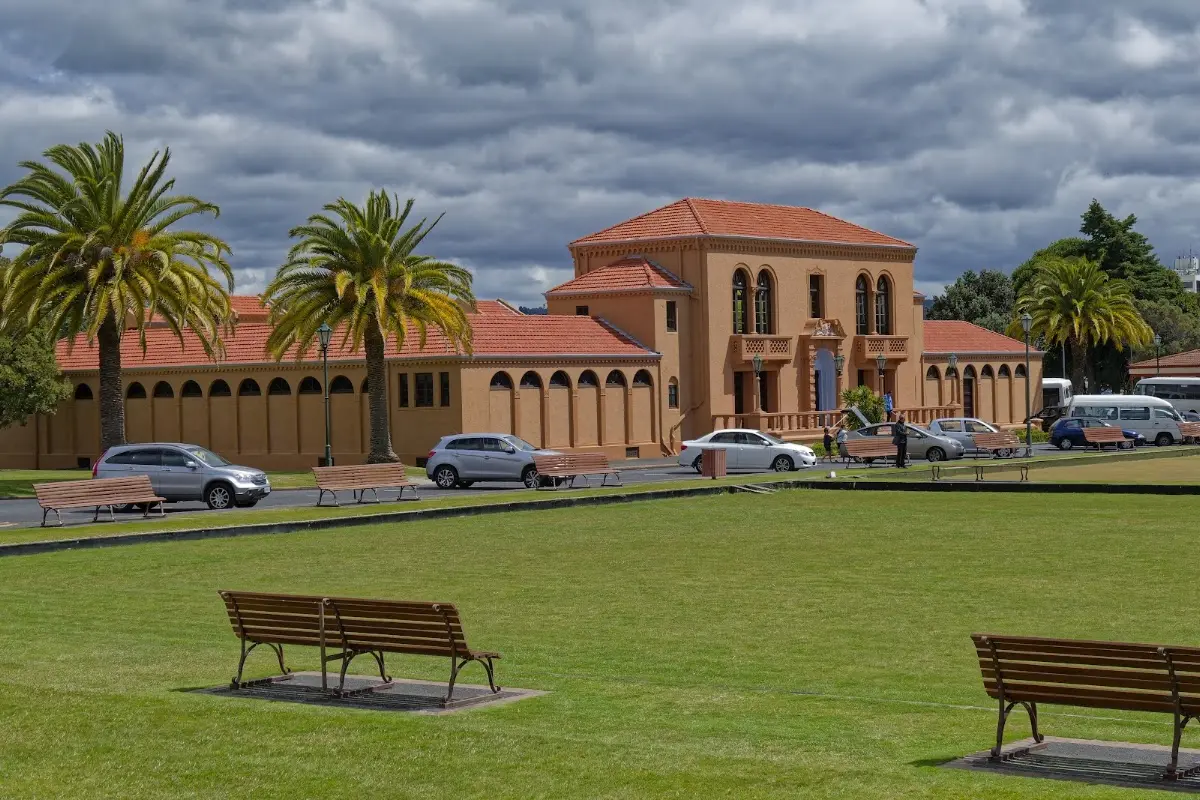
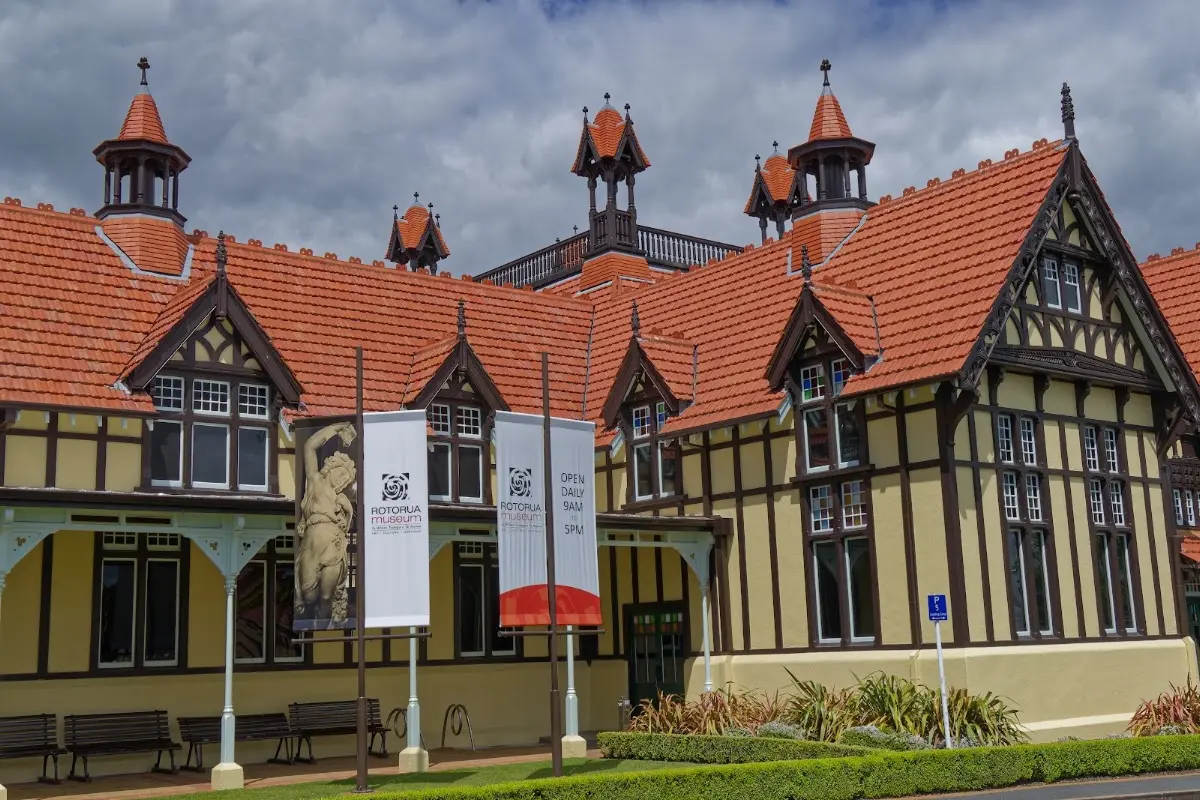
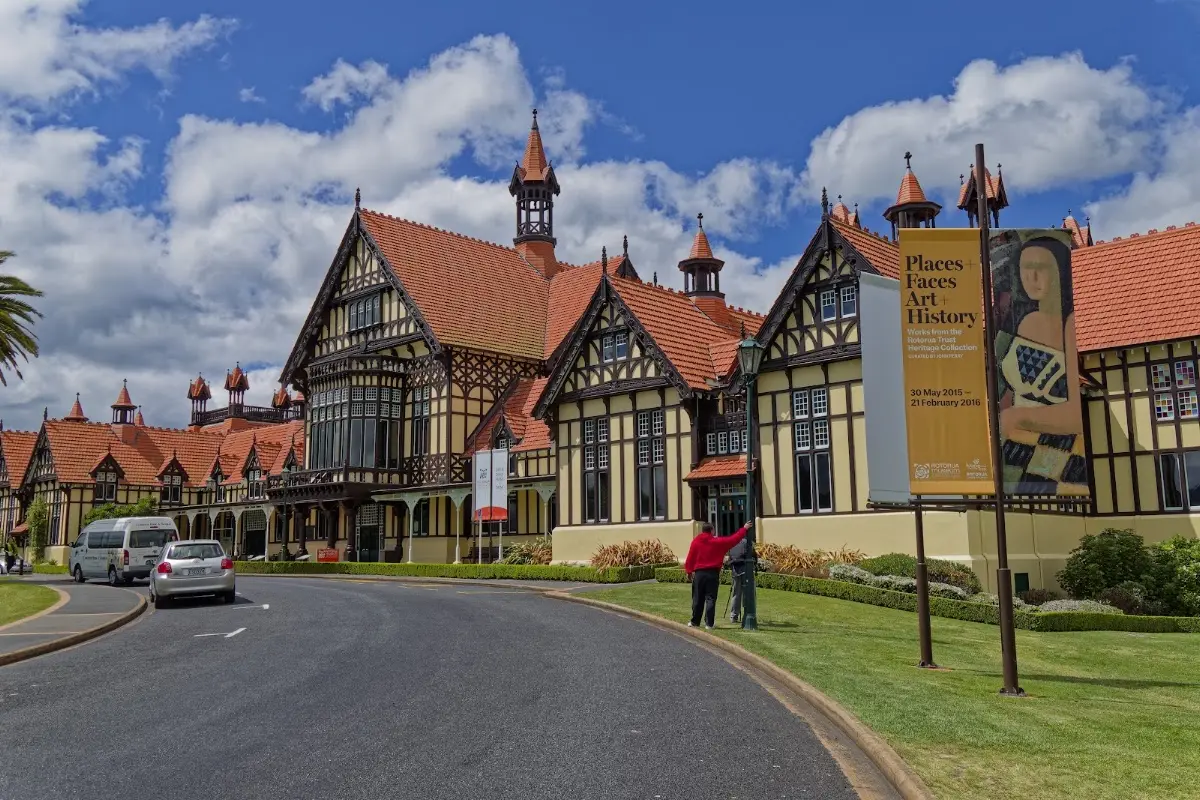
Rotorua is a city in New Zealand's Bay of Plenty region, located on the southern shores of Lake Rotorua. It serves as the seat of the Rotorua Lakes District and has a population of approximately 58,800, making it the 13th largest urban area in the country. The city is renowned for its geothermal activity and Māori cultural tourism, featuring attractions like the Pōhutu Geyser and hot mud pools, all linked to the Rotorua Caldera.
The area was first settled by Māori of the Te Arawa iwi in the 14th century, with a pā established at Ohinemutu. Rotorua played a significant role during the Musket Wars in the 1820s, with conflicts involving the Ngāpuhi iwi. European interest in Rotorua grew in the 19th century due to its geothermal features, leading to the establishment of a spa town through a 99-year lease agreement with Ngāti Whakaue.
Rotorua's name, Te Rotorua-nui-a-Kahumatamomoe, means "Second lake" in Māori, named by the explorer Ihenga in honor of his uncle. The city is nicknamed "Sulphur City" due to its hydrogen sulphide emissions, and "Roto-Vegas" for its bustling strip of businesses and restaurants. Rotorua's development was further boosted by the opening of the Rotorua Branch railway in 1894, enhancing tourism and connectivity.
The city's history includes significant events like the 1886 eruption of Mount Tarawera, which destroyed the famed Pink and White Terraces. Rotorua was established as a borough in 1922, became a city in 1962, and later a district in 1979. The government settled a Treaty of Waitangi claim with Ngāti Whakaue in 1993, returning lands no longer needed for their original purposes.


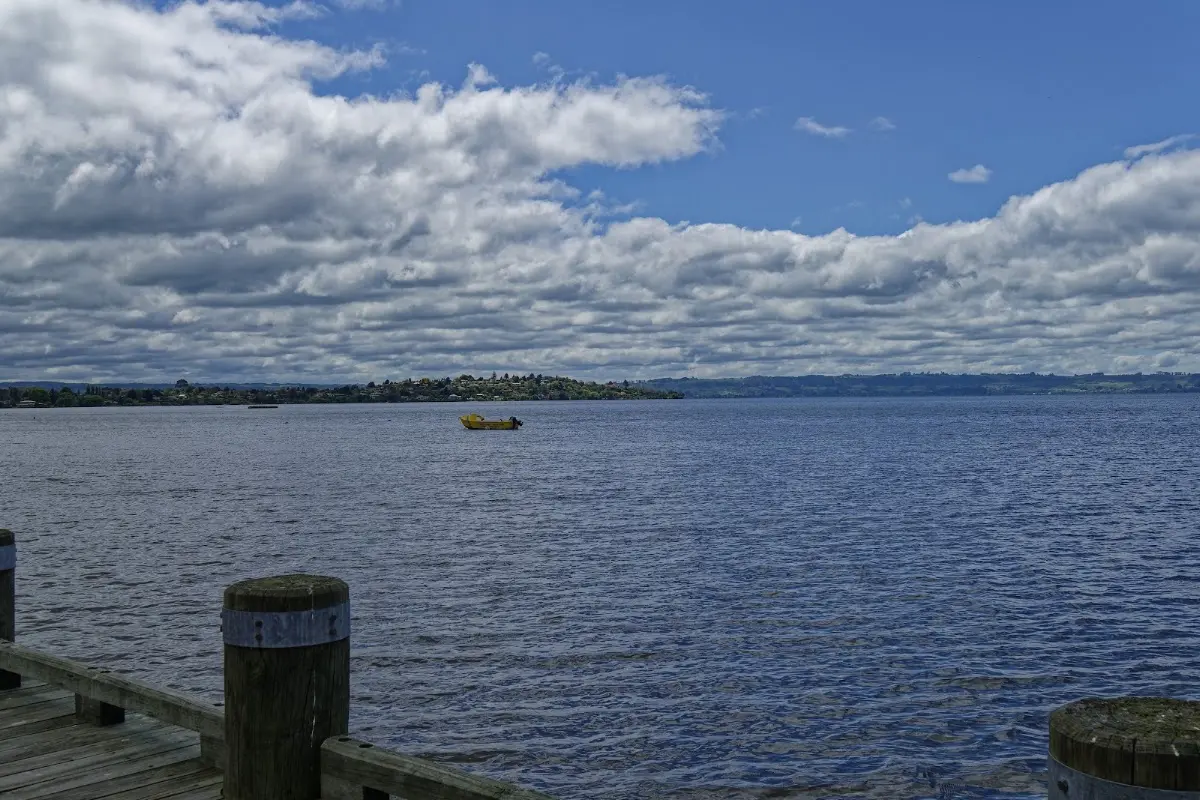
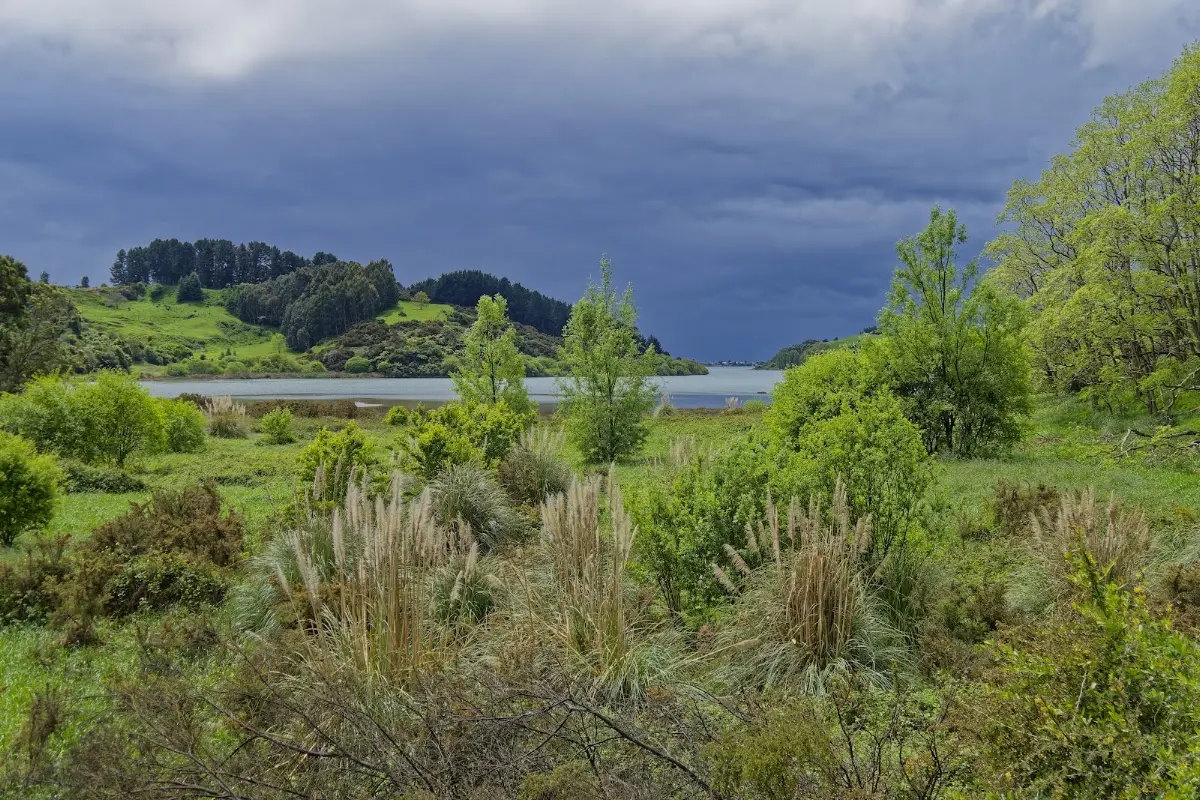
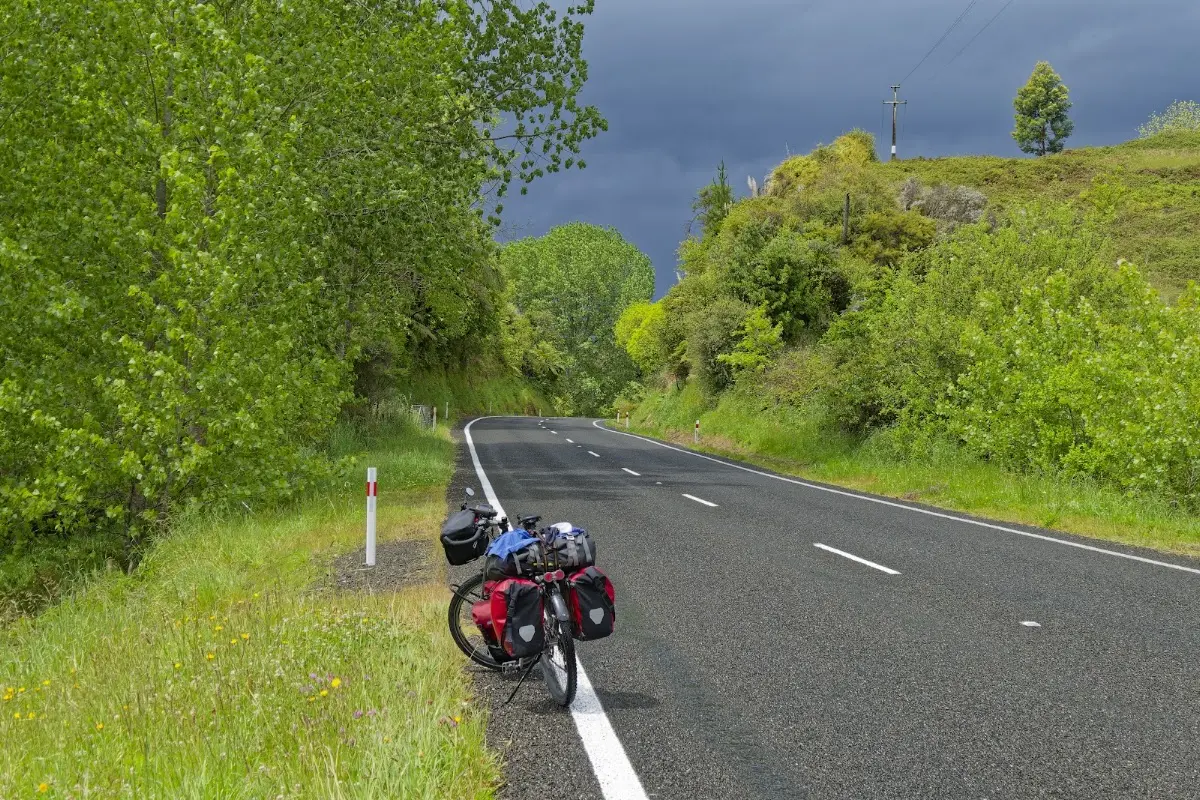
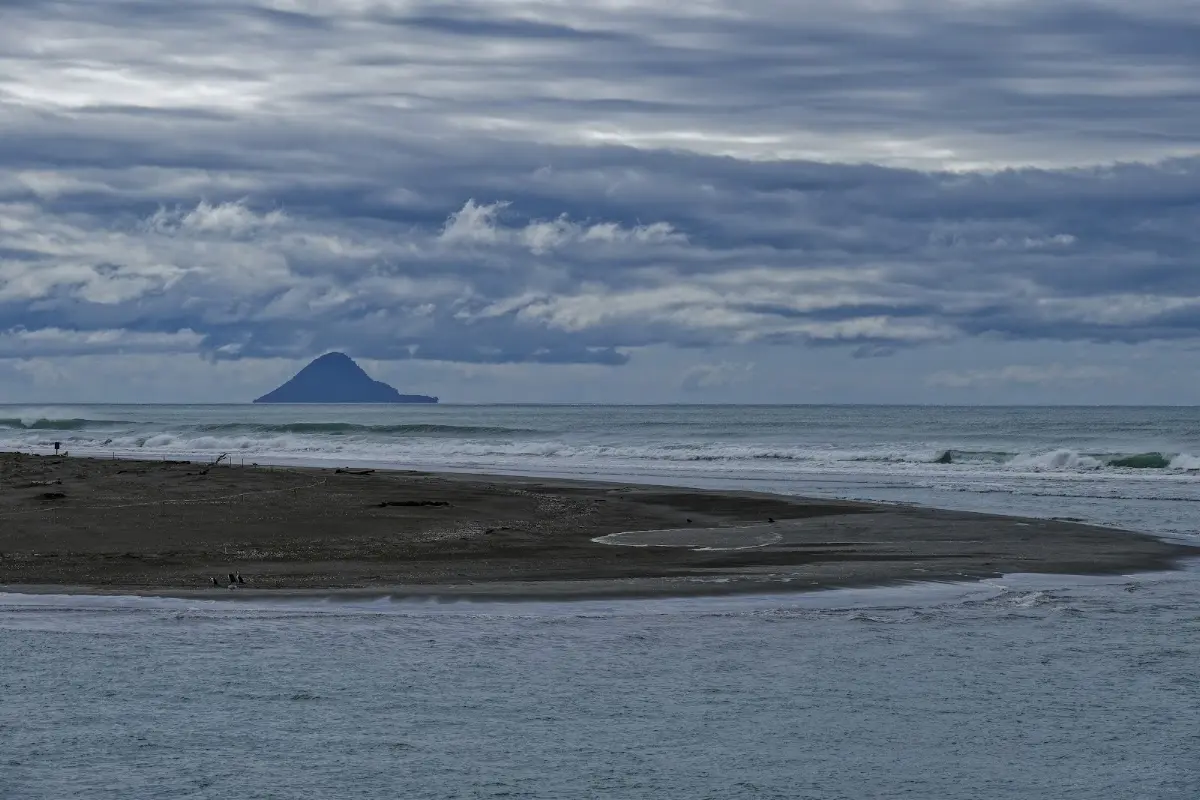
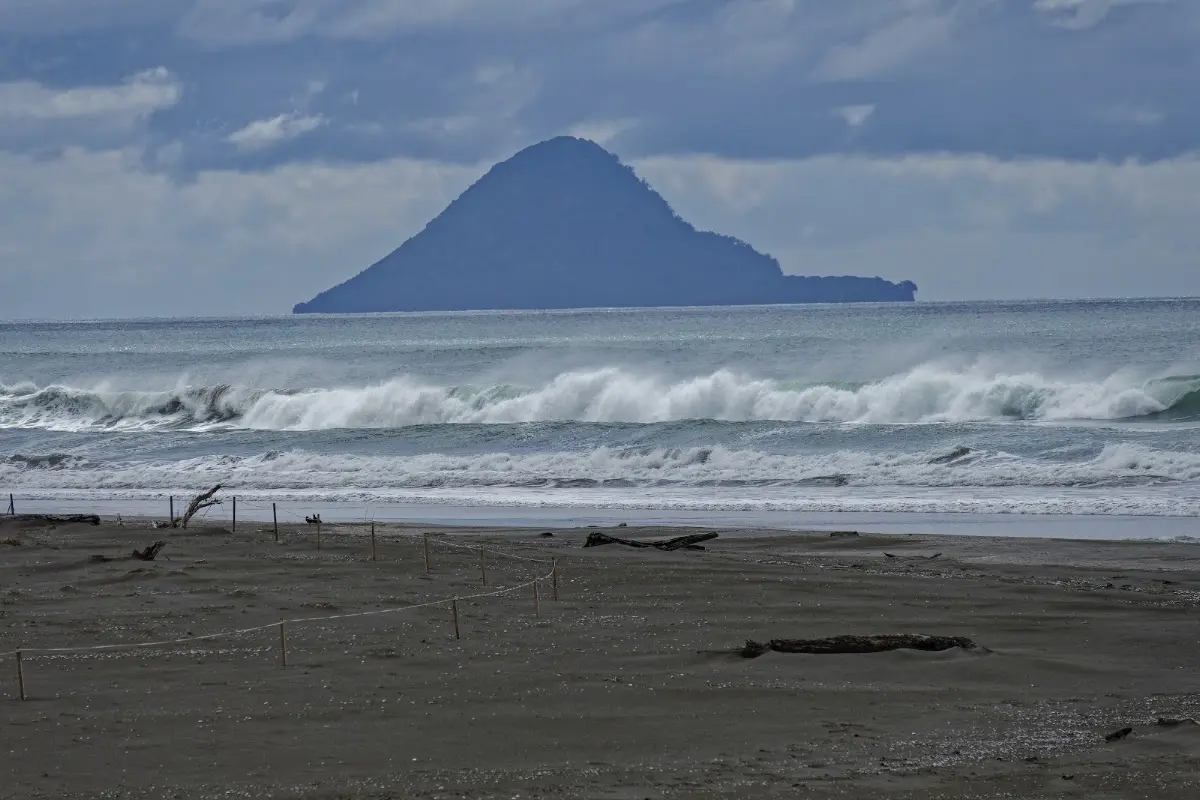
Riding a route I did in 2011, this time in pouring rain along several lakes to Awakeri Hot Springs, Whakatāne and on to Opotiki. Some coffee and a sandwich for lunch. It was a crowded campground full of German working and traveling tourists. I have not met many cyclists yet, only 5 to 10 I have seen in the last weeks. 135.7 km in 6.37 hours today.


Whakatāne
Whakatāne is a town in New Zealand's Bay of Plenty region, located at the mouth of the Whakatāne River. It is 90 kilometers east of Tauranga and 89 kilometers northeast of Rotorua. With an urban population of 16,650, Whakatāne is the third-largest urban area in the Bay of Plenty. The town is part of the Whakatāne District, which has a total population of around 38,400, with a significant portion identifying as Māori.
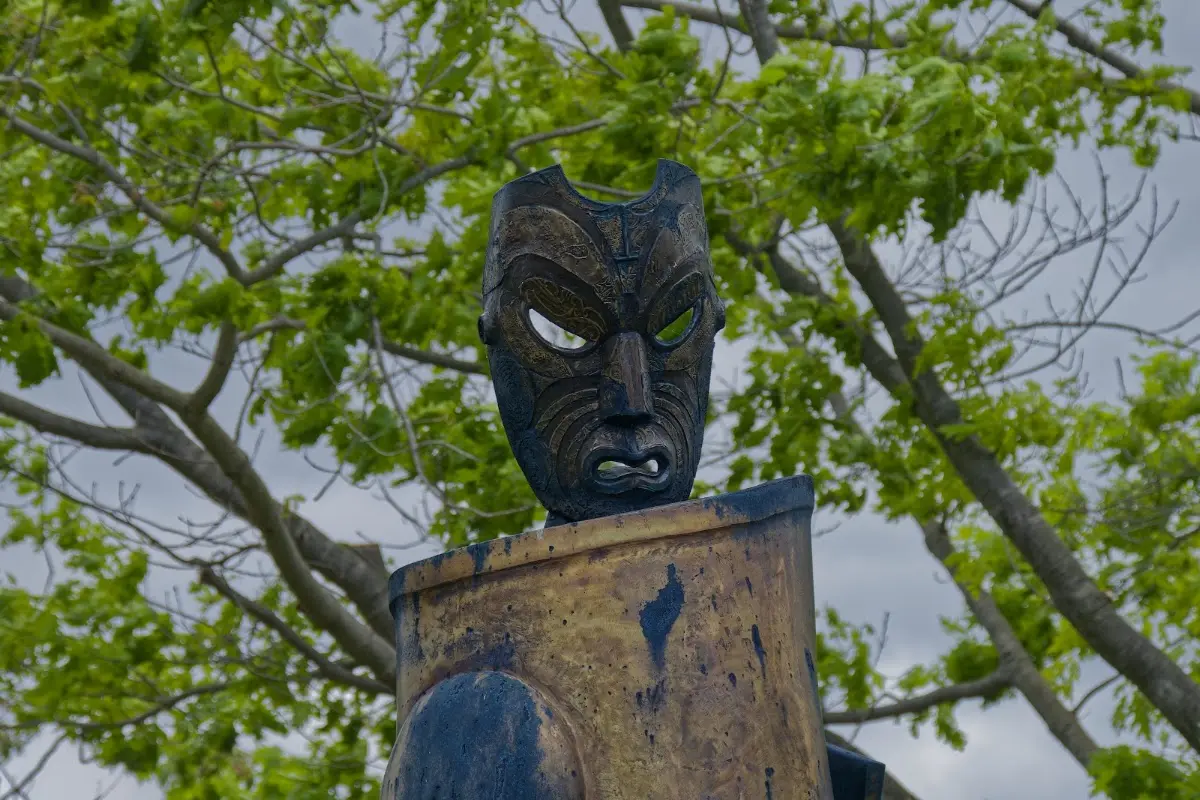
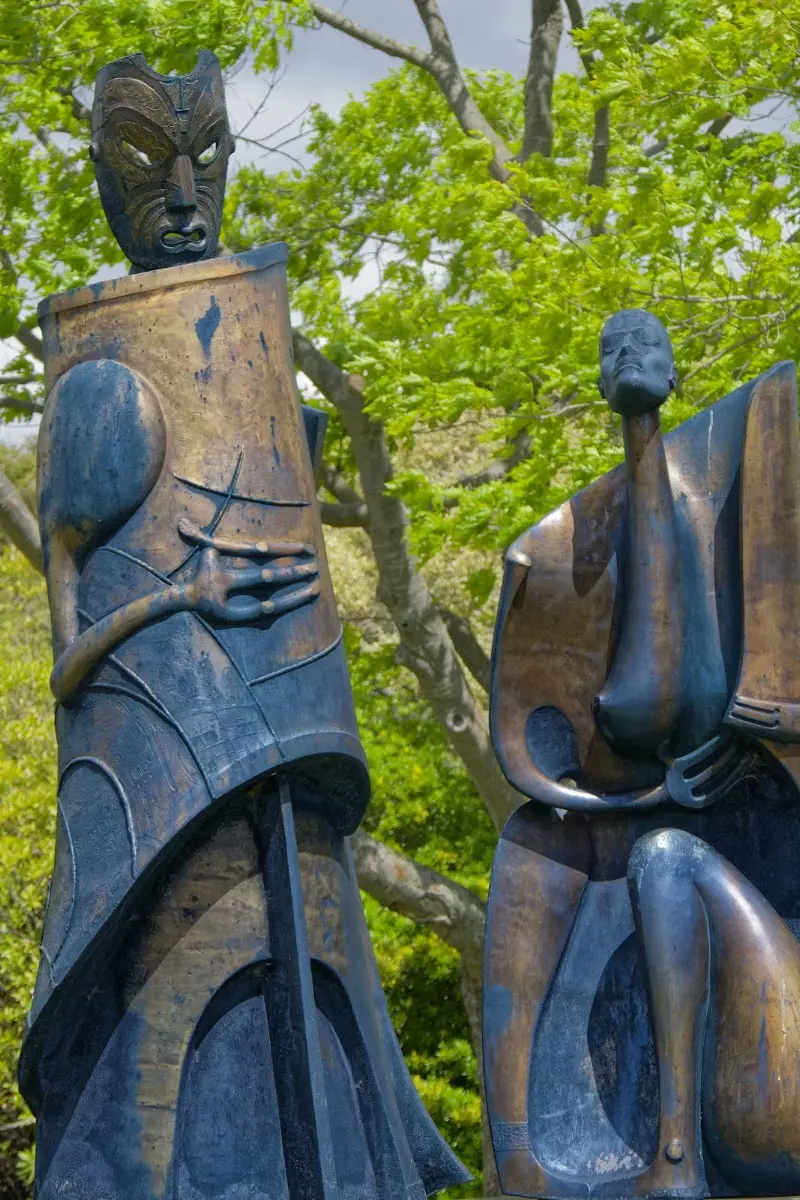
The town has a rich Māori history, with settlement dating back to around 1200 CE. According to tradition, Toi-te-huatahi settled in the area around 1150 CE. The Māori name Whakatāne commemorates an incident involving the chieftainess Wairaka, who saved the drifting Mataatua canoe. Her bravery is honored by a bronze statue at the river's mouth.
Whakatāne played a significant role during the New Zealand Wars, particularly during the Völkner incident and Te Kooti's raids in 1869. The town was a shipbuilding and trade center from 1880, and its growth accelerated with the draining of the Rangitāiki swamp in 1904. The town's infrastructure, including electricity, expanded rapidly in the early 20th century.
The Whakatāne River was re-coursed in the 1960s to prevent flooding and accommodate the town's expansion. The original bridge was replaced in 1984 by the Landing Road bridge. Whakatāne has become a popular retirement and lifestyle destination, benefiting from its dominance over smaller surrounding towns.
In 1993, Whakatāne hosted the 'First International Conference on the Cultural and Intellectual Property Rights of Indigenous Peoples, resulting in the Mataatua Declaration. This declaration addresses the cultural and intellectual property rights of indigenous peoples, highlighting Whakatāne's role in promoting indigenous rights on an international stage.


Ōpōtiki
Ōpōtiki is a town in the eastern Bay of Plenty region of New Zealand's North Island, serving as the headquarters for the Ōpōtiki District Council. Historically, it was the center of the Te Whakatōhea iwi. In 1840, the New Zealand Church Missionary Society established a station in Ōpōtiki. The town gained notoriety in 1865 when missionary Carl Völkner was killed by local Māori, leading to military intervention and land confiscation by the government.
Ōpōtiki developed as a government center in the eastern Bay of Plenty, becoming a town district in 1882 and a borough in 1908. Its economy was primarily based on agriculture, particularly dairy farming, until the 1980s. Economic reforms during that decade led to factory closures and layoffs, causing a population decline. However, the town's economy later improved with the development of horticulture and an offshore mussel farm.
By the 2020s, Ōpōtiki had gained a national reputation for its significant gang presence, with groups like Black Power and Mongrel Mob being prominent. In June 2023, a tangihanga (funeral) procession led to the temporary closure of local schools and public transport, drawing political attention from Prime Minister Chris Hipkins.