Biking and Hiking New Zealand - Kea Attack and Mountains
The rain stopped shortly after midnight, and the next day I spent climbing Avalanche Peak (1,830 m) as a round trip. Kea were everywhere. I was able to lock my bike away in a DOC shelter, because those mountain clowns will happily tear apart your saddle or wheels if they get bored.
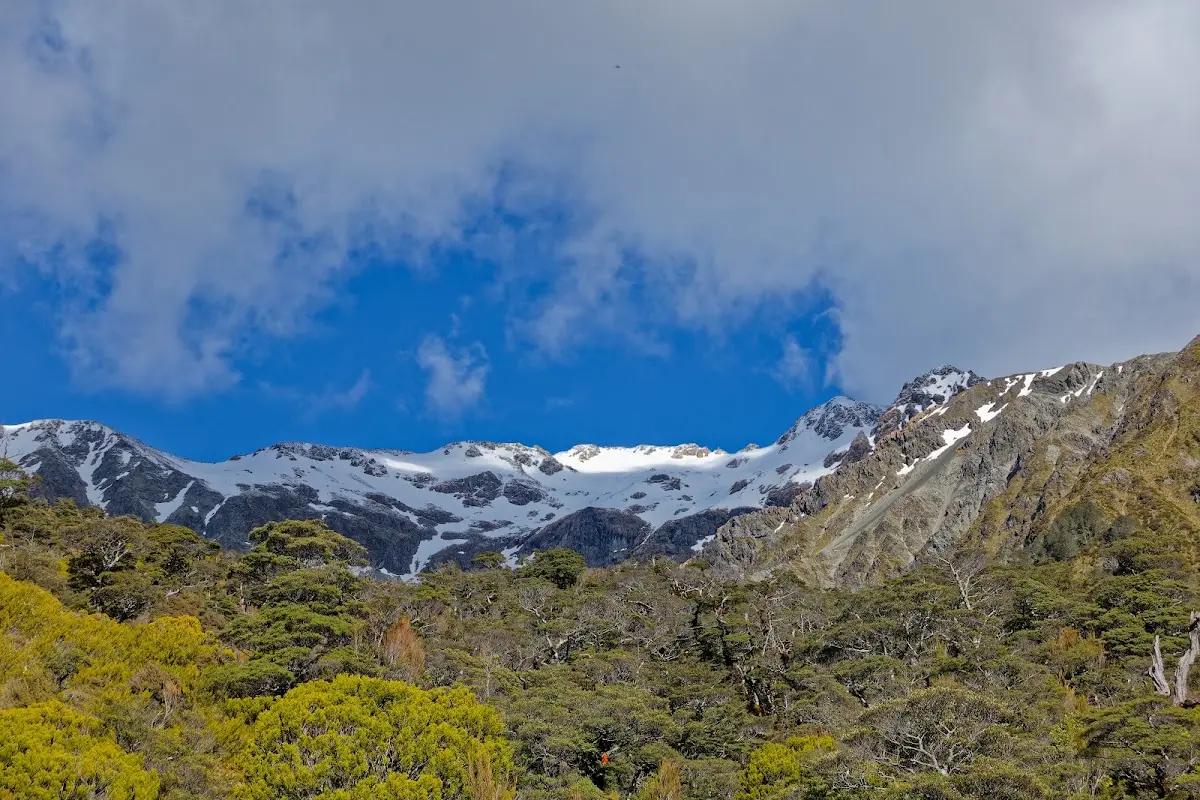
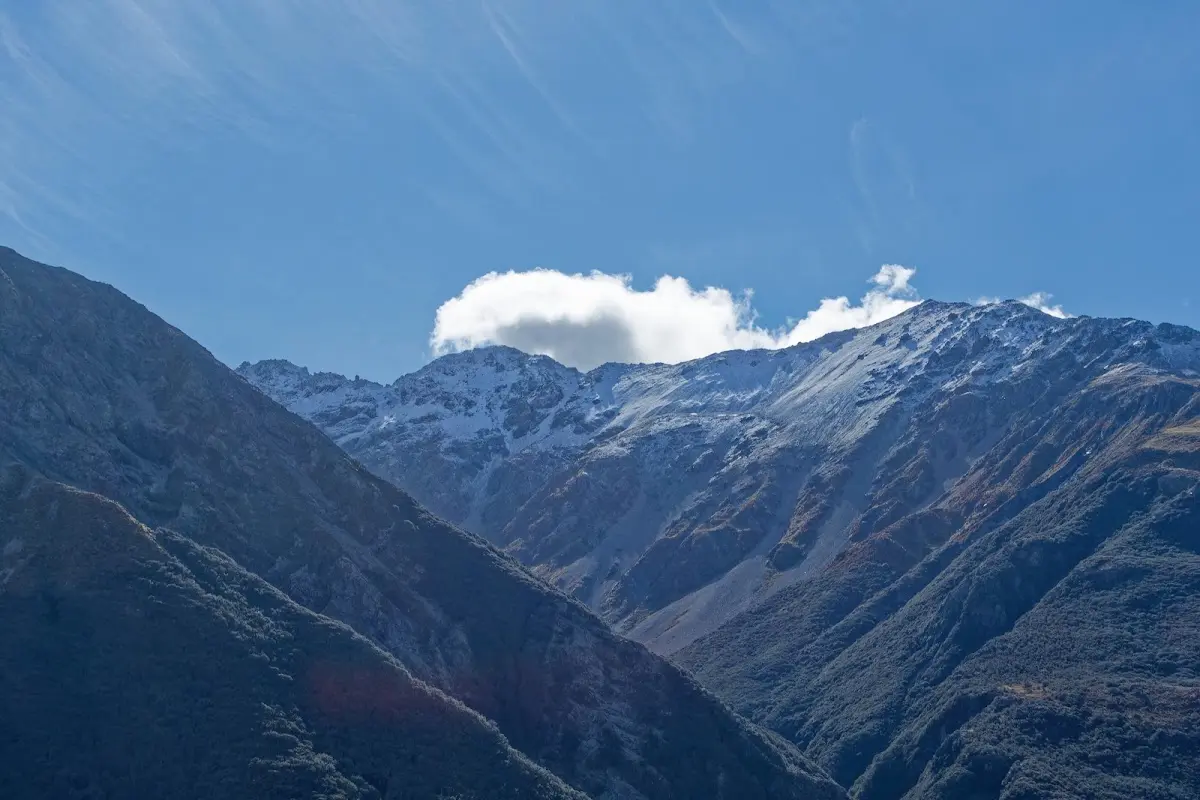
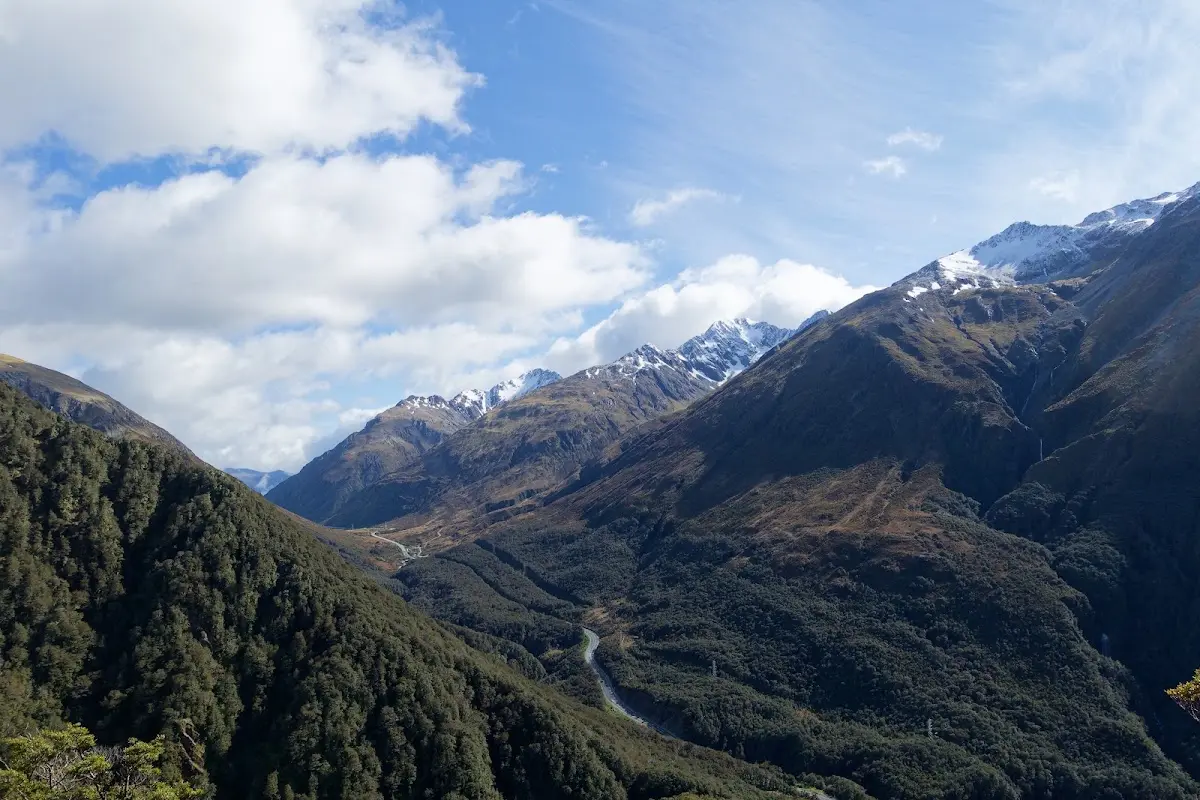
Arthur's Pass National Park
History:
- Land in Arthur's Pass and the Otira Gorge was originally set aside under the Lands Act 1885 and the Scenery Preservation Act of 1903.
- The park was established in 1929, becoming the first national park in the South Island and the third in New Zealand.
- The first park ranger at Arthur's Pass National Park was Charles Edward Warden, who was appointed in 1929 and served until November 1937.
Geography:
- The park is bisected by State Highway 73, which passes through Arthur's Pass village and the mountain pass with the same name over the Southern Alps at a height of 920 metres above sea level.
- The park is split by the main divide of the South Island, with the eastern side being typically drier and consisting of mountain beech forest and wide riverbeds, while the western side contains dense rainforest.
- The park contains numerous geographical features, including passes, rivers, and mountains.
Ecology:
- Whio (blue ducks): 17 released into the park in March 2021
- Kākāriki karaka (orange-fronted parakeet): rarest of New Zealand's six kākāriki species, only found in Arthur's Pass National Park
- Kea: regularly seen in the park and township, often spotted on Scotts Track and at the viaduct lookout
- Great spotted kiwi (roroa): up to 40 kiwi living in the Bealey Valley, often heard but difficult to see due to nocturnal habits
- Weka: becoming more common in the western side of the park, occasionally seen in the Edwards Valley
Flora:
- Mountain beech forest: found on the eastern side of the park
- Rainforest: dense and mixed podocarp and rata, found on the western side of the park
- Beech forest: found on the Andrews-Poulter track
- Podocarp and broadleaf forest: found on the Carroll Hut track
Tracks:
- Avalanche Peak: poled route to the summit, steep climb with good views of the Southern Alps
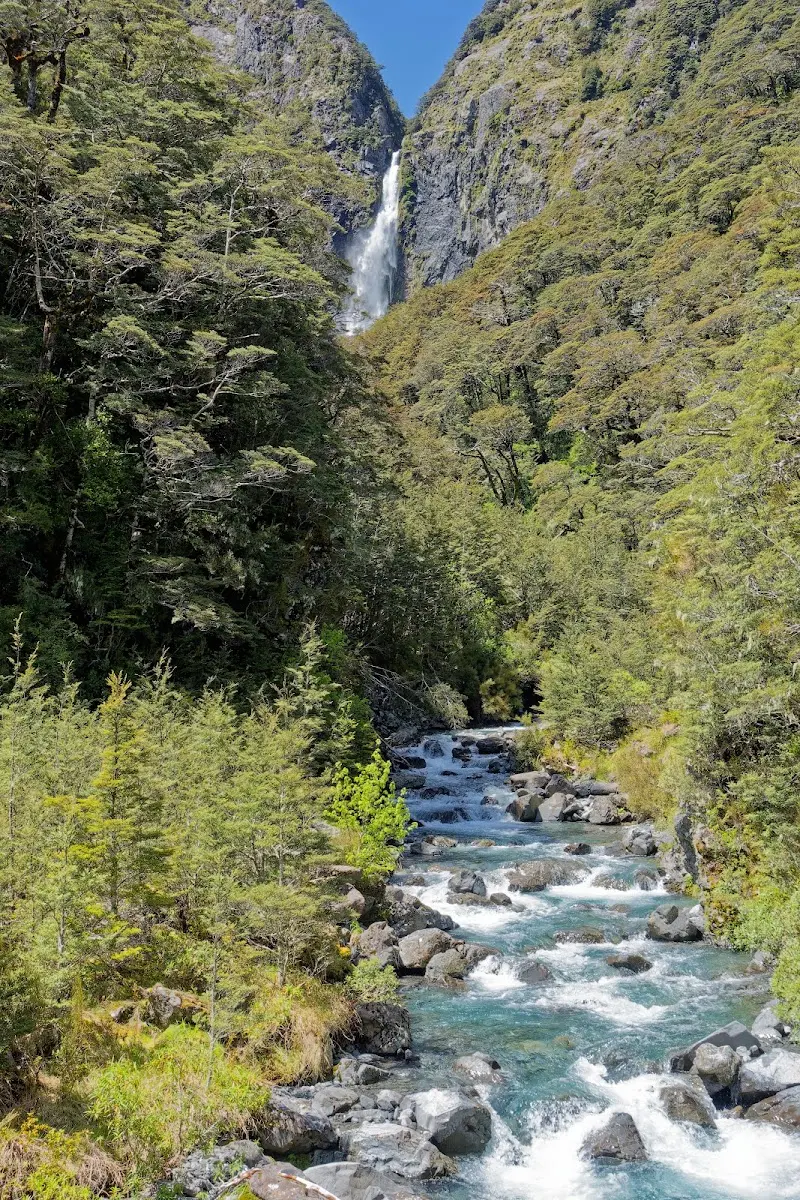
- Devils Punchbowl waterfall: short walk to the waterfall and back, takes under two hours
- Bealey Spur track: easy 2.5 hour walk up to the Bealey Spur Hut, offers views over the Waimakariri Basin and surrounding mountains
- O'Malleys track: follows the Waimakariri River, crosses Turkey Flat to Anti Crow Hut, then on to Carrington Hut
- Edwards-Hawdon track: challenging tramping trip that travels up the Edwards River, crosses two alpine Passes, and then travels down the Hawdon River
- Andrews-Poulter track: non-technical trip on the eastern side of the park, crosses two passes and offers views of beech forest
- Mingha-Deception track: well-known tramping trip that travels up the Mingha river to Goat Pass, offers views of the Deception river and Lake Mavis
- Carroll Hut track: step climb through podocarp and broadleaf forest, offers views of the Taramakau River
Conservation and Human Interaction:
- The Department of Conservation operates a depot, administration, and information centre in Arthur's Pass village.
- The park is popular for tramping, skiing, hunting, and mountaineering, but the terrain is challenging and the weather is subject to frequent and sudden change.
- The park has a reputation as one of the most dangerous national parks in New Zealand due to the harsh and variable conditions.
- The Department of Conservation has proposed developing facilities to encourage more visitors to stay the night, including high-end accommodation and amenities.
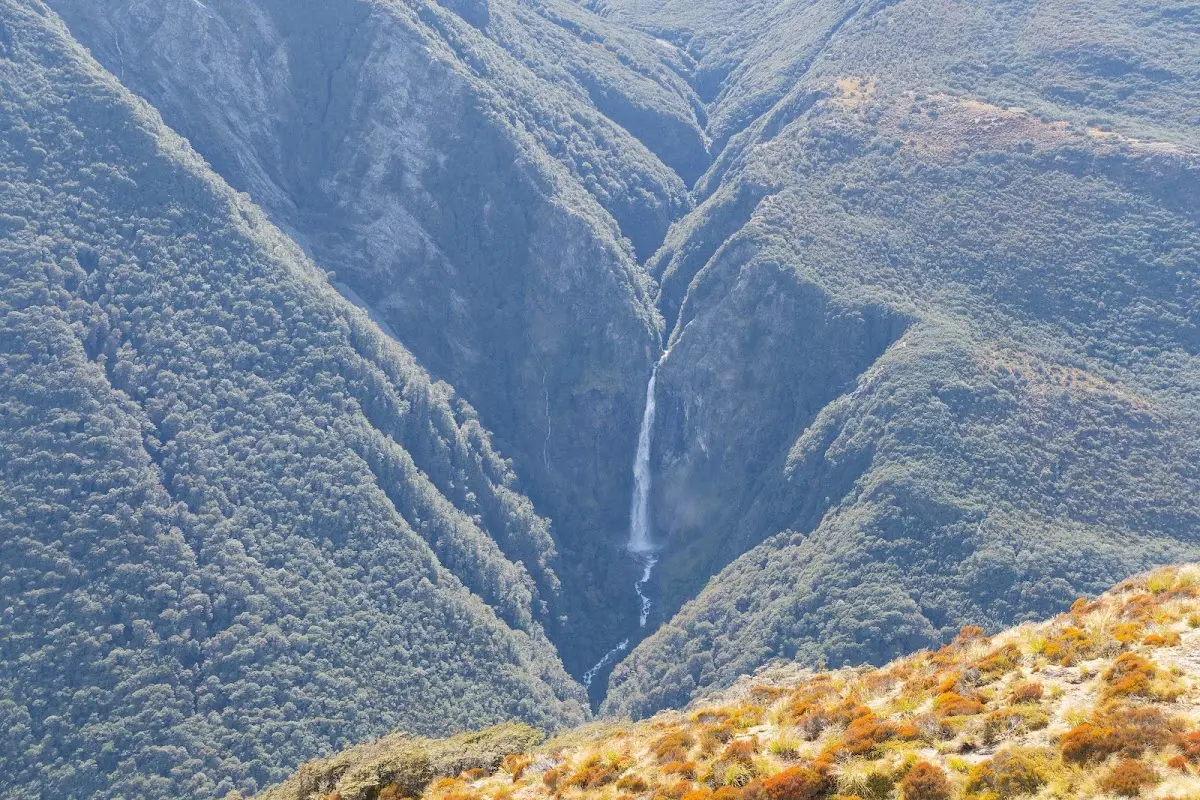
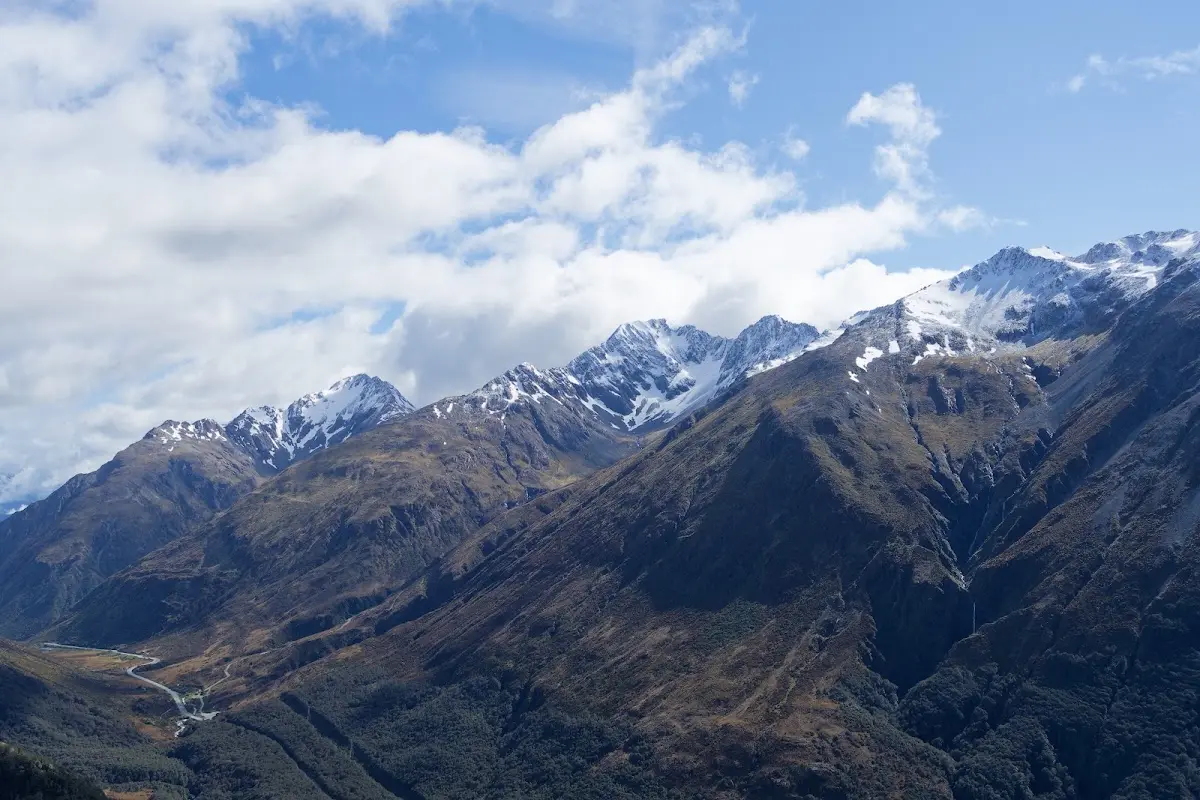
A slender waterfall dropping through a deep V-shaped gorge, seen from high up the track.
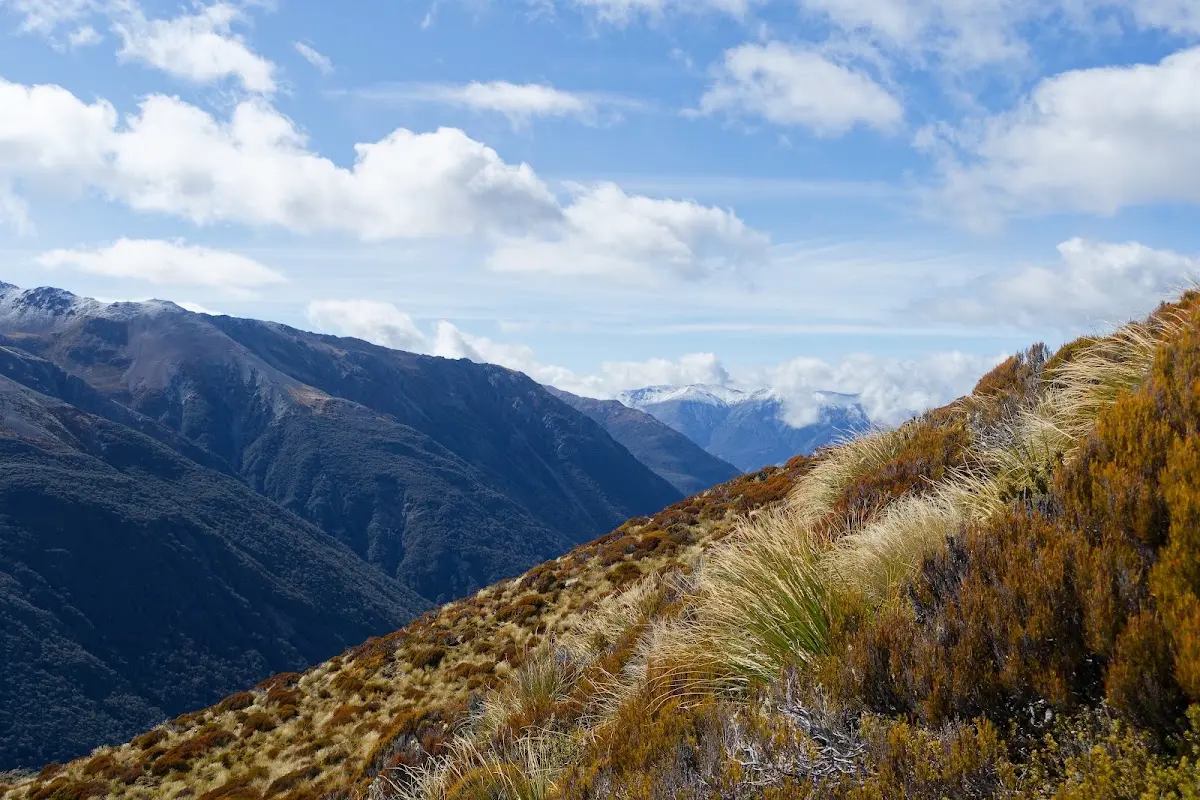
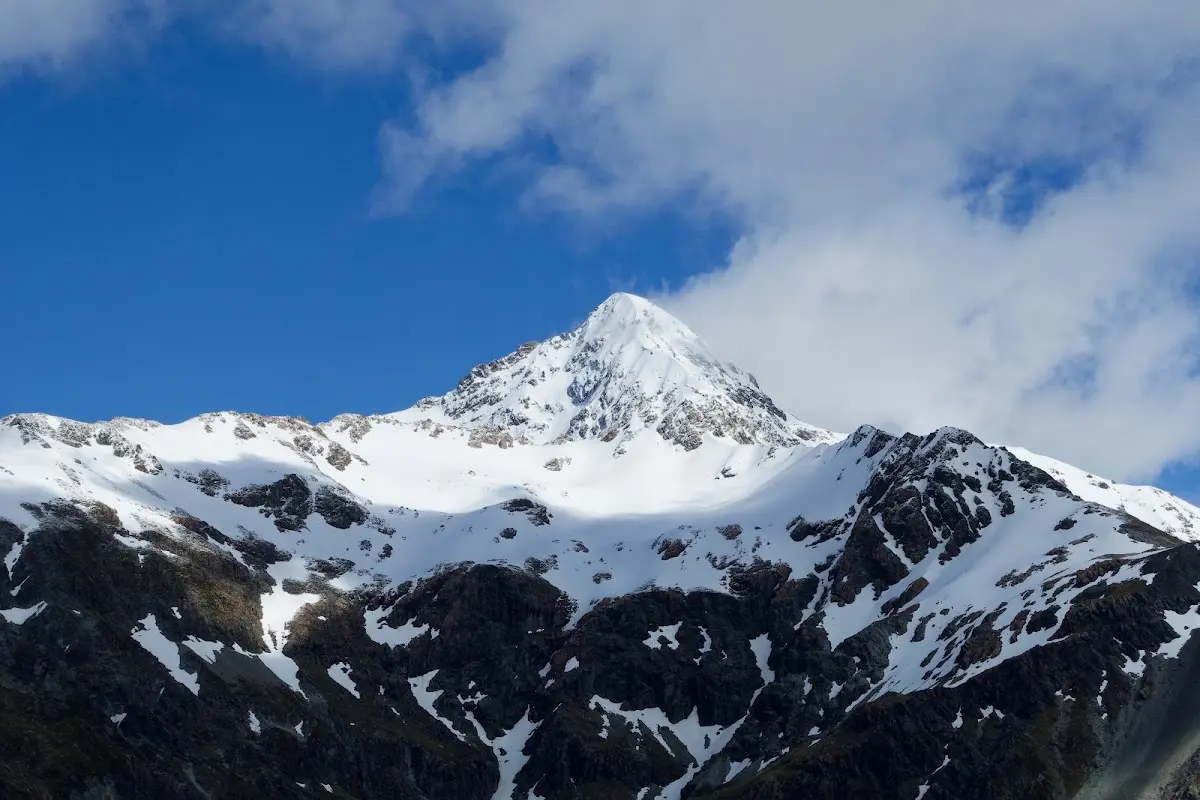
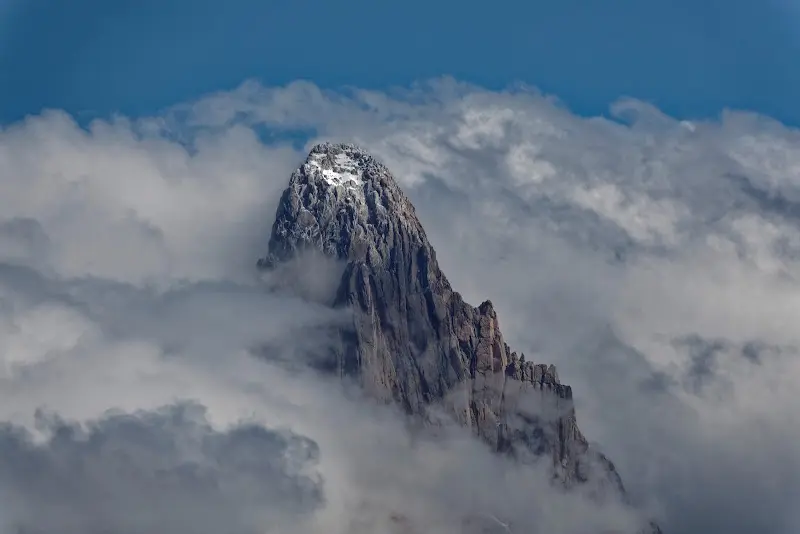
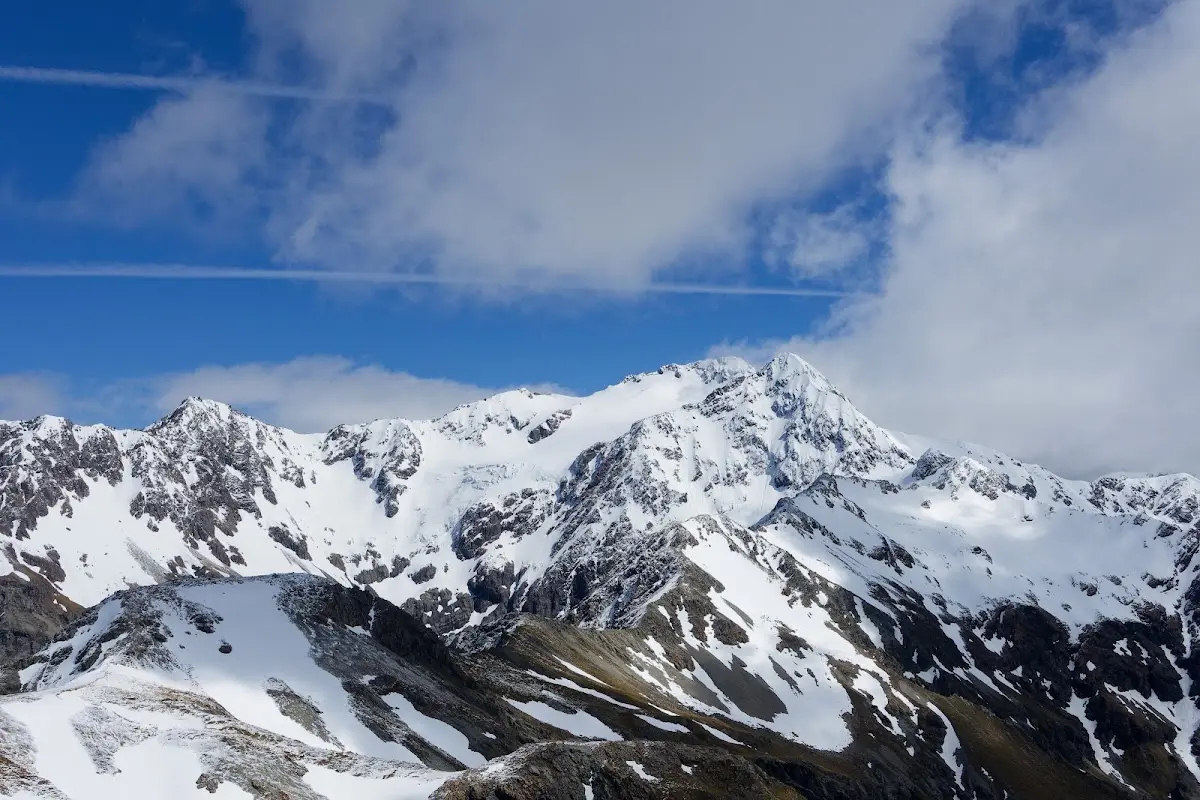
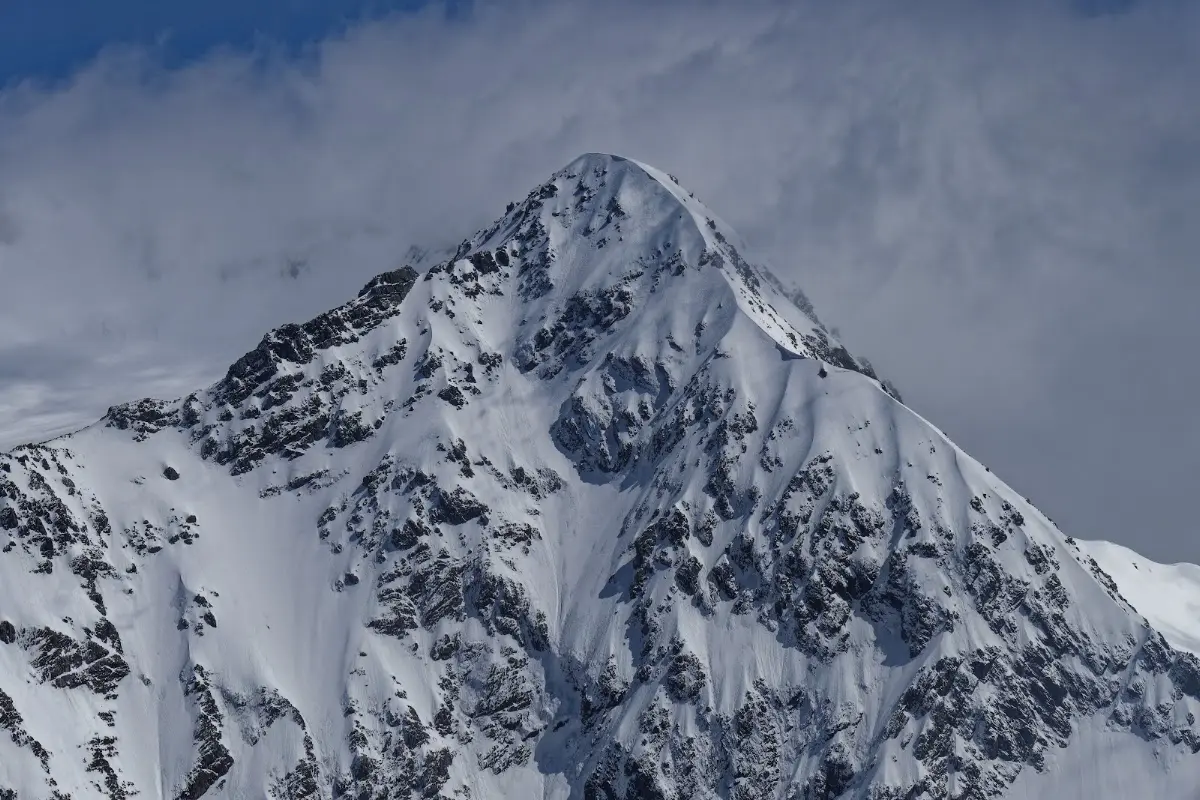
A perfect pyramid of snow trailing its own cloud, deep in the Southern Alps.
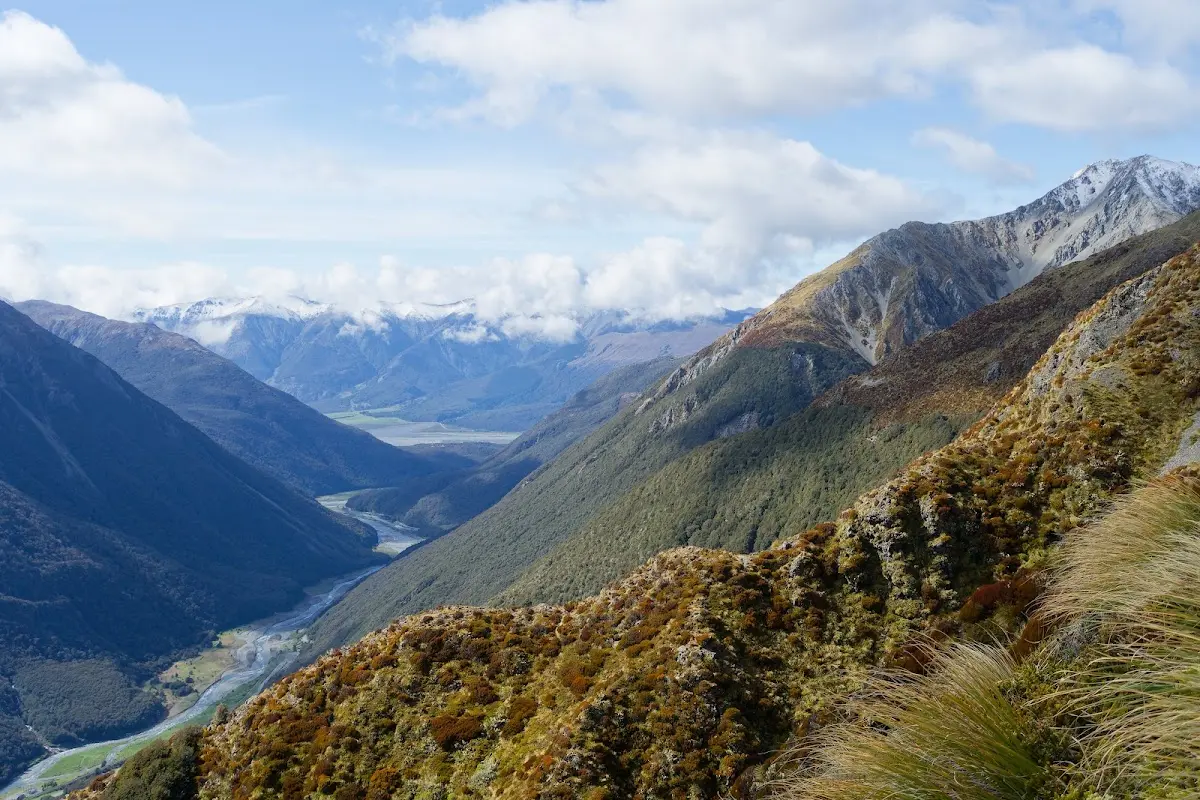
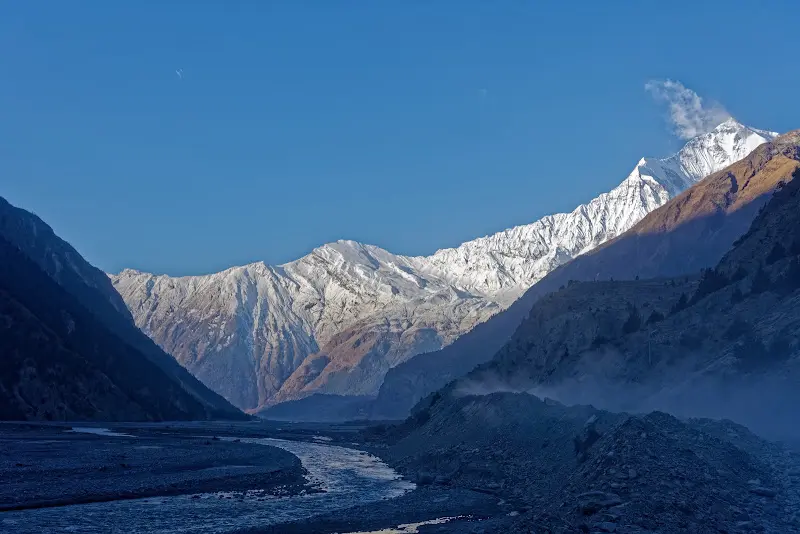
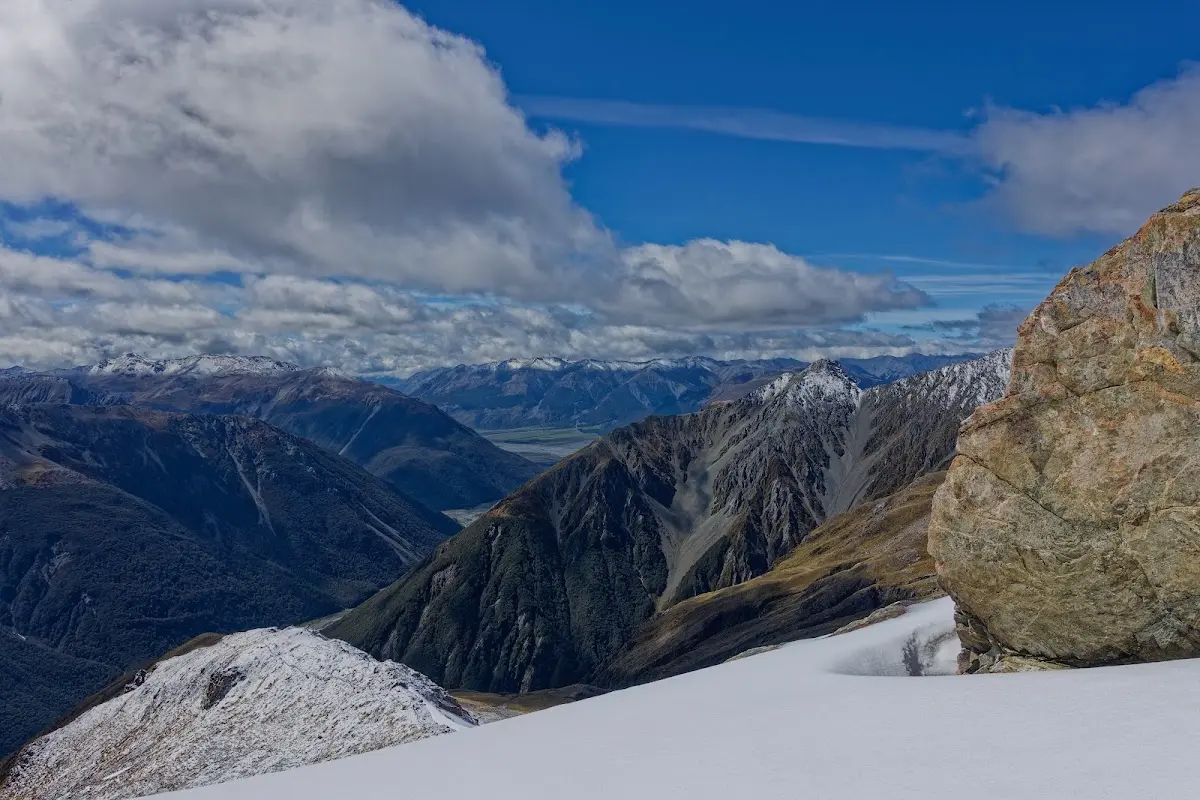
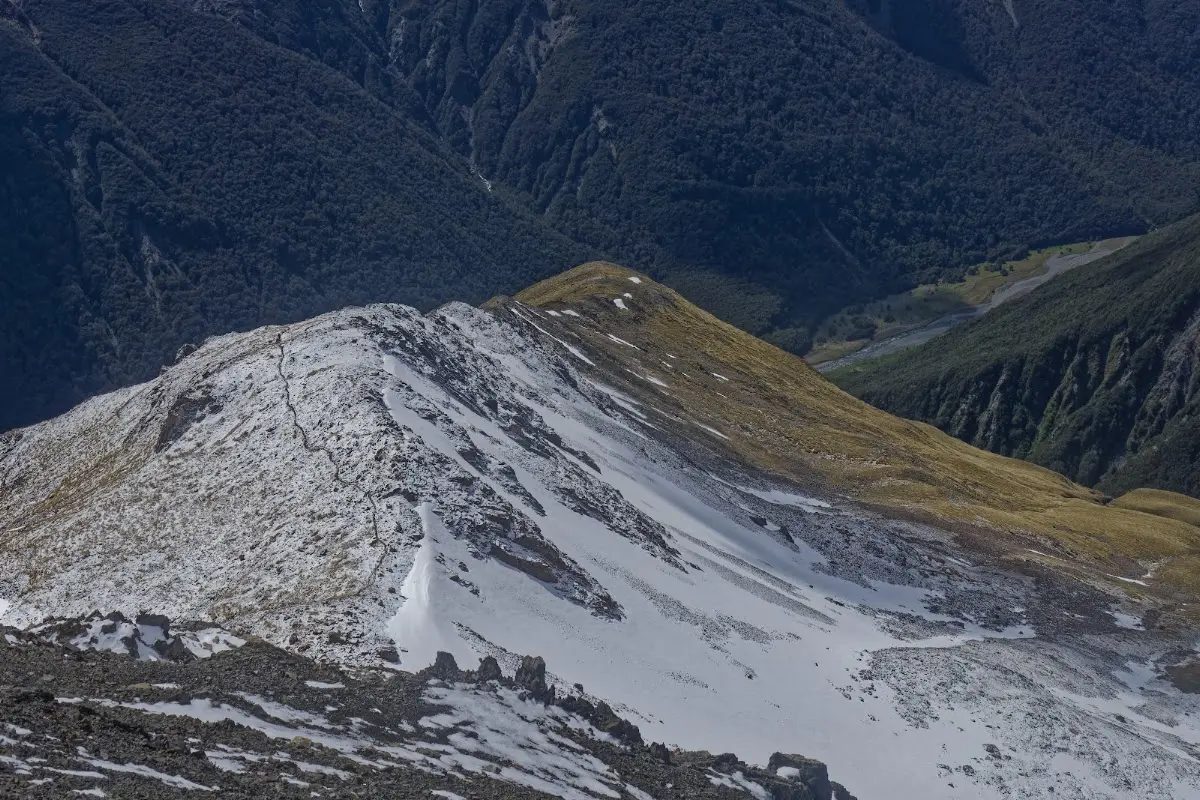
The braided river valley opening up far below — a whole mountain amphitheatre on the round trip.
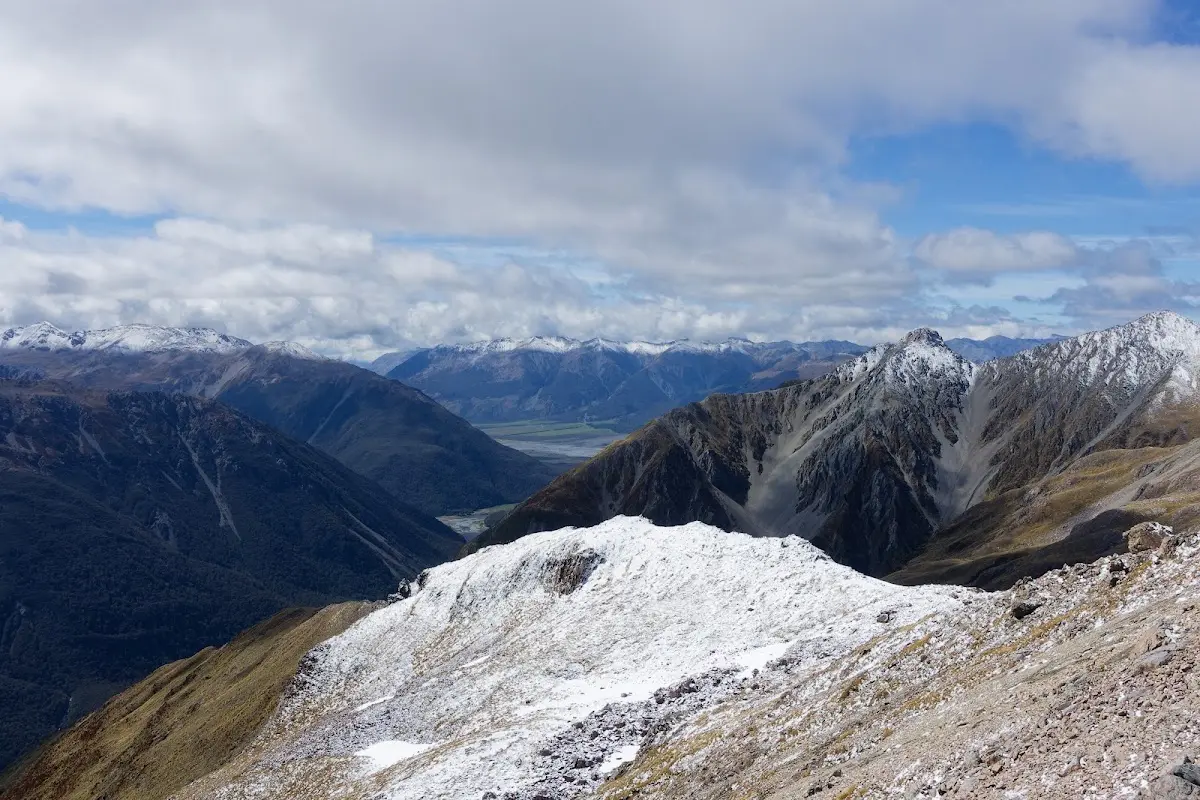
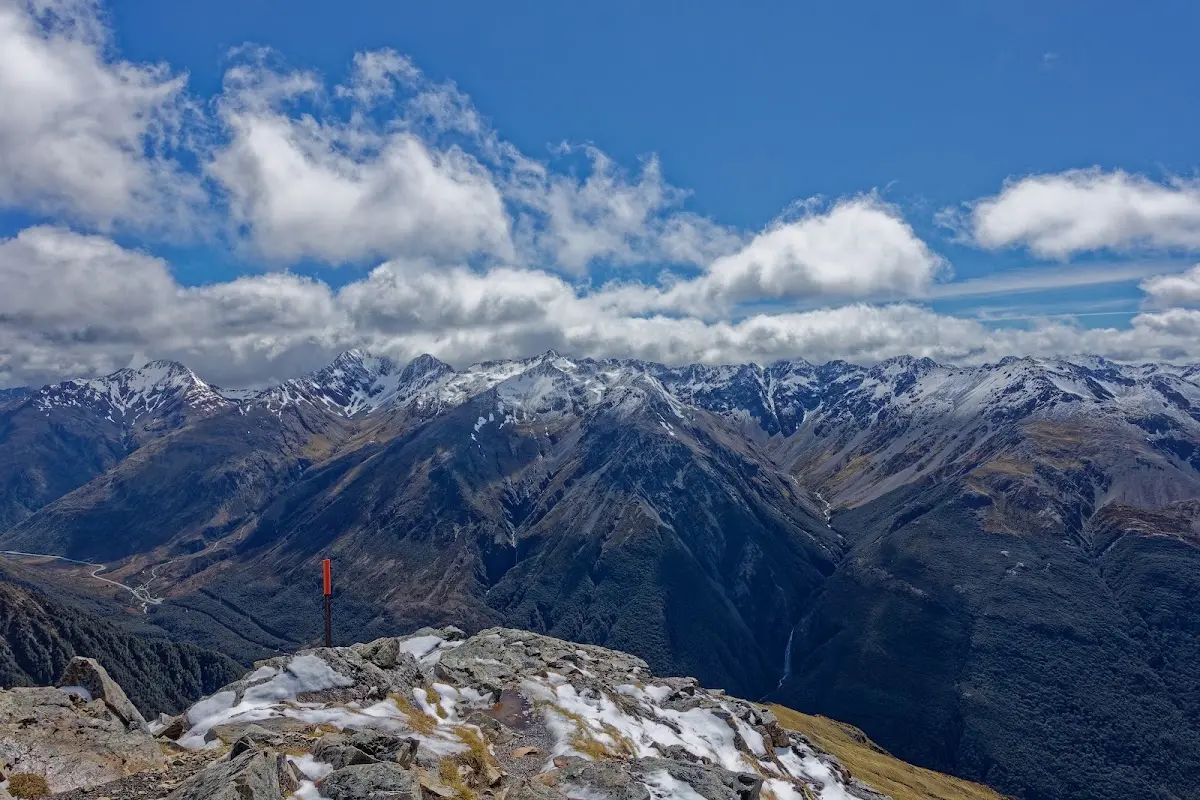
The route marker pole right at the summit ridge, an unbroken wall of peaks behind it.
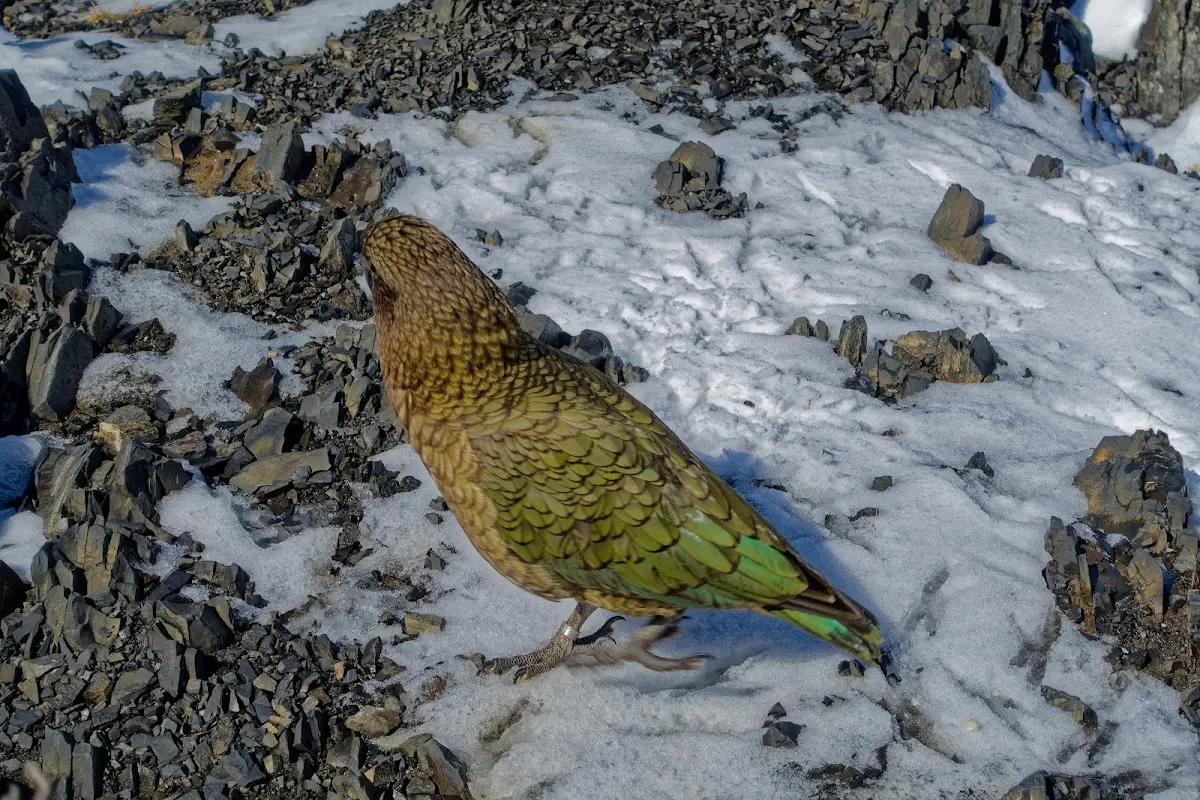
The first kea of the day, at home on the summit scree.
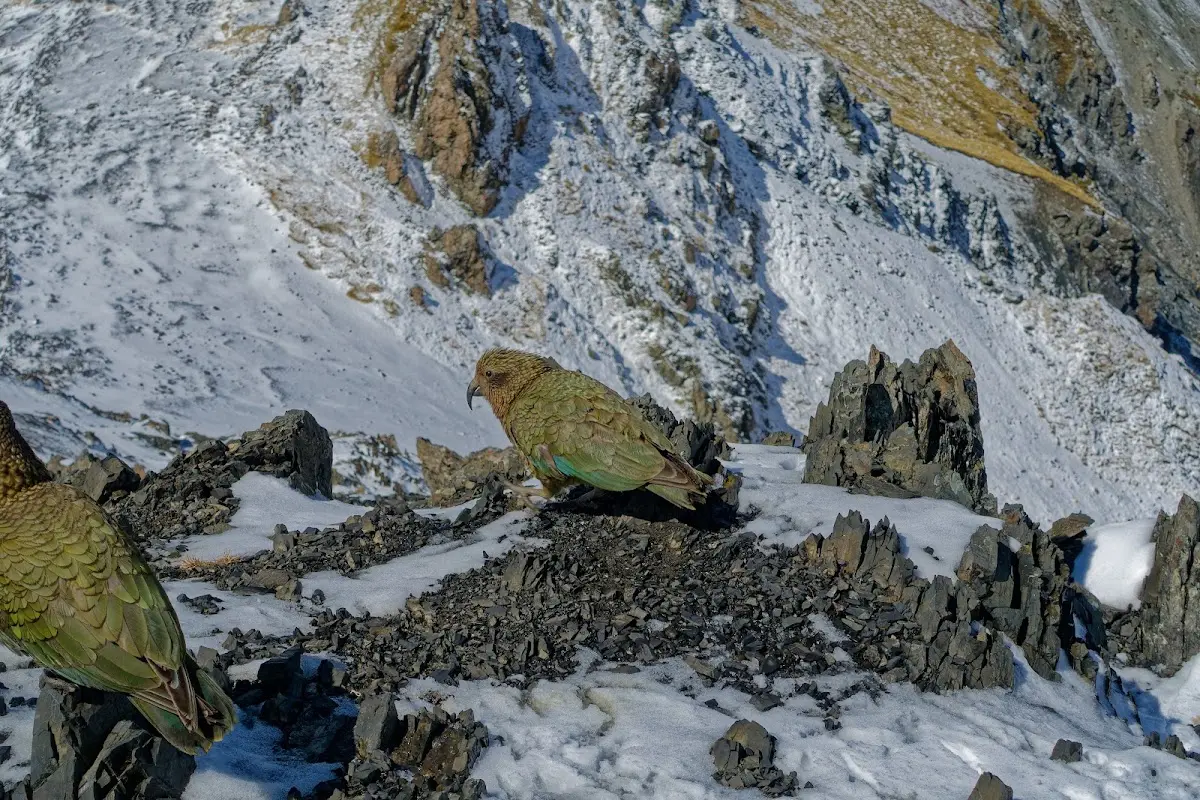
A whole pair of them working the summit rocks — "everywhere," just as promised.
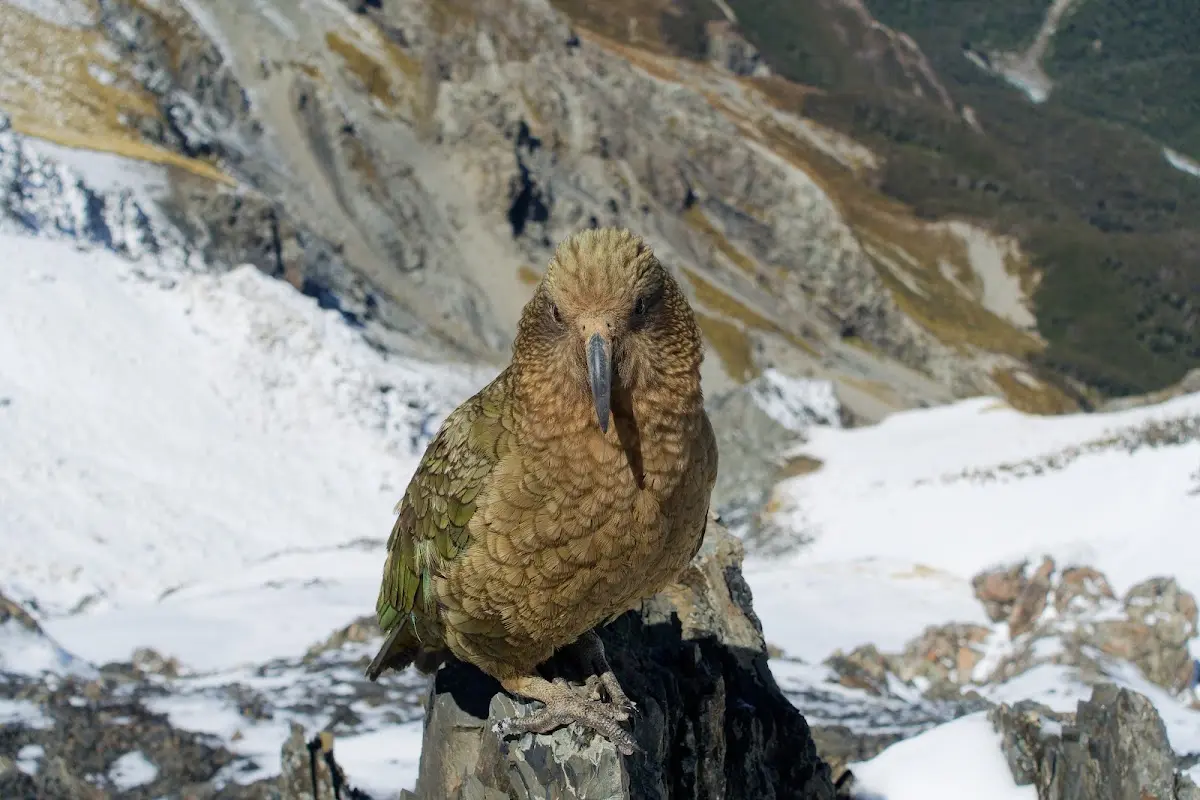
A kea posing right on cue, head cocked, watching closely — the curiosity these birds are known for.
Kea: A Species of Large Parrot
The kea is a species of large parrot in the family Strigopidae that is endemic to the forested and alpine regions of the South Island of New Zealand. It is known for its intelligence, curiosity, and ability to solve complex tasks.
Physical Characteristics:
The kea is a large parrot measuring 46 to 50 cm (18 to 20 in) in total length, with some specimens possibly reaching 55 cm (22 in).
Adult kea weigh between 750 and 1,000 g (1.65 and 2.20 lb), with males averaging 956 g (2.108 lb) and females averaging 779 g (1.717 lb).
The kea has mostly olive-green plumage with a grey beak having a long, narrow, curved upper beak.
The adult has dark-brown irises, and the cere, eyerings, and legs are grey.
It has orange feathers on the undersides of its wings.
The feathers on the sides of its face are dark olive-brown, the ones on its back and rump are orange-red, and some of the outer wing feathers are dull blue.
It has a short, broad, bluish-green tail with a black tip.
Feather shafts project at the tip of the tail and the undersides of the inner tail feathers have yellow-orange transverse stripes.
Diet and Feeding:
The kea is an omnivore, feeding on more than 40 plant species, beetle larvae, grasshoppers, land snails, other birds (including shearwater chicks), and mammals (including sheep, rabbits, and mice).
It has been observed breaking open shearwater nests to feed on the chicks after hearing the chicks in their nests.
It enjoys the flesh and bone marrow from carcasses.
The kea has also taken advantage of human garbage and "gifts" of food.
Tool Use Behavior:
The kea has been observed using tools, such as pebbles, to aid with its preening habits.
A bird named Bruce, who has a broken upper beak, wedged pebbles between his tongue and lower mandible and then utilized this arrangement to aid with his preening habits.
Relationship with Humans:
The kea is known for its curiosity and urge to explore and investigate, making it both a pest for residents and an attraction for tourists.
In 2017, the kea was voted New Zealand Bird of the Year in a campaign to raise awareness about the country's endangered wildlife.
The kea has been kept as pets before being protected, but rarely, since they were difficult to capture and destructive when in captivity.
People commonly encounter wild kea at South Island ski areas, where they are attracted by the prospect of food scraps.
The kea's naturally trusting behaviour around humans has also been indicated as a contributing factor in a number of recent incidents at popular tourist spots where kea have been purposely killed.
Conservation:
In the 1970s, the kea received partial protection after a census counted only 5,000 birds.
In 1986, it was given absolute protection under the Wildlife Act 1953.
Kea are also listed under Appendix II of the Convention on International Trade in Endangered Species of Wild Fauna and Flora (CITES), meaning international export/import (including parts and derivatives) is regulated.
Despite being classified as Nationally Endangered in the New Zealand Threat Classification System and endangered in the IUCN Red List and protected by law, kea are still deliberately shot.
Kea deaths due to traffic have prompted the NZ Transport Agency to install signs to help raise awareness, and to encourage people to slow down if necessary.
A citizen science project called the "Kea Database" was launched in 2017 that allows for the recording of kea observations to an online database.
Some are calling for kea to be reintroduced into predator-free zones on the North Island.
Kea conservation is supported by the NGO Kea Conservation Trust, founded in 2006 to protect kea.
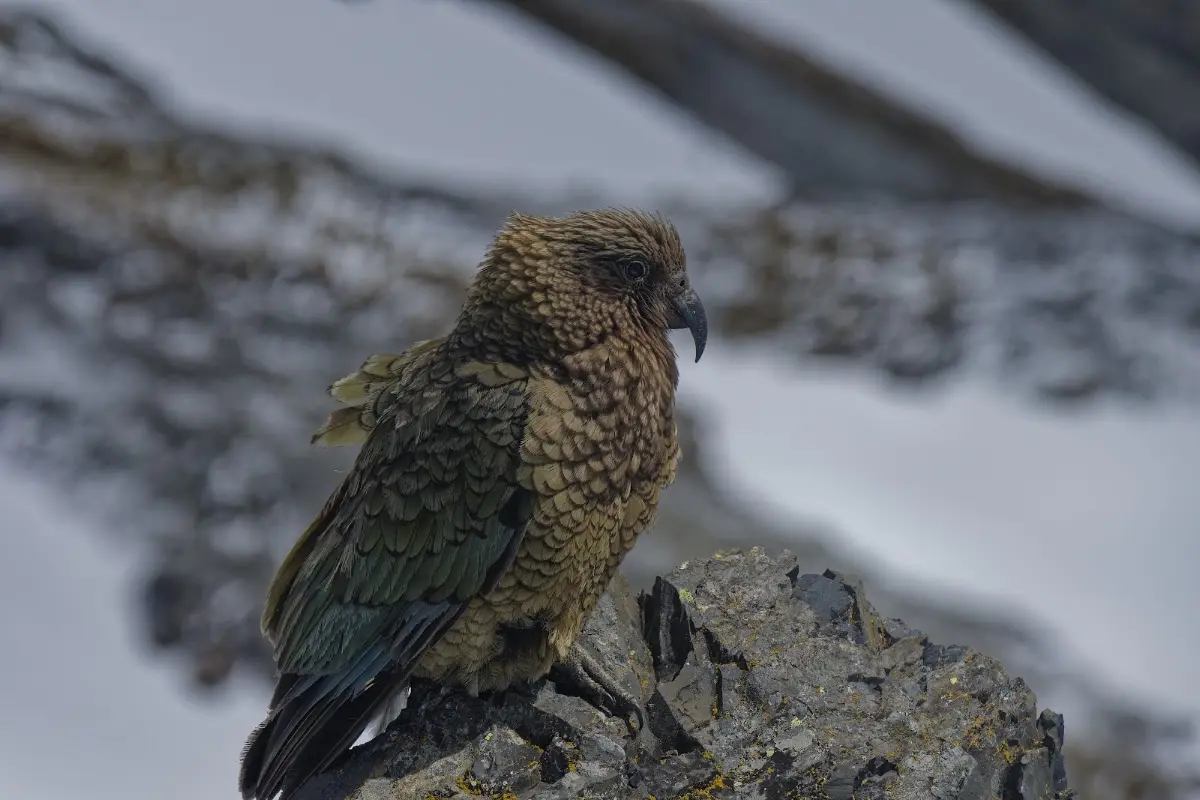
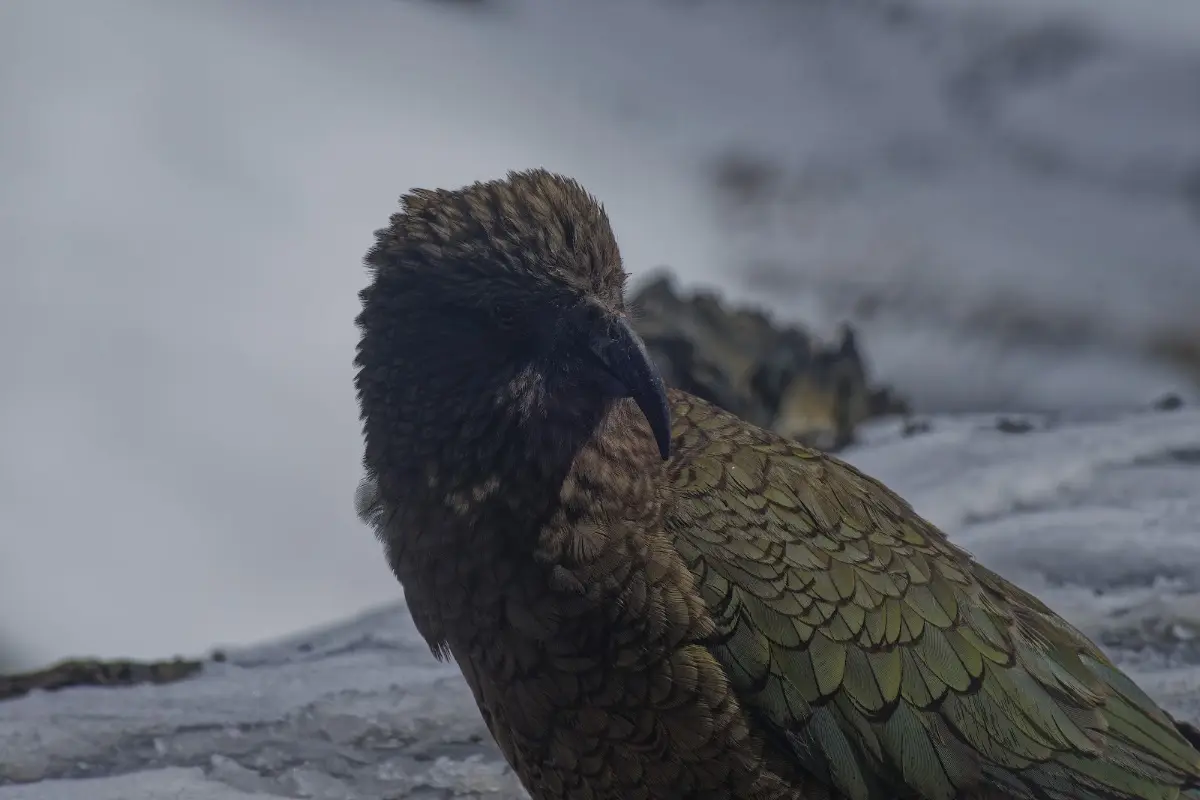
A close portrait showing off that long curved beak — built for tearing apart far more than just alpine plants.
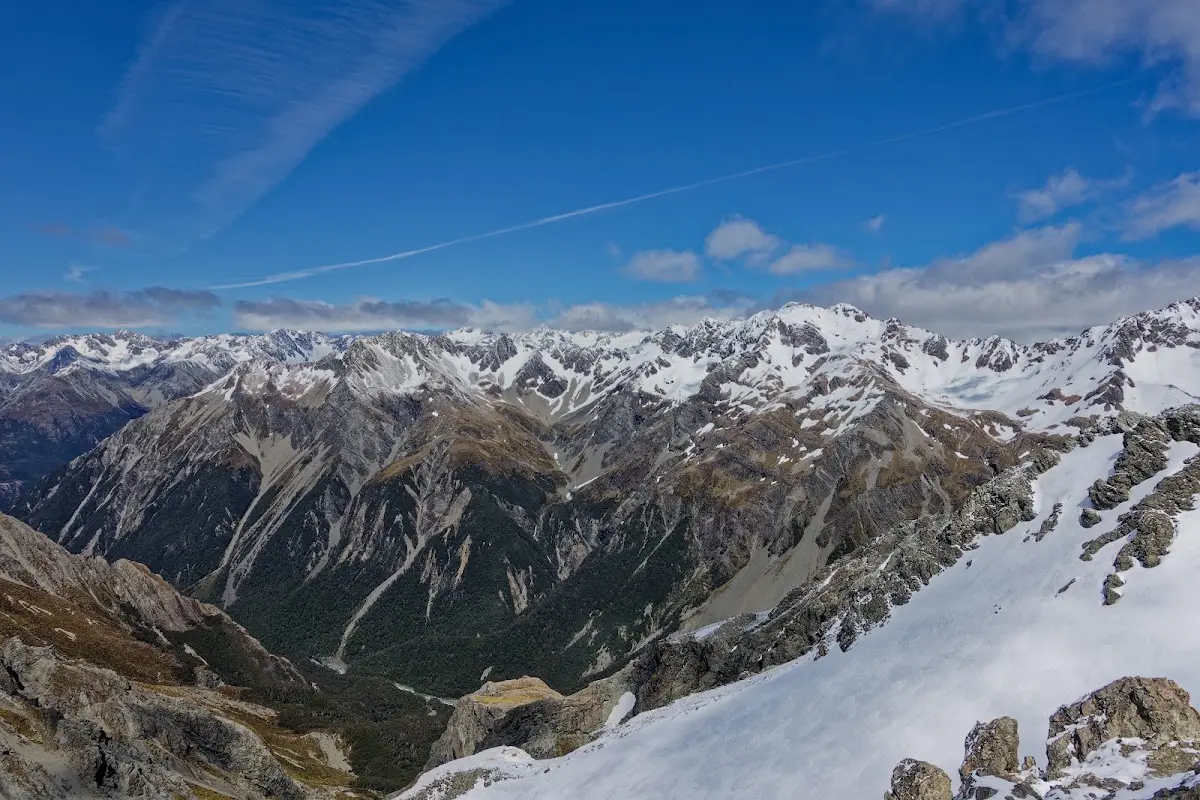
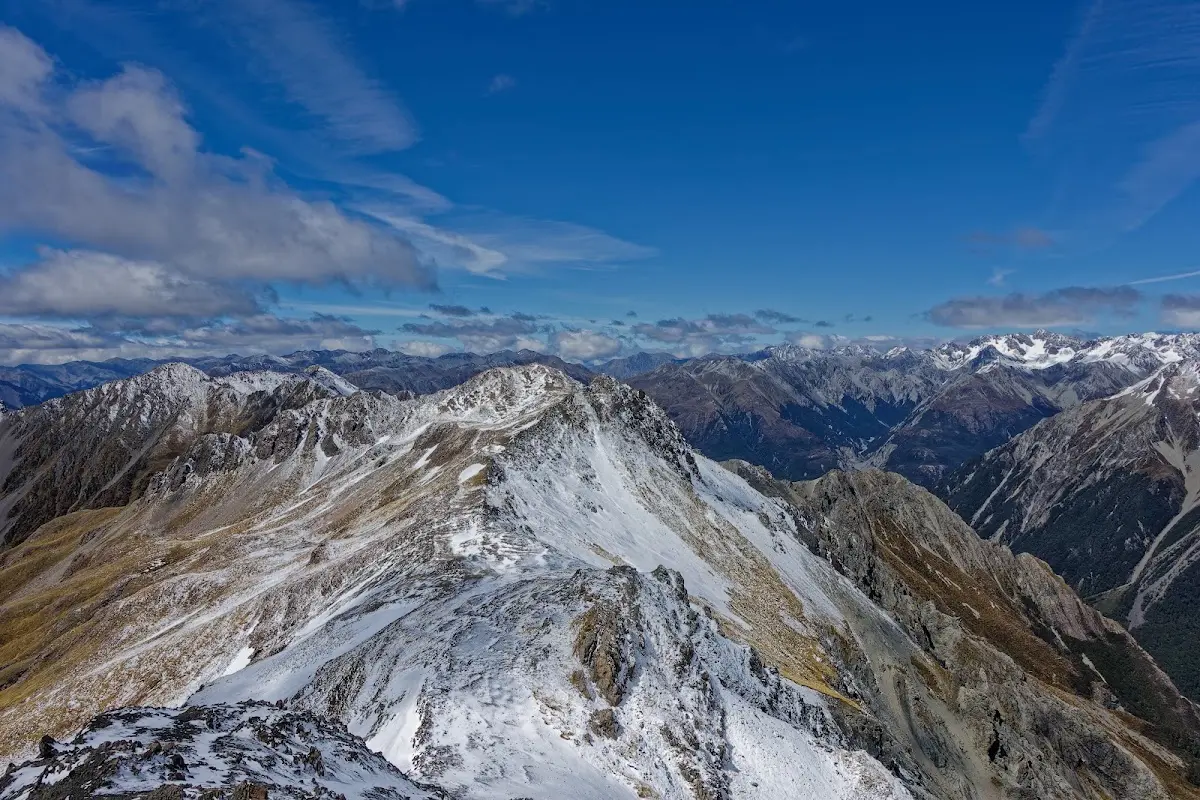
The full 360-degree summit view — mountains layered off in every direction, worth every metre of the climb.
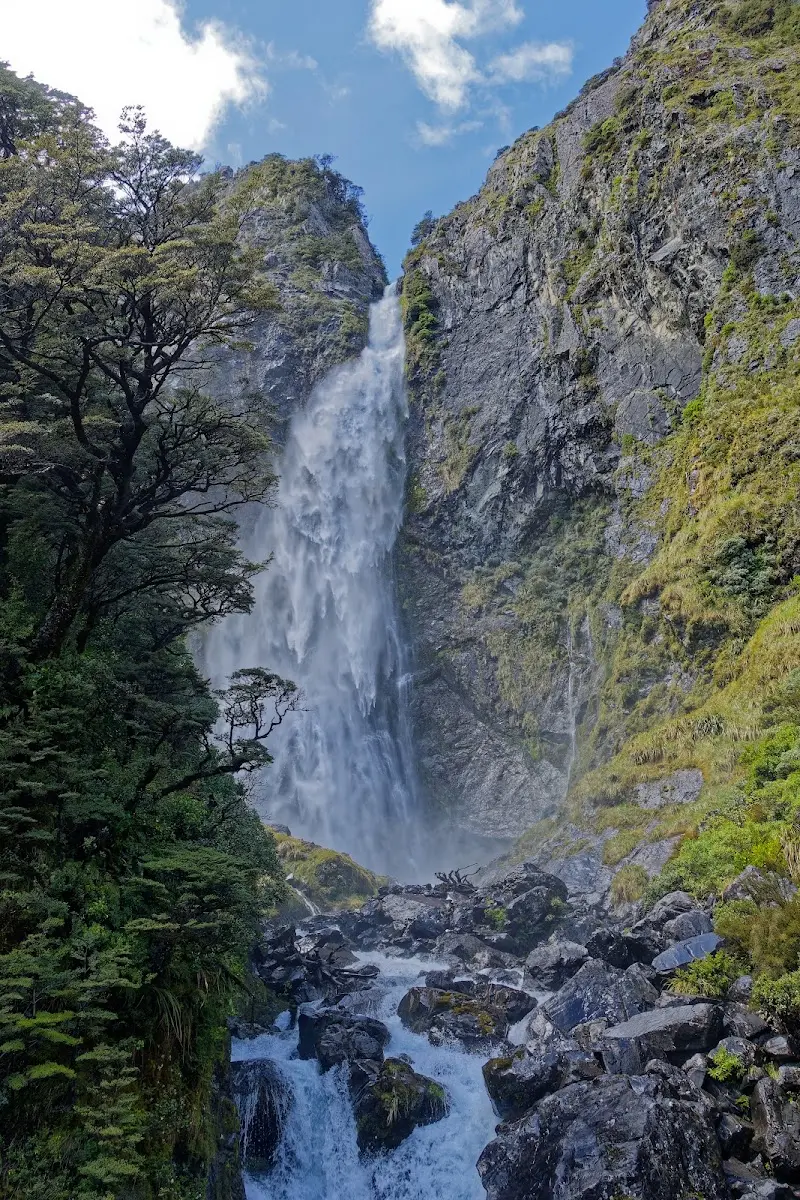
Right at the base — the full drop of the Devils Punchbowl waterfall, mist drifting off the plunge pool.
Despite all precautions during the night: attack of the mountain clowns. Kea strike back. Five holes in two different places, and two water bottles now useless.
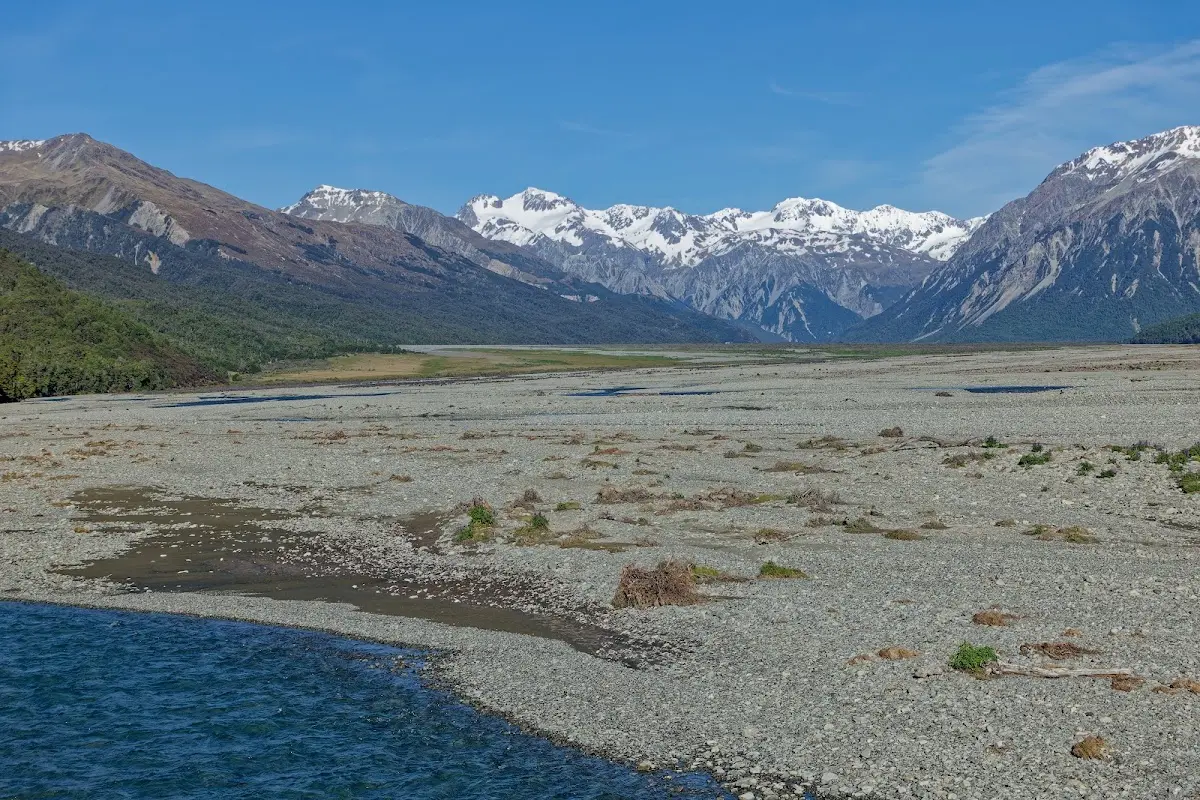
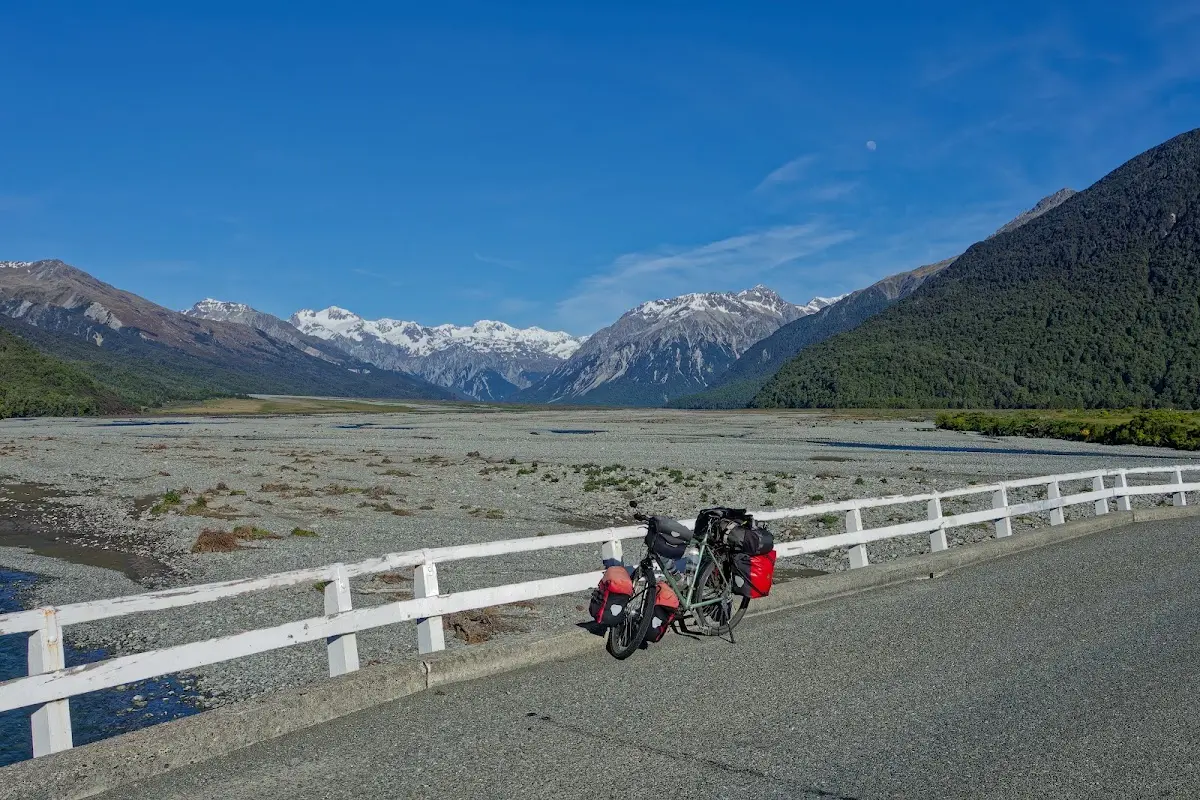
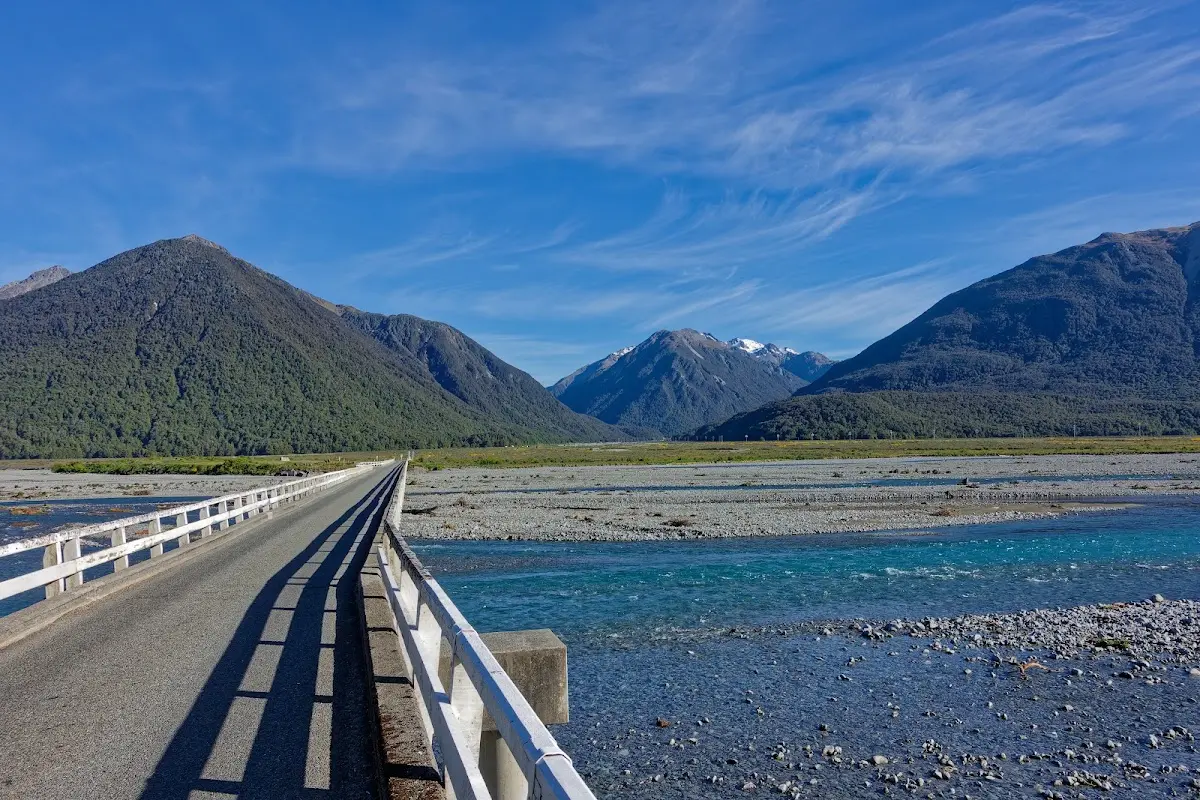
The bike parked on the bridge, still marked with five holes from the kea encounter — mountains of the main divide stretching out ahead.
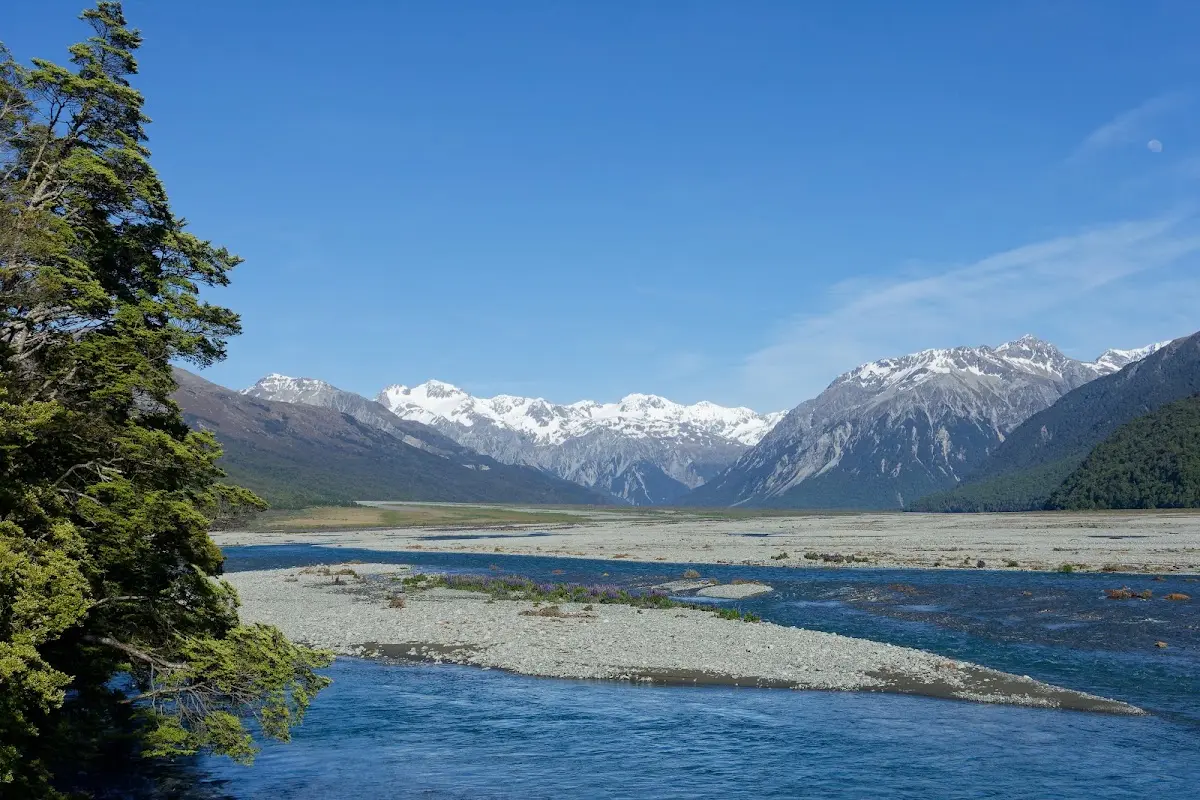
Bealey River
The Bealey River is a small river in New Zealand's Southern Alps, serving as a tributary to the Waimakariri River and forming the eastern approach to Arthur's Pass. It is named after Samuel Bealey, a 19th-century Superintendent of Canterbury Province.
In the early 20th century, the New Zealand Railways Department (NZR) used the Bealey River to stabilize its banks by dumping withdrawn locomotives and wagons, especially near the railway bridge. Some of these locomotives have been recovered by heritage groups for restoration, while others remain buried or scrapped.
During the 1920s, NZR operated an open-air workshop at a former quarry near Cora Lynn station to strip locomotives of parts before dumping them. A clean-up operation in the late 1990s buried many remaining parts in the quarry's access embankment.
In the 1950s and 1960s, NZR also used the Bealey River to scrap old wooden passenger coaches. These carriages were brought from Christchurch, burned in the riverbed to recover metal parts, and used as scrap or spares for other vehicles.
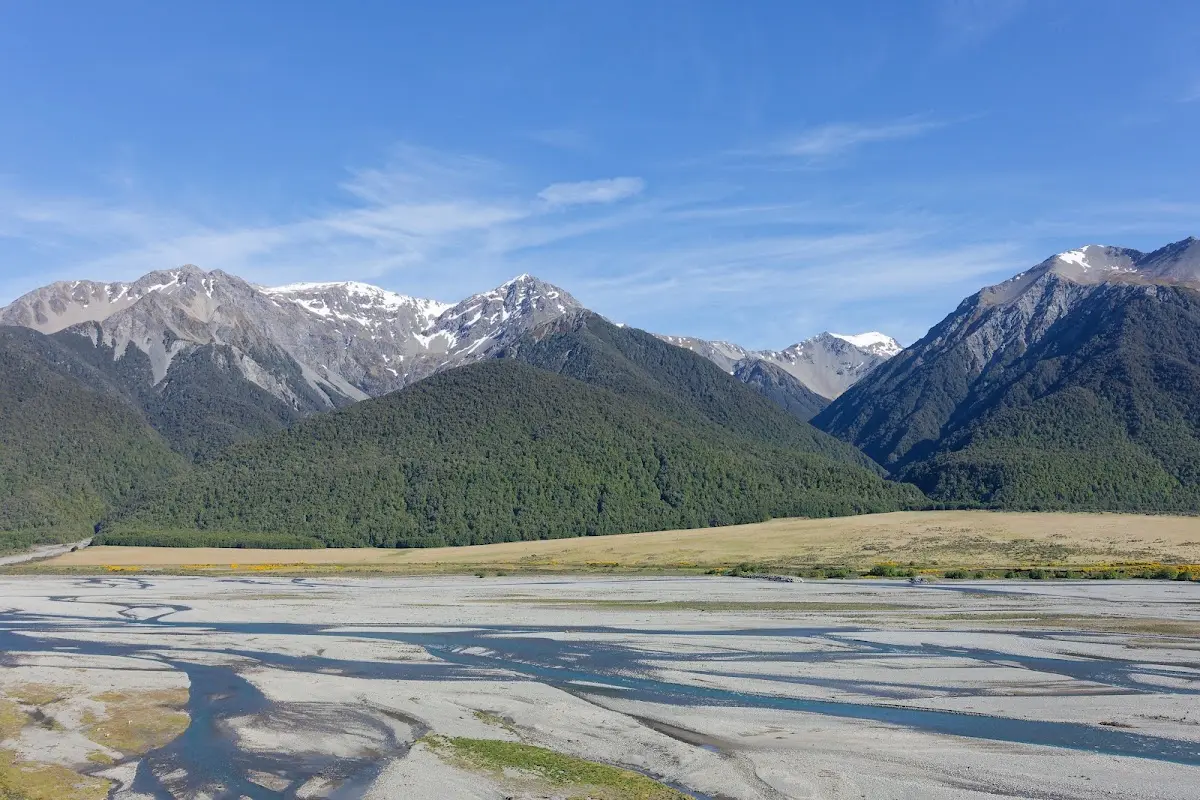
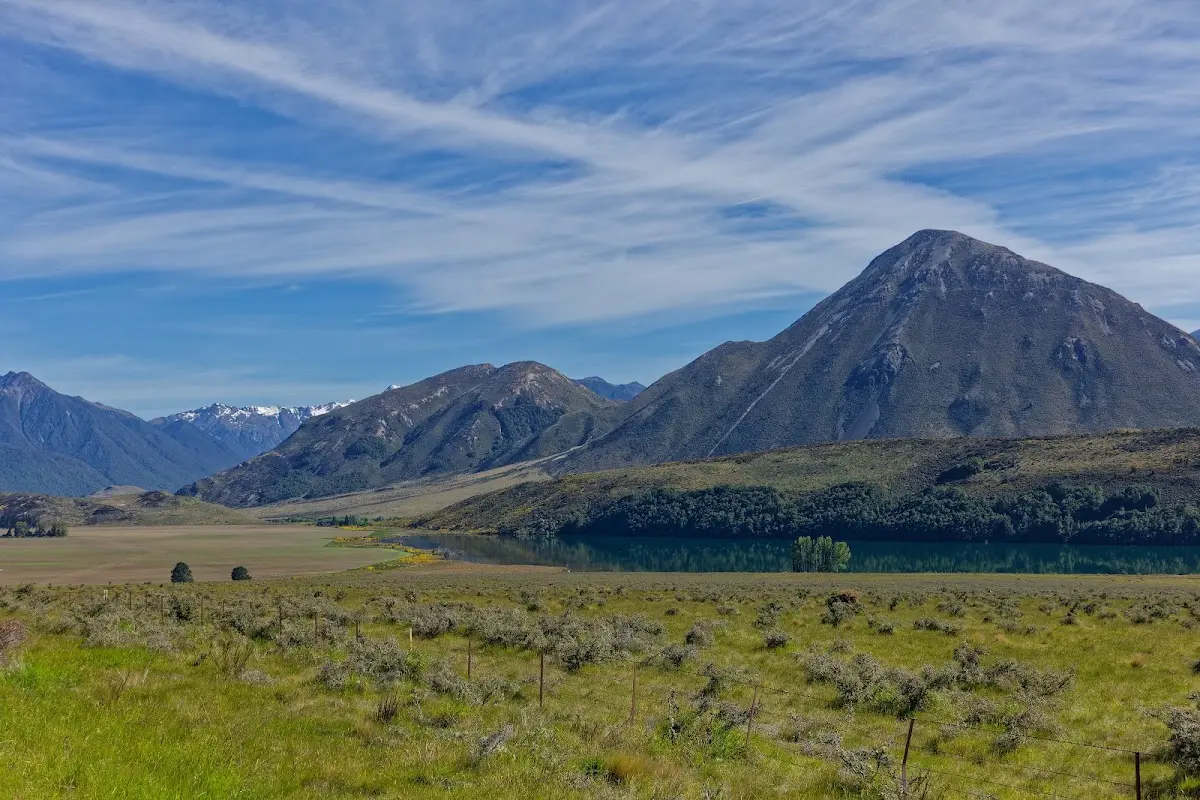
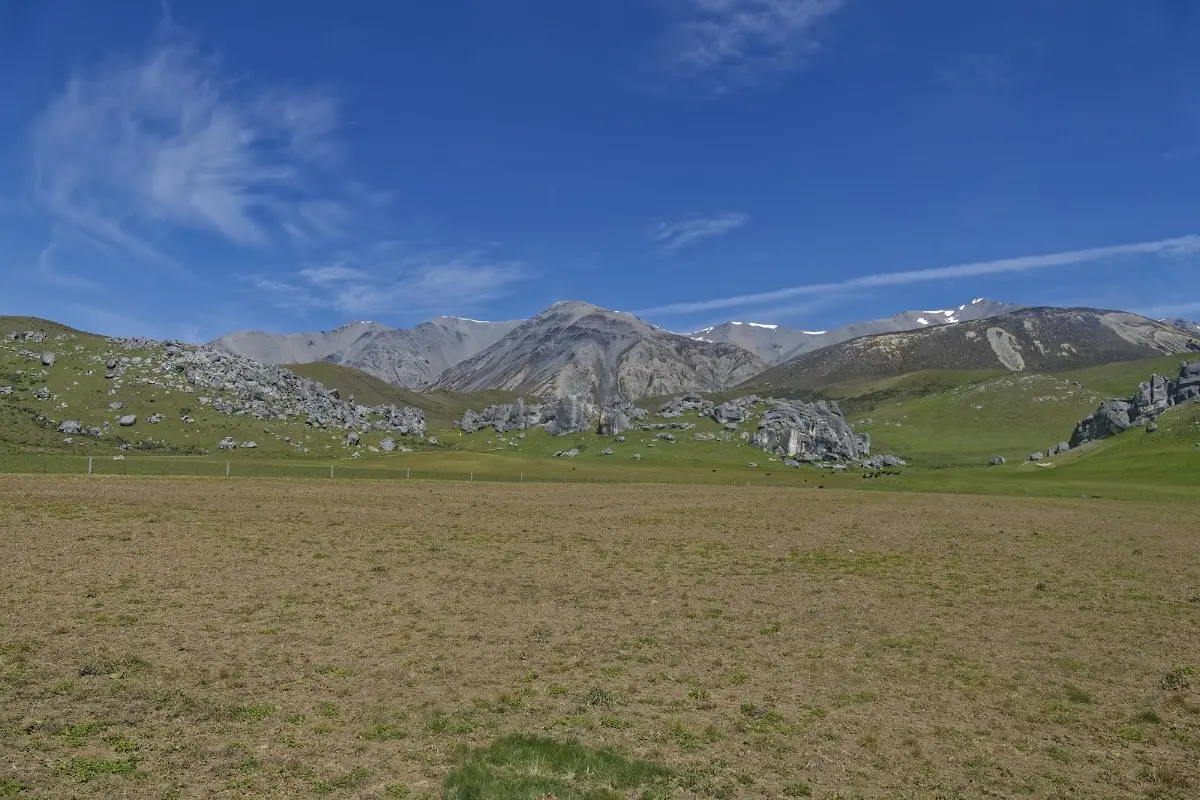
The famous limestone tors of Castle Hill scattered across green paddocks below the Craigieburn Range.
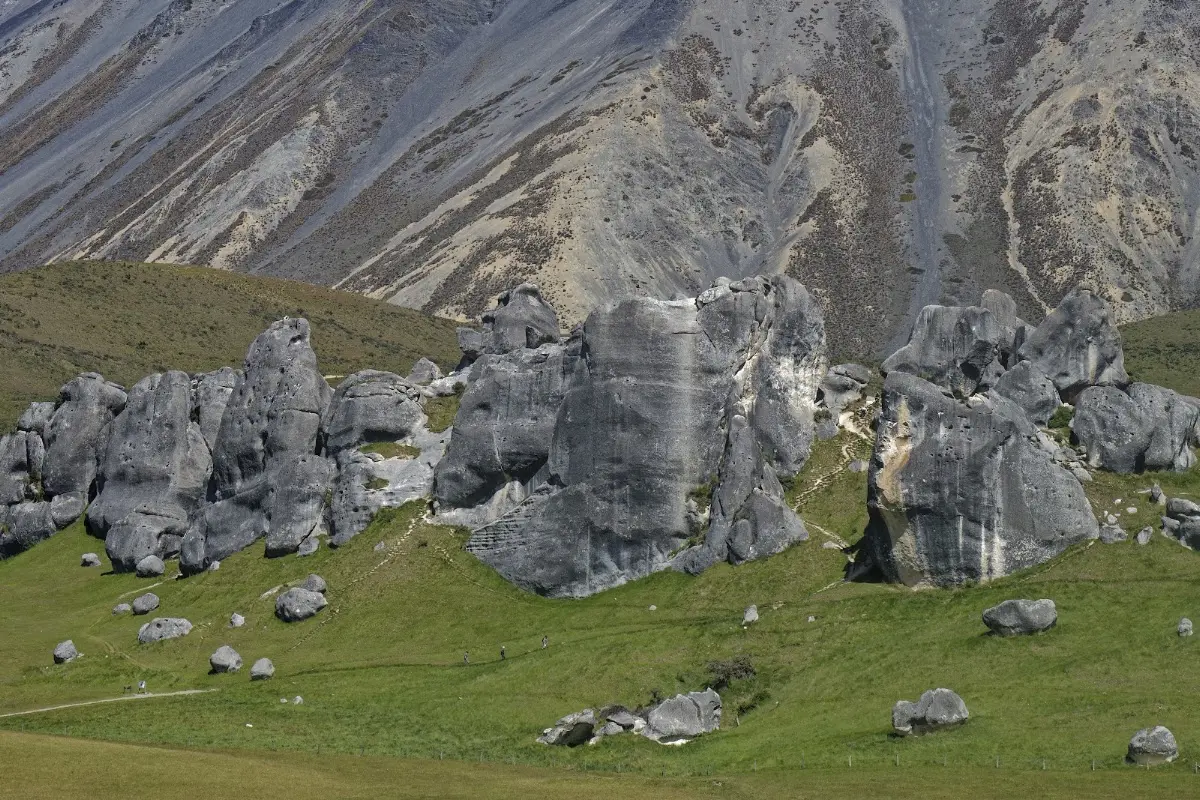
Massive weathered boulders towering over walkers threading between them, tiny by comparison.
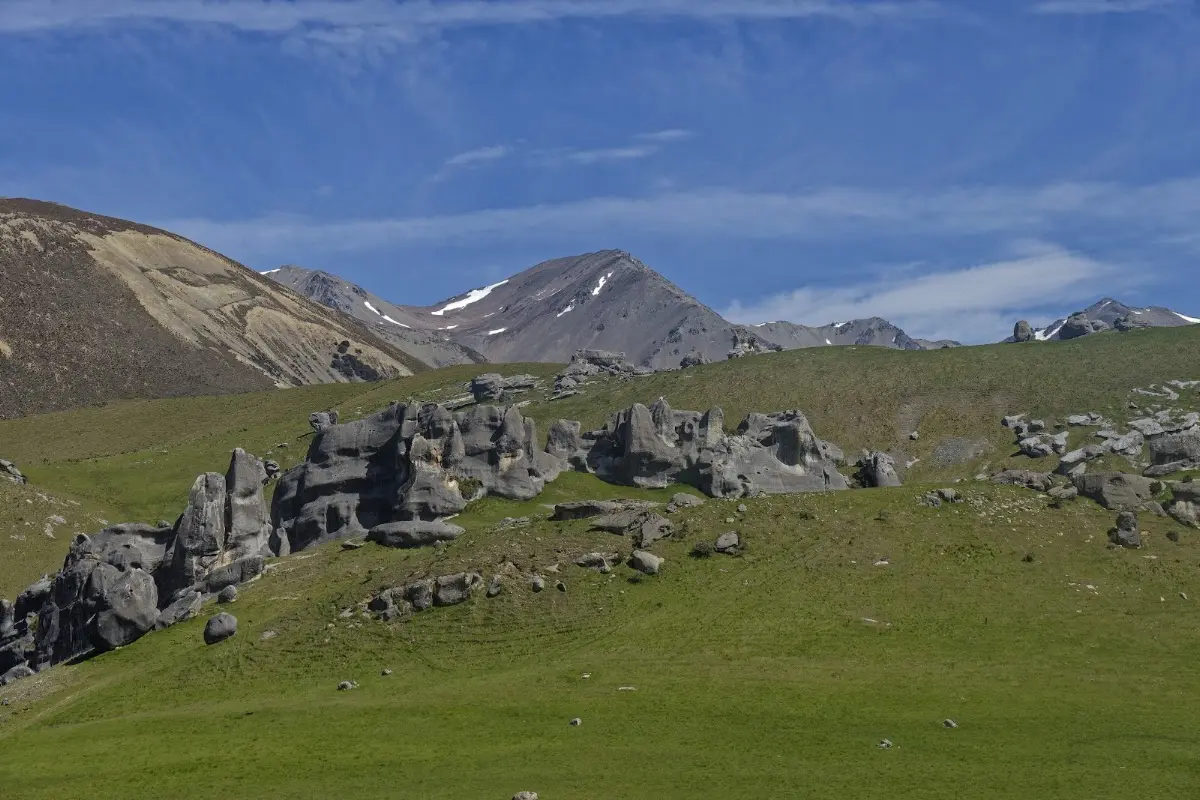
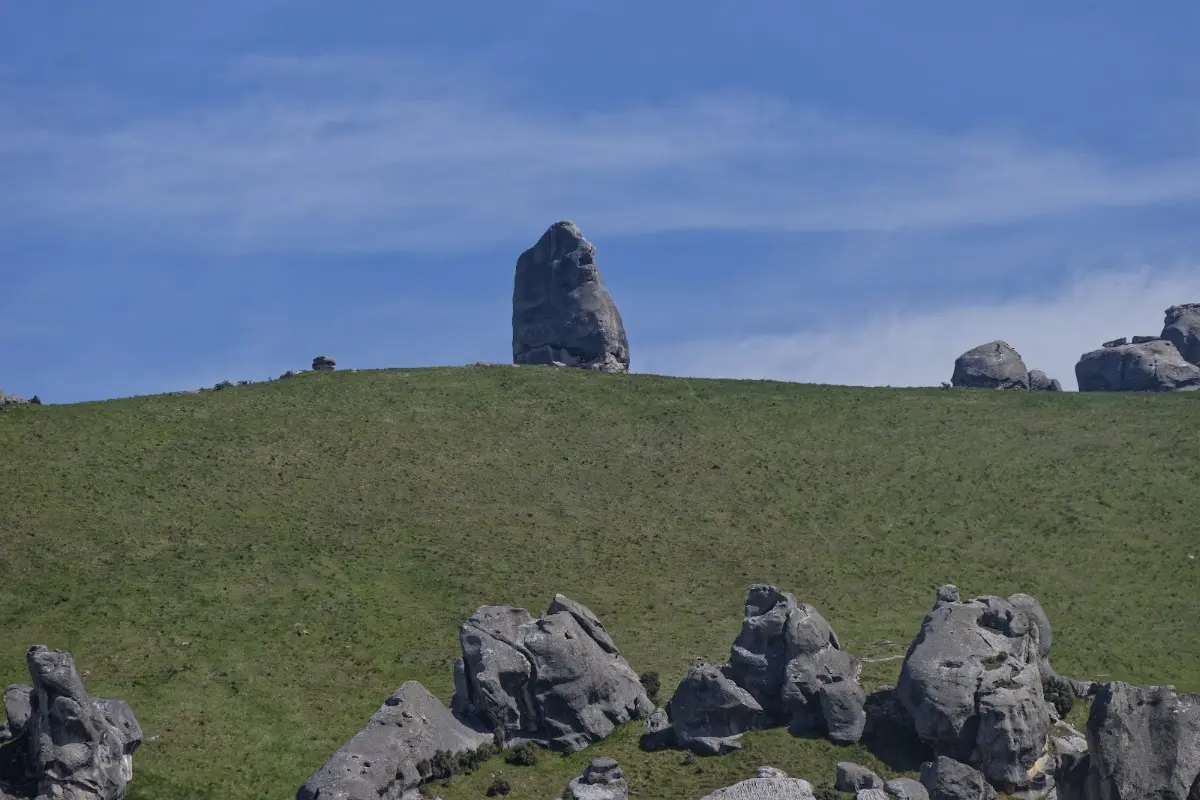
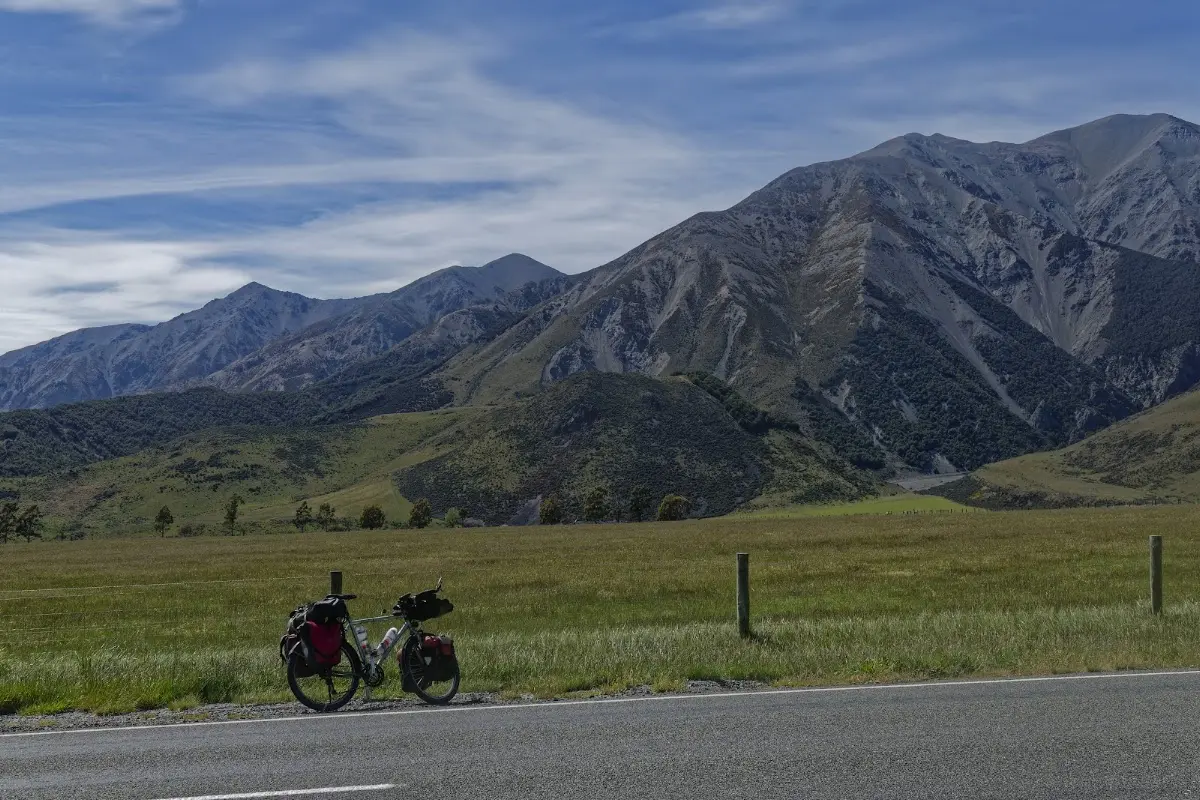
The bike parked roadside below the Craigieburns — one long climb behind, plenty more mountains still ahead.