Biking and Hiking New Zealand - Alps2Ocean - West Coast
On the bike at 7:30, over Haast Pass and down to Haast Beach for fish and chips. The plan had been to stay the night in Haast, but after shopping I carried on instead — Lake Paringa was next, its DOC campground already quite full.
Eight kilometres more to the Salmon Farm, from where I sent greetings to an au pair I'd met back at Mount Cook. Then, at 4 p.m., another 62 km on top of everything already ridden — over Haast Pass, along Haast Beach and Lake Paringa — to reach Fox Glacier by evening, a very long day at around 220 km and nine hours of pedalling. The campsite there was packed. Tomorrow, weather permitting: the lake, then the hot pools, then on toward Hokitika.
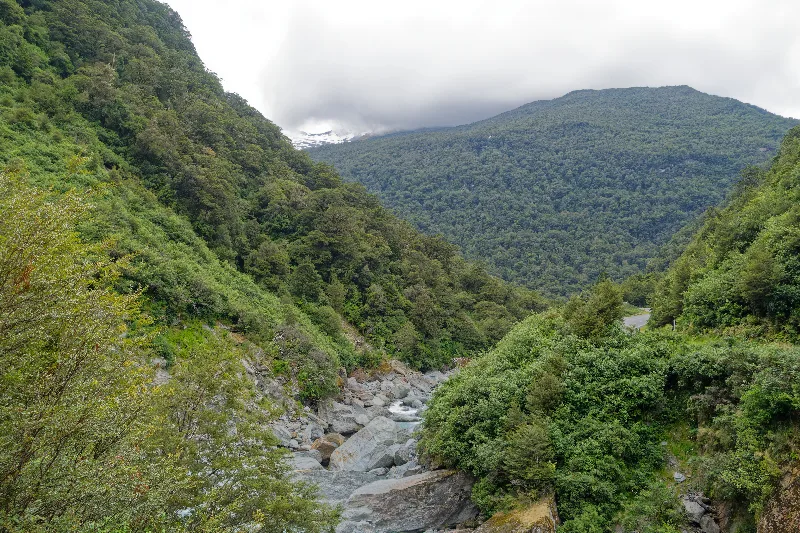
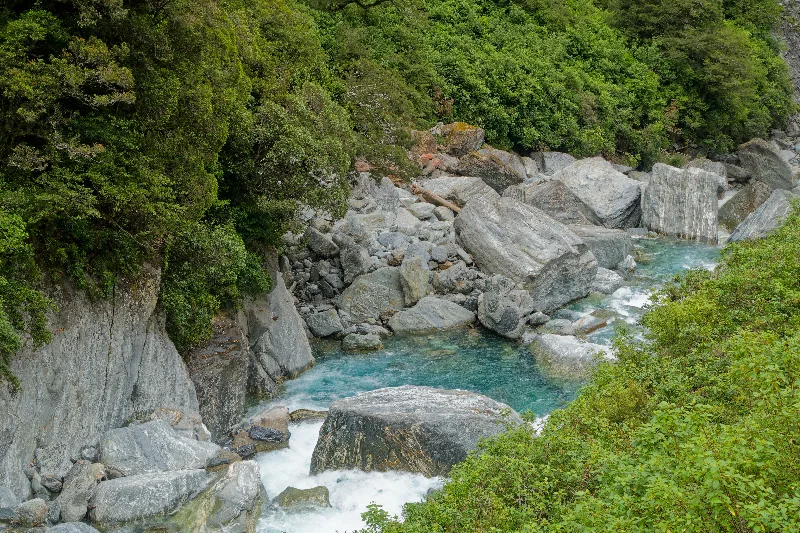
A turquoise pool below Haast Pass, granite boulders worn smooth by the current.
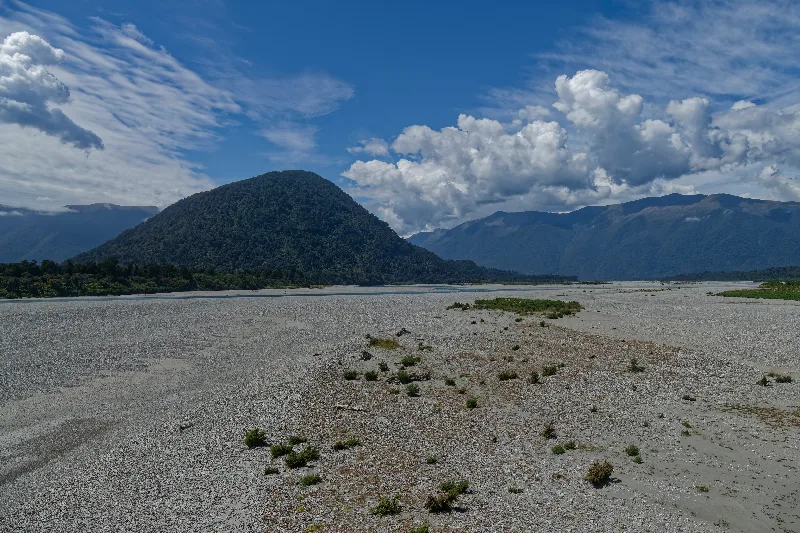
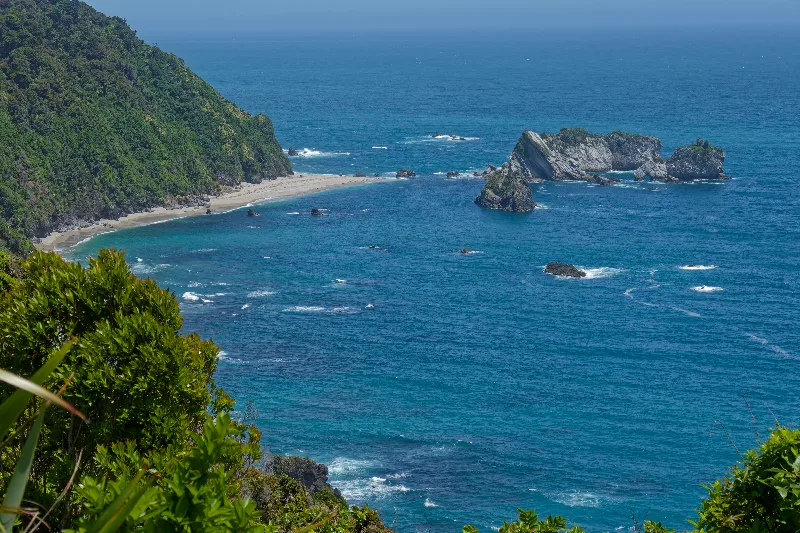
A rocky bay along the coast road north of Haast, a small islet offshore.
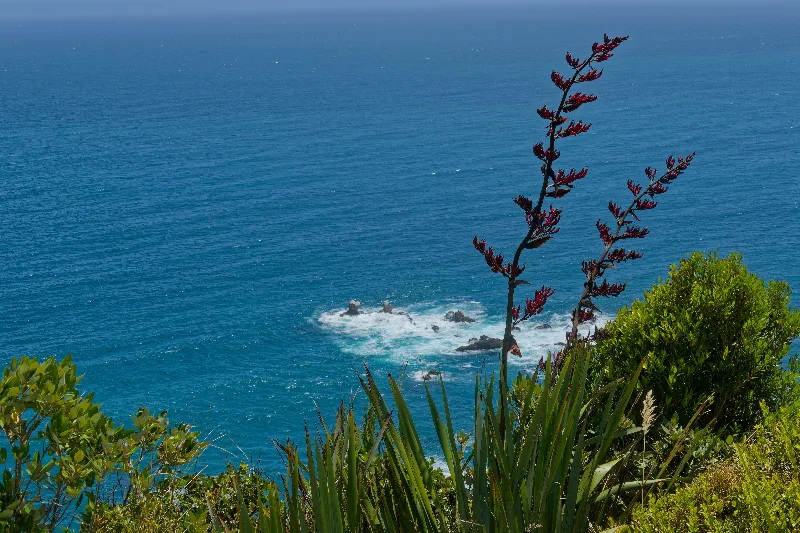
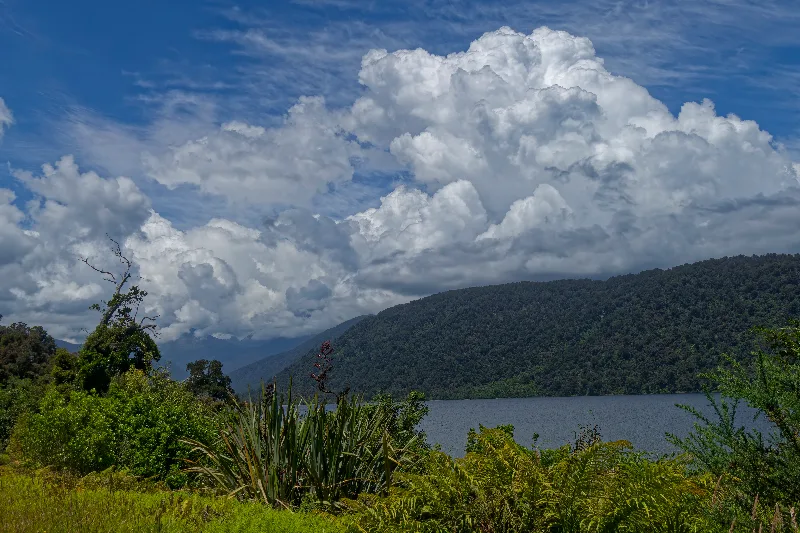
Lake Paringa under a huge build-up of afternoon cloud.
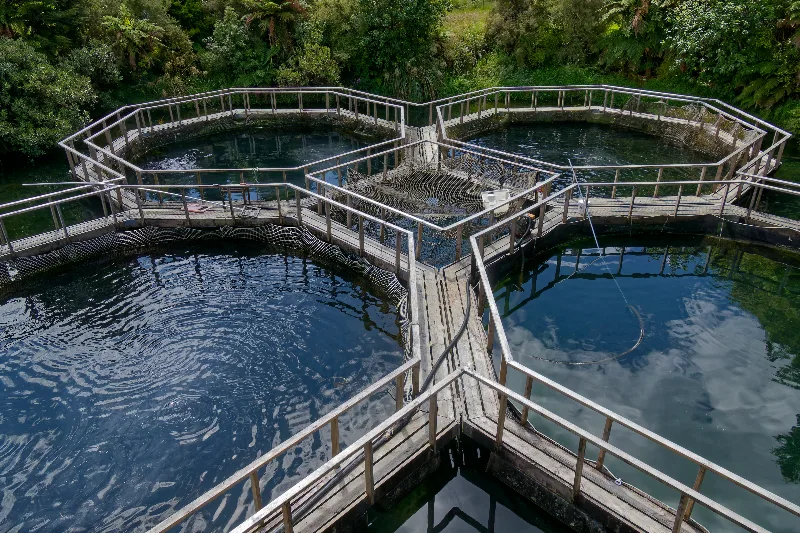
The Salmon Farm's circular rearing ponds, walkways strung between them.
Haast Pass and Fox Glacier
Haast Pass / Tioripatea, at just 563 metres, is the lowest and northernmost of the South Island's three main alpine crossings, linking Otago to the West Coast through Mount Aspiring National Park. Long used by Māori travelling to the coast for pounamu (greenstone), it remained a foot and pack-horse route into the 20th century and wasn't fully sealed as a road until 1995 — one of the last major highway links in the South Island to be completed.
Fox Glacier, on the West Coast side, is one of two glaciers (with Franz Josef, further north) that flow from the Southern Alps' permanent snowfields almost to sea level, through temperate rainforest — a combination found in very few places on Earth. Both glaciers have retreated substantially since the early 2000s, and access to the ice itself now depends heavily on helicopter and small-plane flights rather than the valley walks that used to reach much closer.
Stretching and packing up in the morning, on the road by 9:05. Across to Lake Matheson first — the famous "mirror lake" — though the constant noise of helicopters ferrying tourists to the glaciers took some of the shine off it.
On via Franz Josef Glacier and over Mount Hercules — three hills in total, not an easy ride, but in very hot, very clear, long-sightline weather. A few detours and complications getting into Hokitika, since one campsite was closed; ended up backtracking 5 km toward Greymouth and back again before finding a site. Checked in at 18:45, two nights booked for $20 — no Wi-Fi, no barbecue, so points deducted for that. Passed the 7000 km mark for the trip today — further than I've ever cycled on a single trip before.
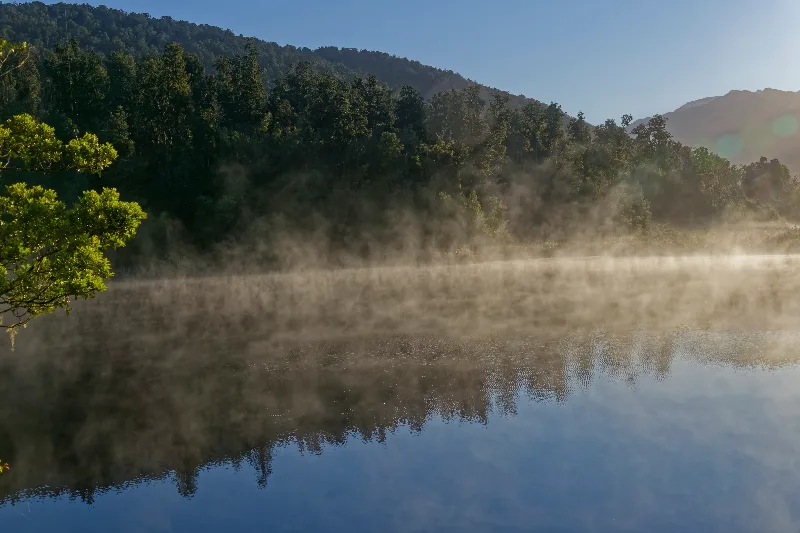
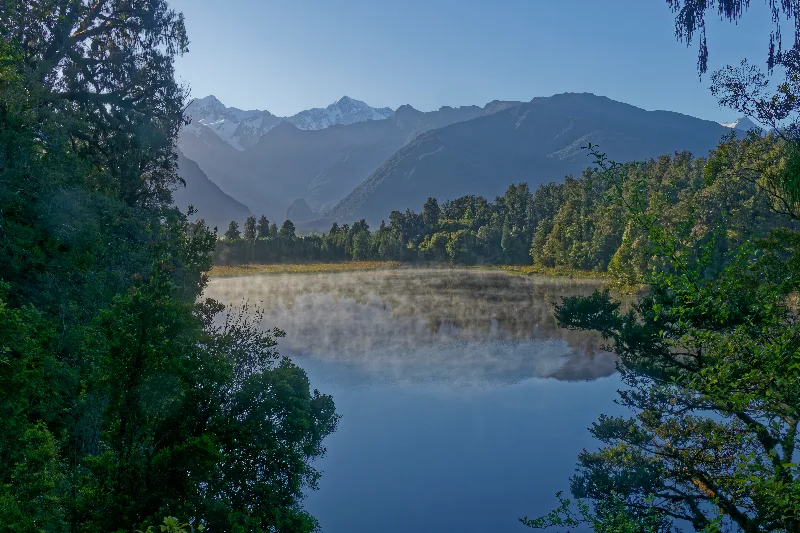
Mist rising off the water at first light, before the walk out to Lake Matheson.
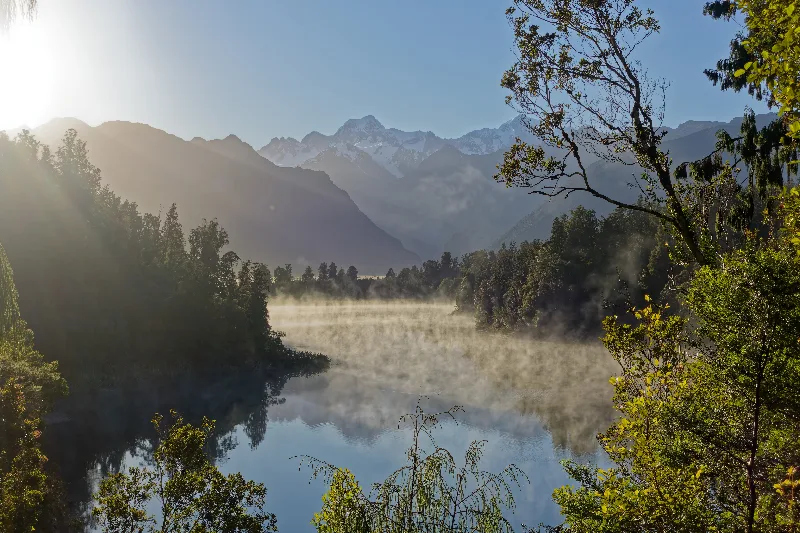
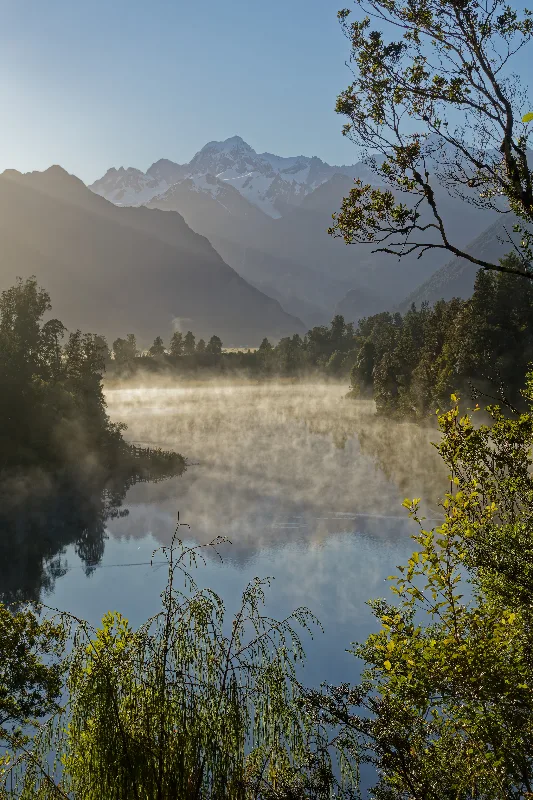
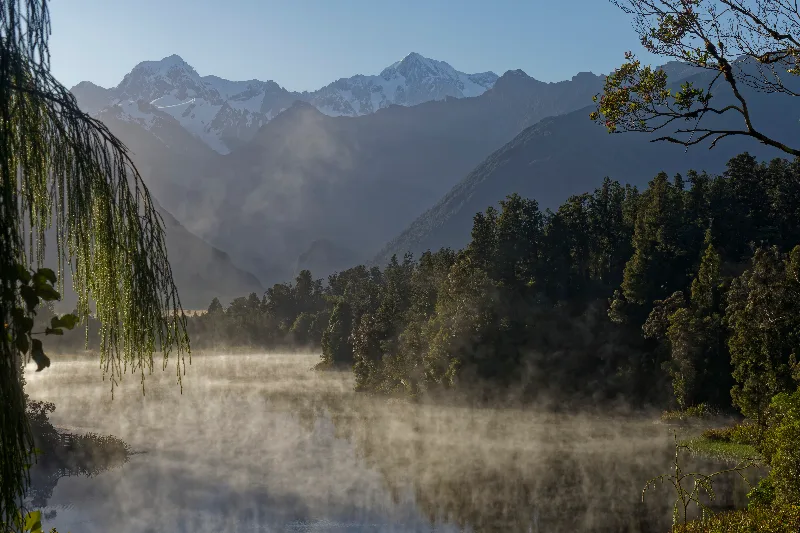
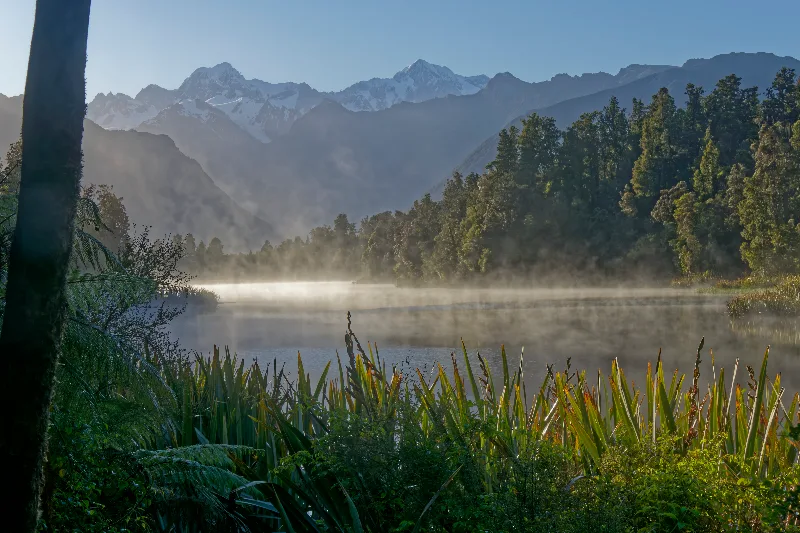
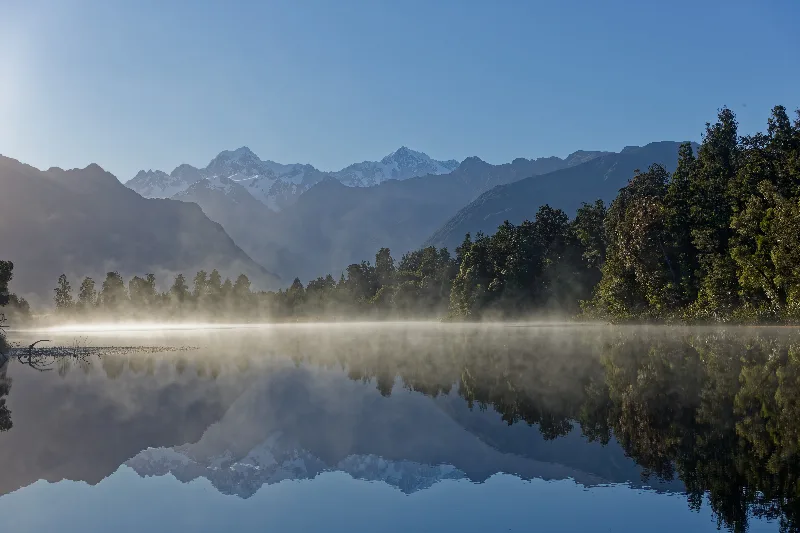
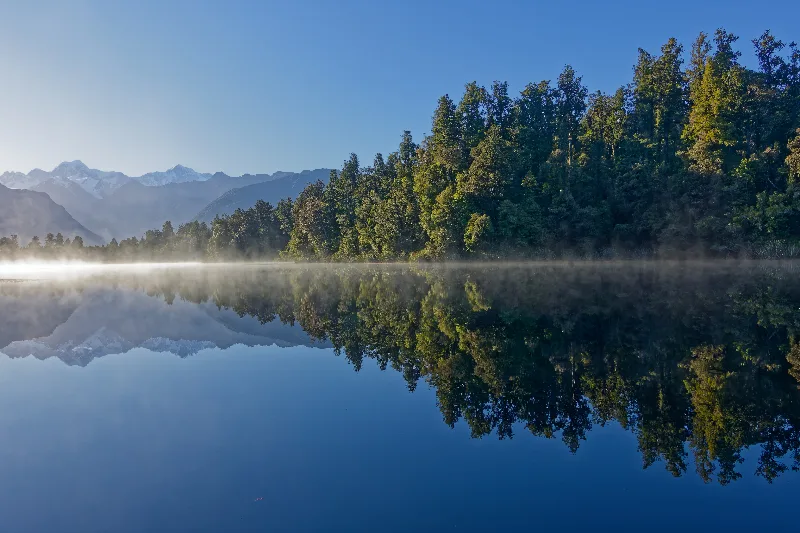
Lake Matheson living up to its "mirror lake" name — a perfect reflection, helicopters not yet started for the day.
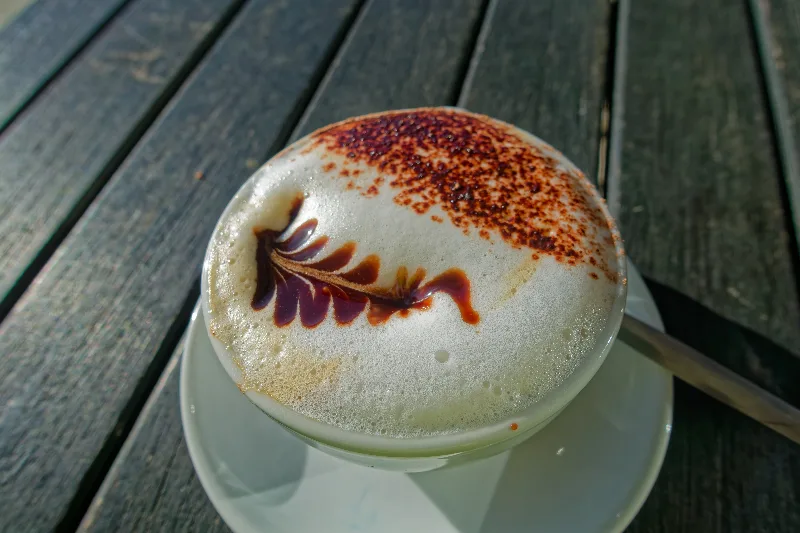
Coffee with a fern-leaf pattern in the foam, before the long ride to Hokitika.
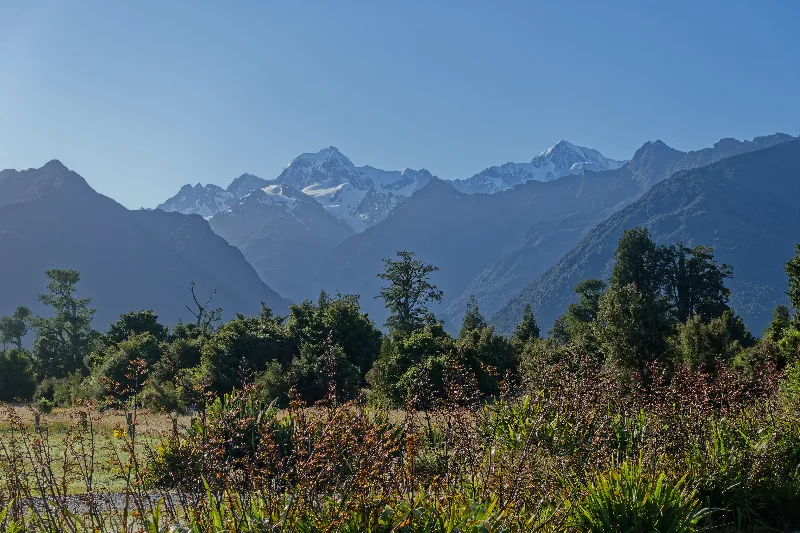
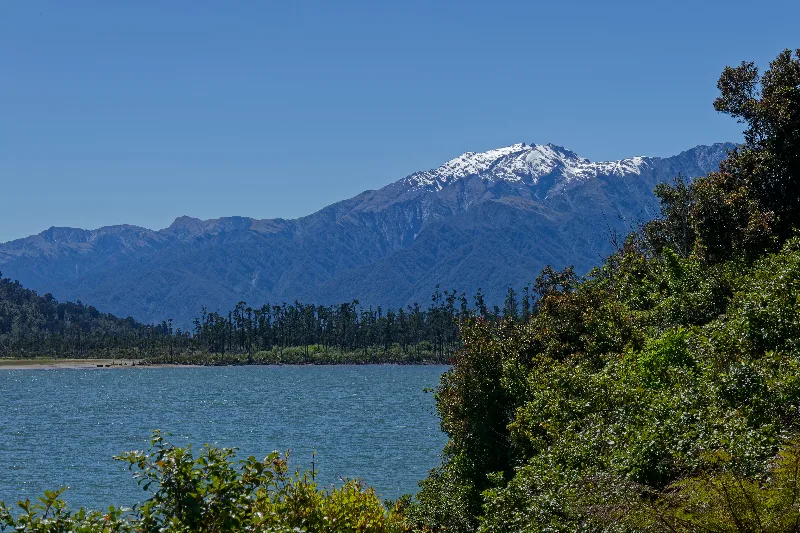
Lake Mapourika, right beside the highway between Franz Josef and Hokitika.
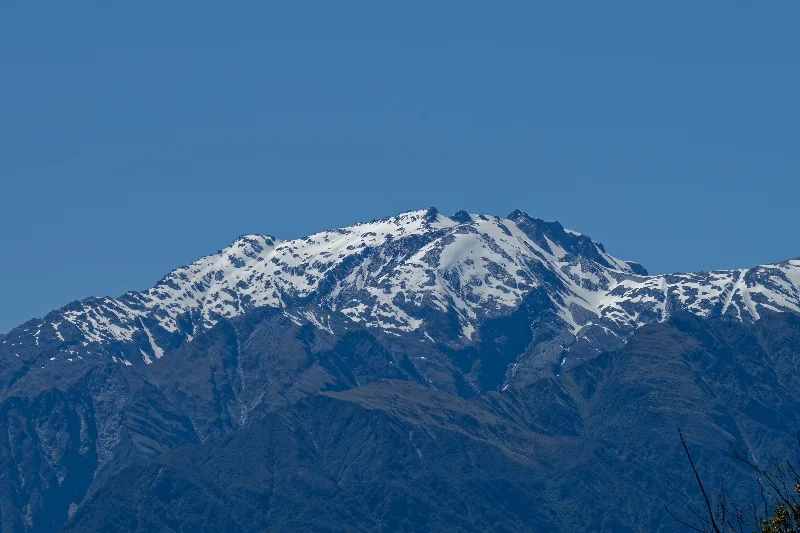
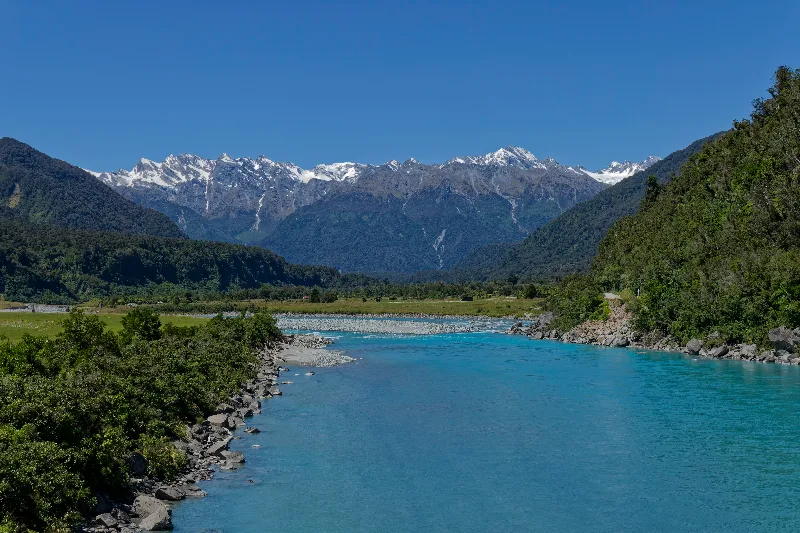
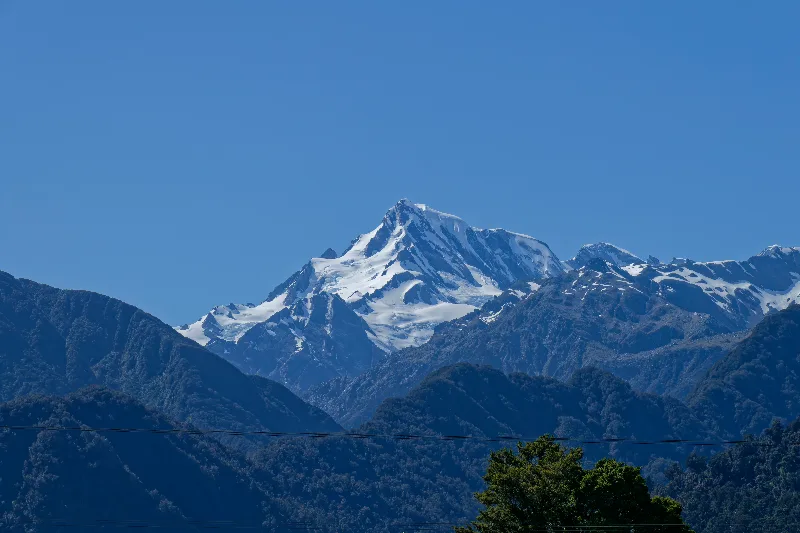
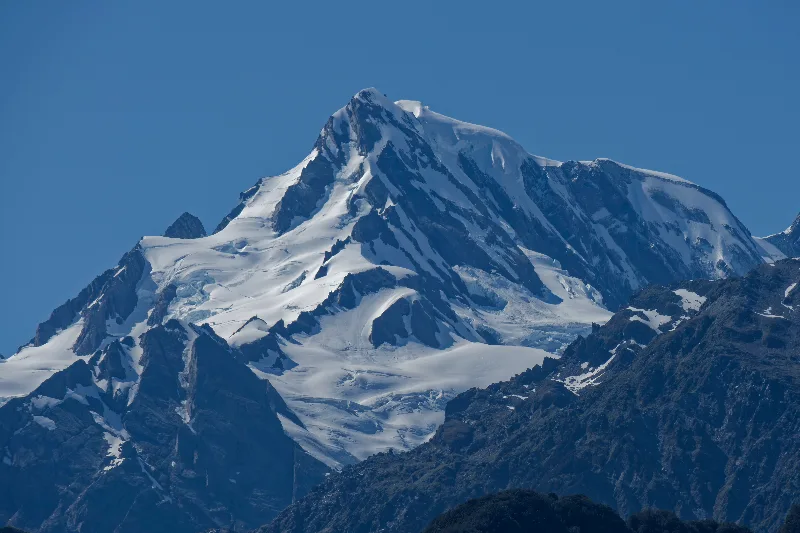
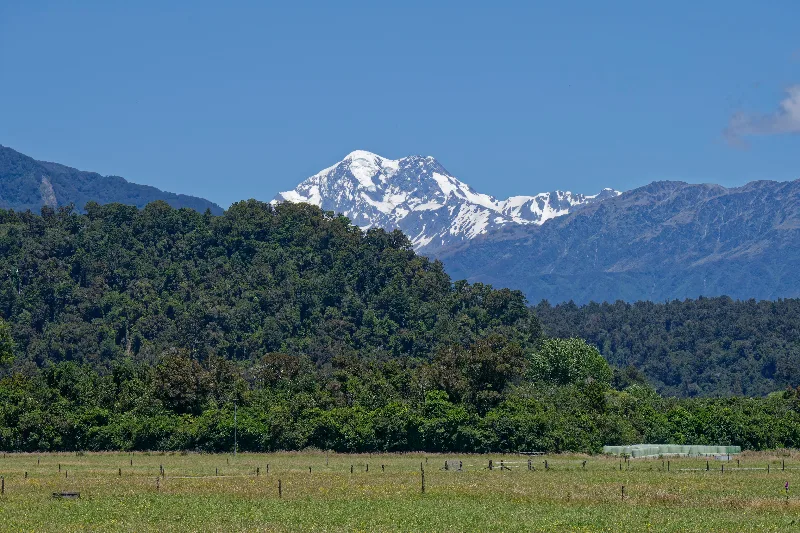
Glacial blue water near Franz Josef, snowy peaks still visible behind despite the heat.
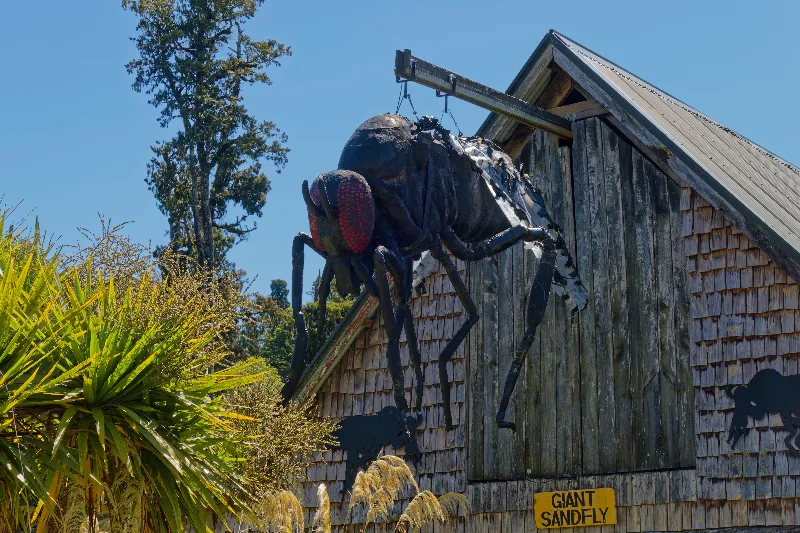
A giant sandfly sculpture mounted on a roadside building — the West Coast's least favourite resident, made into a landmark.
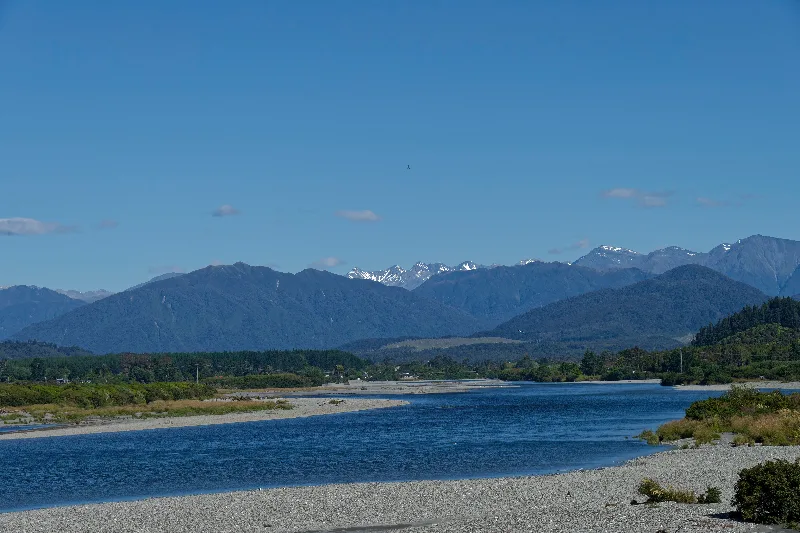
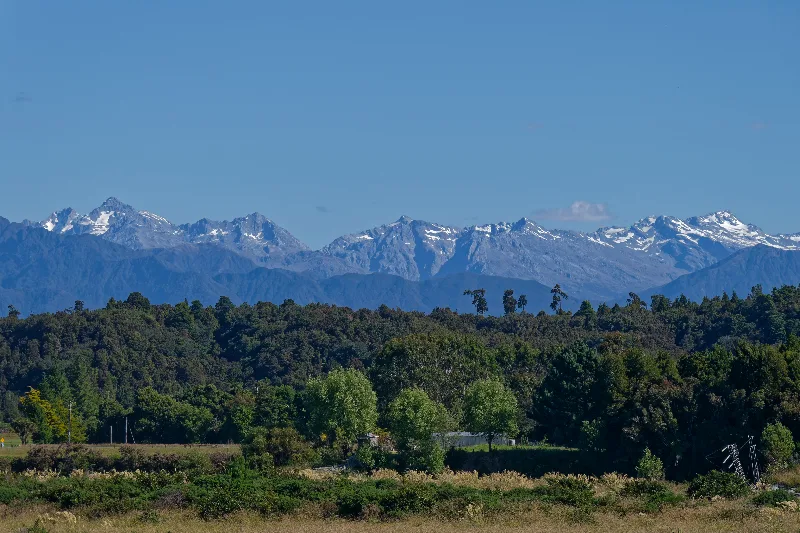
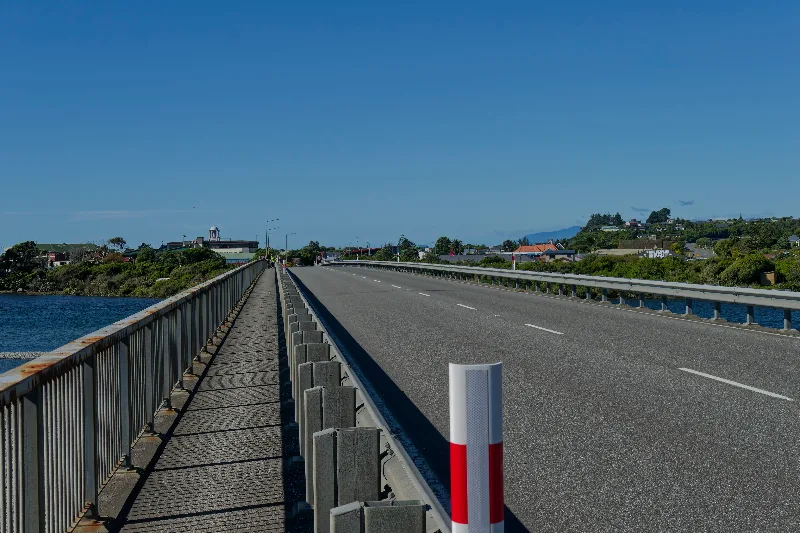
Crossing the bridge into Hokitika, the day's long ride nearly done.
Hokitika
Hokitika grew rapidly during the West Coast gold rush of the 1860s, briefly becoming one of New Zealand's busiest ports despite a notoriously dangerous river bar that wrecked dozens of ships. Gold gave way over time to other industries, and today the town is best known as the country's centre for pounamu (greenstone) carving, with numerous workshops and galleries continuing a craft with deep roots in Māori tradition.
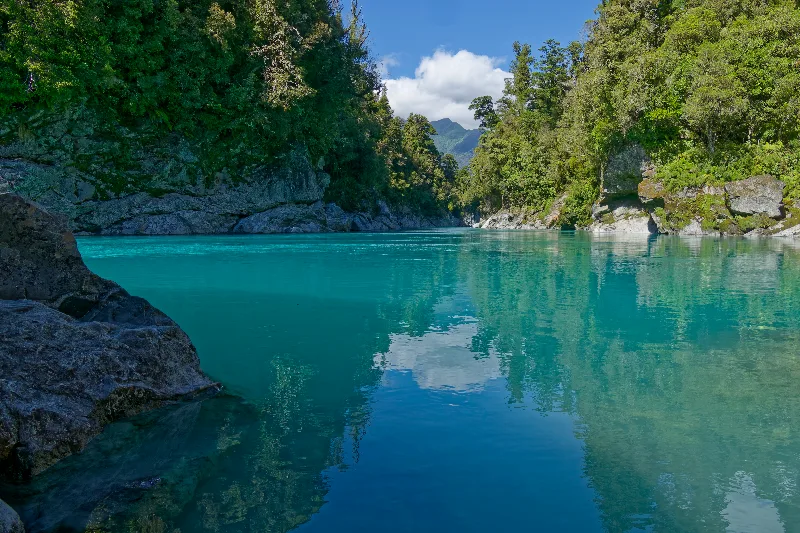
The town is also closely tied to whitebait, the tiny migratory fish caught in West Coast rivers each spring and prized as a local delicacy, and to Hokitika Gorge a short ride inland — a narrow rock gorge running an almost impossible turquoise from glacial rock flour, one of the most photographed spots on the whole coast.
A rest day. Rode out to Hokitika Gorge and back, about 40 km round trip on flat coastal road, for a swim in that startling turquoise water.
Otherwise a slow day in town: the museum, with its exhibits on greenstone and whitebaiting, the library, a café. Noticed more touring cyclists here than anywhere else on the trip so far — maybe just the season, or maybe good weather draws them out and bad weather sends them into hiding.
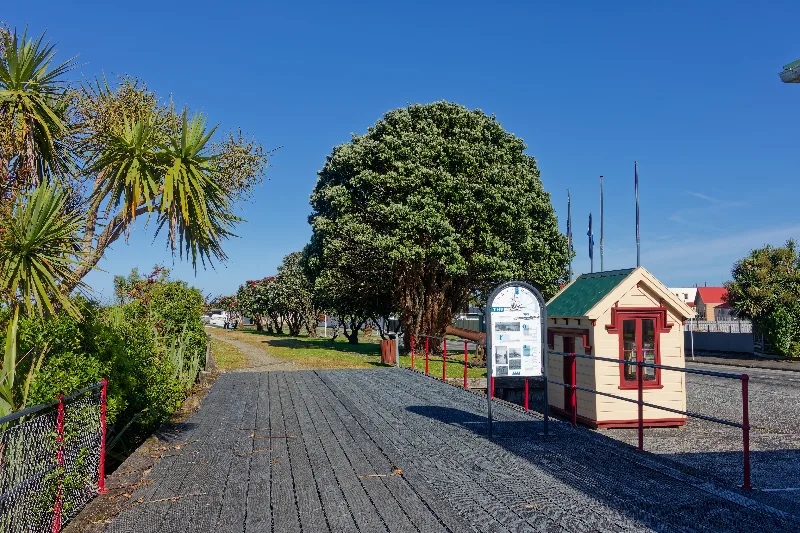
A small information kiosk on Hokitika's waterfront promenade.
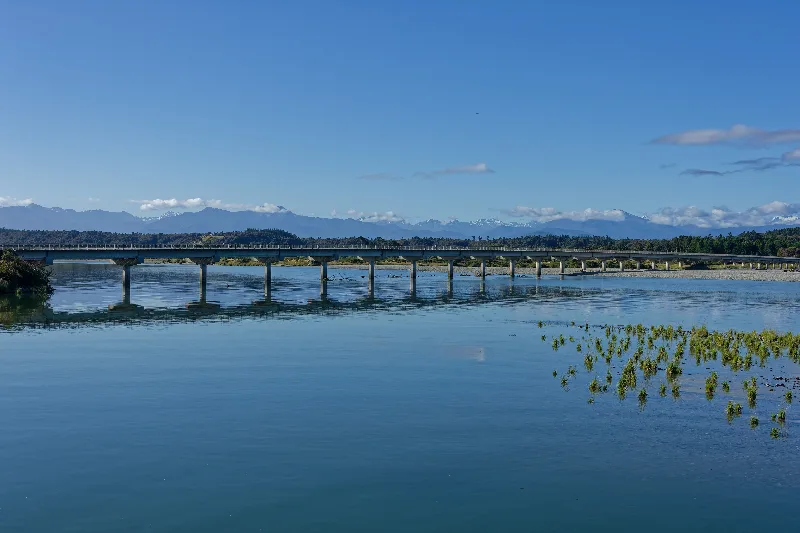
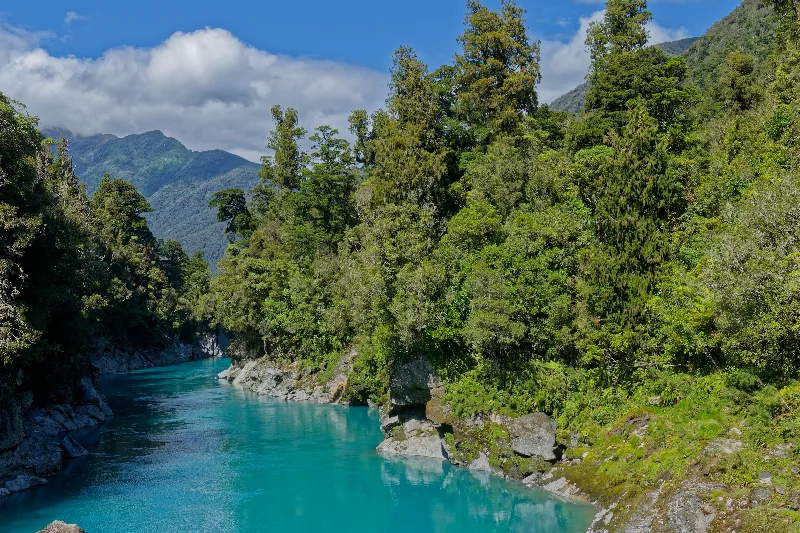
Hokitika Gorge, the water its trademark turquoise from suspended glacial rock flour.
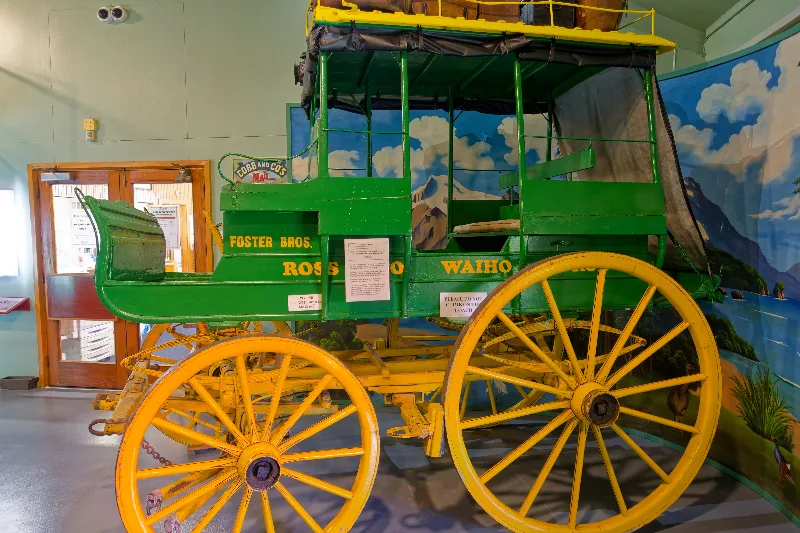
A restored Cobb & Co. stagecoach in the Hokitika museum, once running the Ross-Waiho mail route.
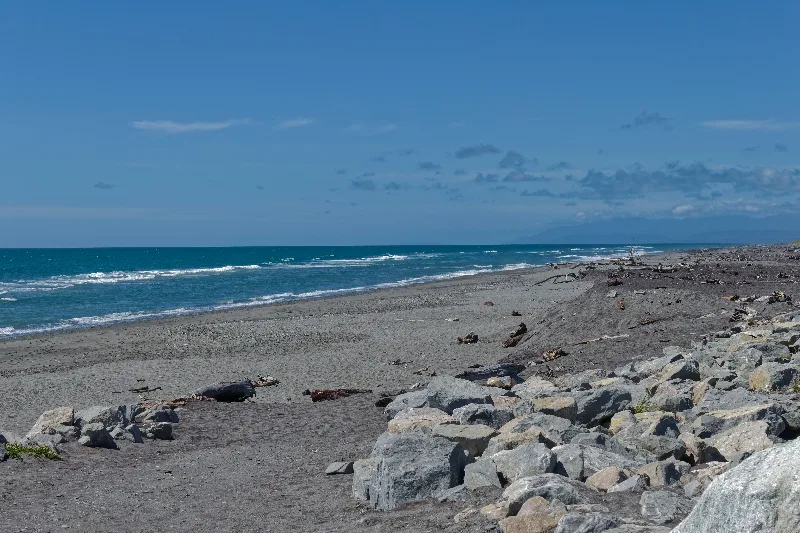
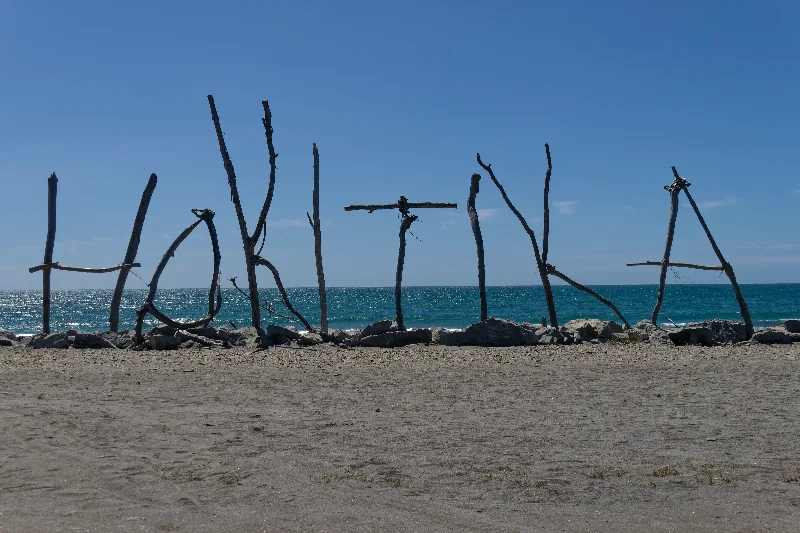
The driftwood "HOKITIKA" sign on the beach, a well-known local landmark.