Biking and Hiking New Zealand - Wellington
The ferry from Picton to Wellington, about an hour and a half and surprisingly flat. Boarding was far too early — the first sailing of the day had apparently been fully booked.
In Wellington by 17:45, at the campsite by 19:30 — Upper Hutt rather than the city itself, where sites run at about a third of the price charged in Lower Hutt, with frequent trains into Wellington from there. A nice enough site; tent up, then 5 km into town for something to put on the barbecue. On the ferry I'd met two touring cyclists, an older couple from Unterhaching, though not especially talkative.
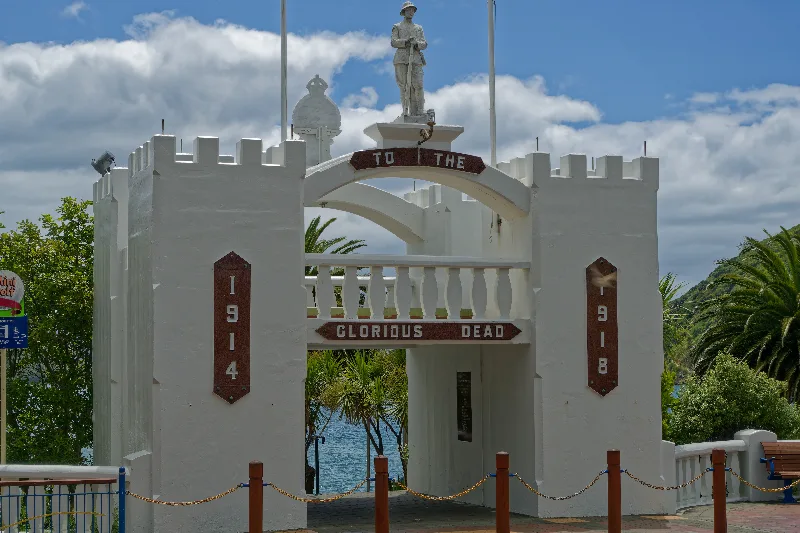
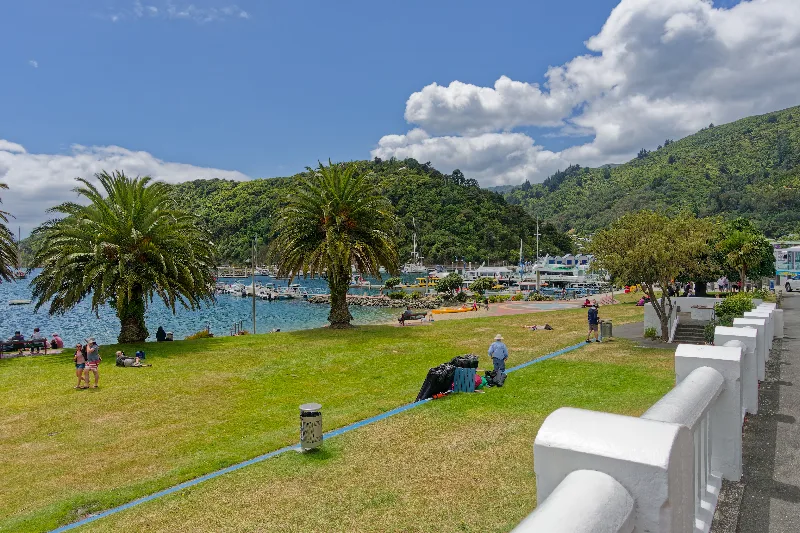
Picton's war memorial arch, "To the Glorious Dead," by the waterfront near the ferry terminal.
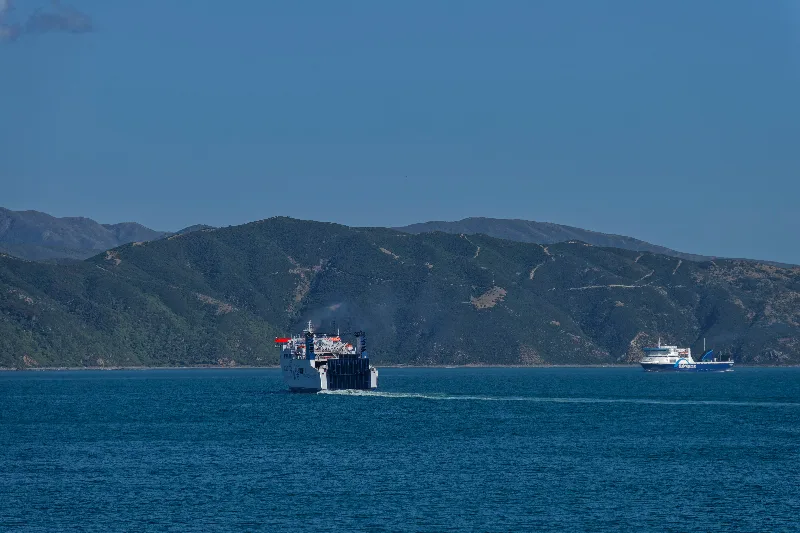
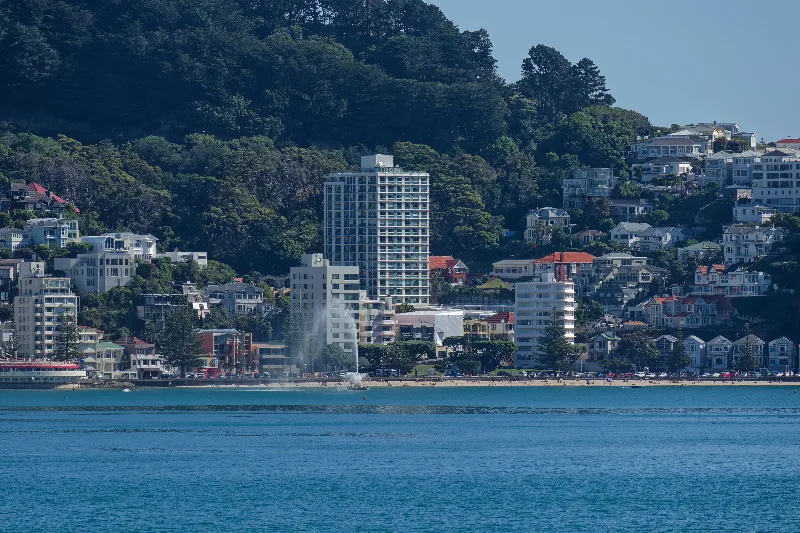
Coming into Wellington past Oriental Bay, the harbourside apartment towers and hillside houses rising behind the fountain.
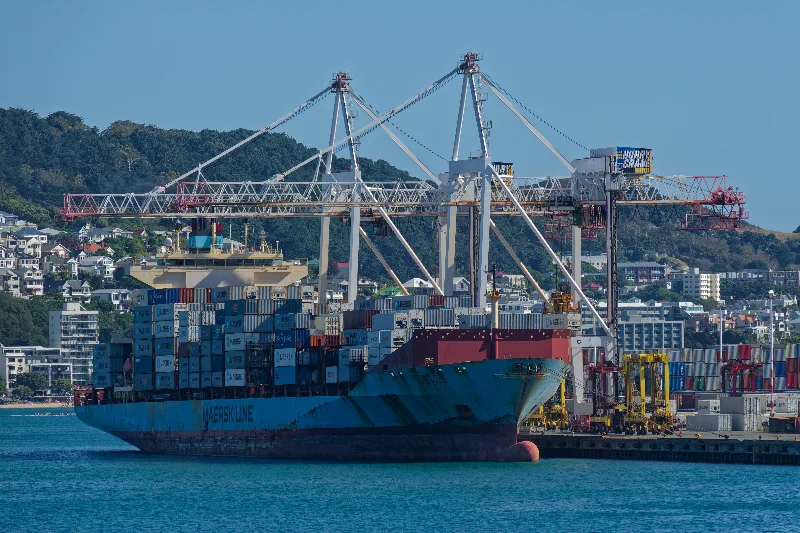
Wellington
Wellington became New Zealand's capital in 1865, chosen for its central location between the two main islands after Auckland was judged too remote from the growing South Island settlements. Built around a deep natural harbour and squeezed between steep hills and the sea, it has one of the most compact and walkable city centres in the country — and, thanks to the funnelling effect of Cook Strait, one of the windiest, a reputation the city wears with some pride as "Windy Wellington."
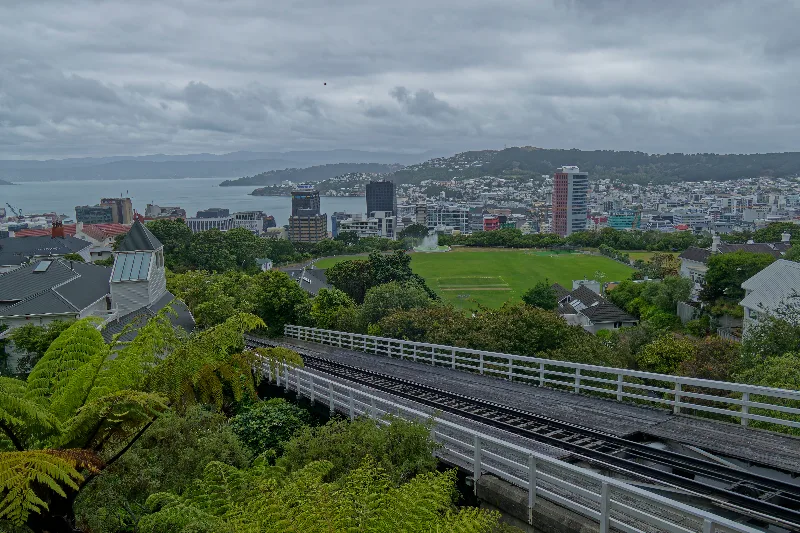
The city sits directly on the Wellington Fault, and earthquakes are a regular part of life here, shaping everything from building codes to public awareness campaigns. Above the CBD, the 1902 cable car climbs to the Botanic Garden and the old Carter Observatory, giving one of the best views over the harbour — one of several long-standing Wellington attractions alongside its museums, theatres and a famously strong café and craft-beer culture.
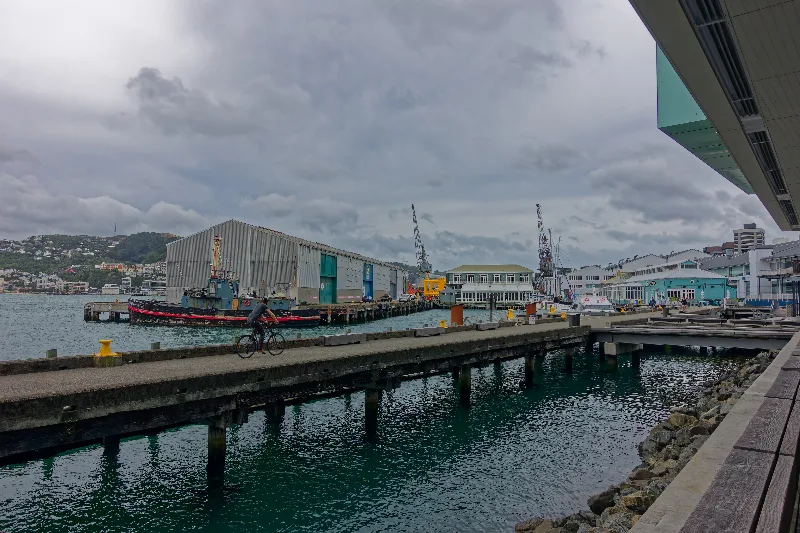
A 45-minute walk to the station — a day ticket cost $14, cheaper at $10 by bus, but the walk was free. First stop the Hofbräuhaus down by the harbour, quiet at that hour, then a few hours at Te Papa. Left the Gallipoli exhibition for another day — the queue was too long.
A stop at the DOC office about Mount Taranaki: the Camp House, it seems, is the only accommodation option up there. Walked back to the campsite in the evening with groceries, filed a blog report — no free Wi-Fi at the site, so that had to wait for town. Rough plan for the days ahead: the Remutaka Trail via Martinborough to Masterton, then two more days on to Napier and Hastings.
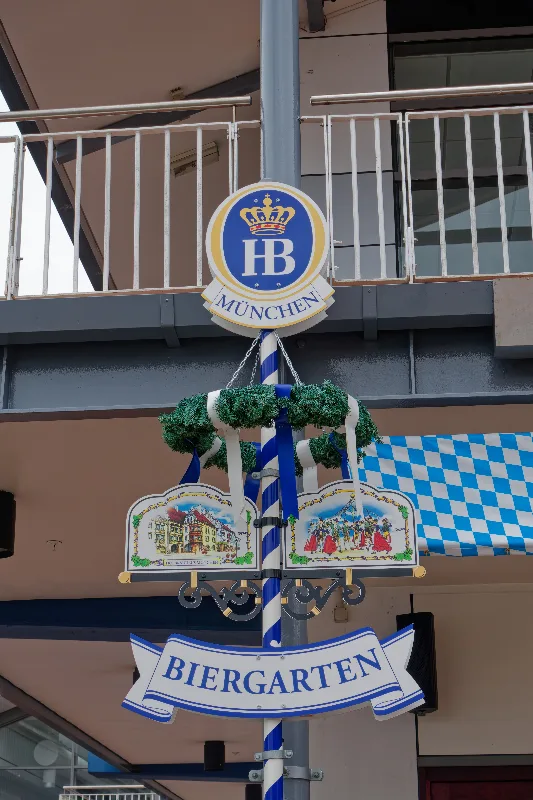
The Hofbräuhaus München sign on Wellington's waterfront — a genuine outpost of the Munich original, right down to the biergarten pole.
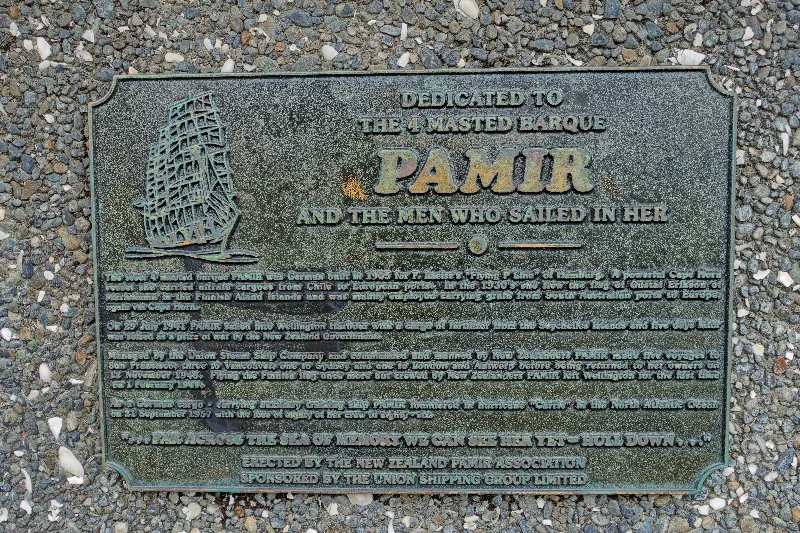
A waterfront plaque to the four-masted barque Pamir, wrecked in the Atlantic in 1957 with the loss of most of her crew — a training ship that had called at Wellington on her final voyages.
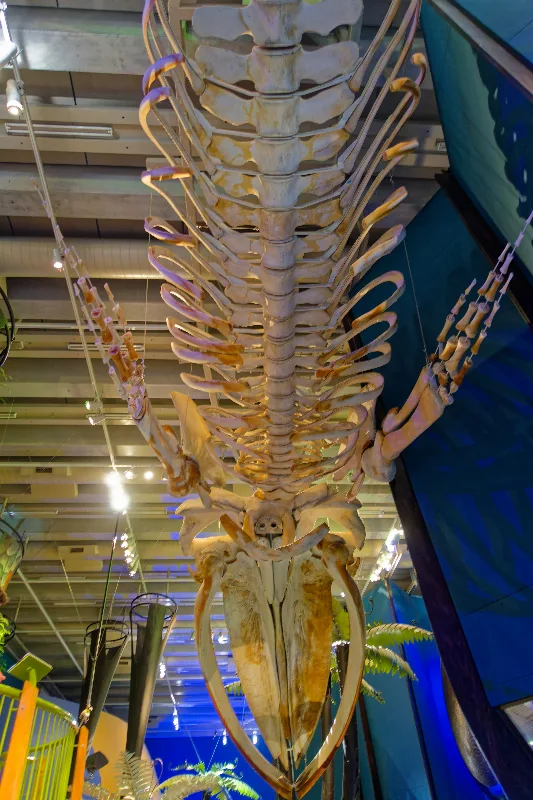
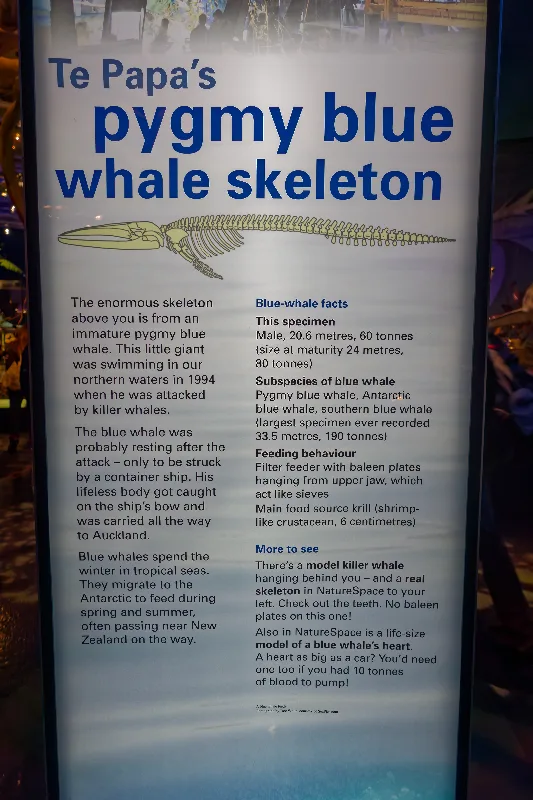
Te Papa's pygmy blue whale skeleton, 20.6 metres — killed by orca in 1994, then struck and carried to Auckland on the bow of a container ship.
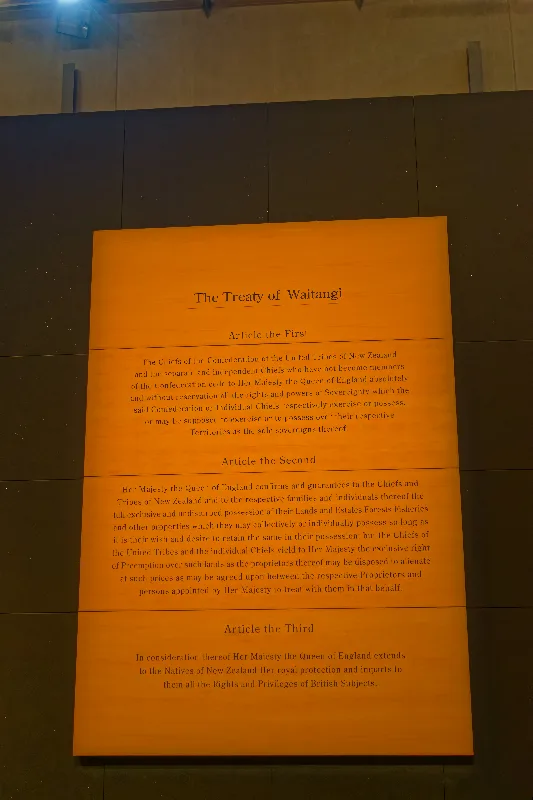
The Treaty of Waitangi's three articles on display at Te Papa, in English translation.
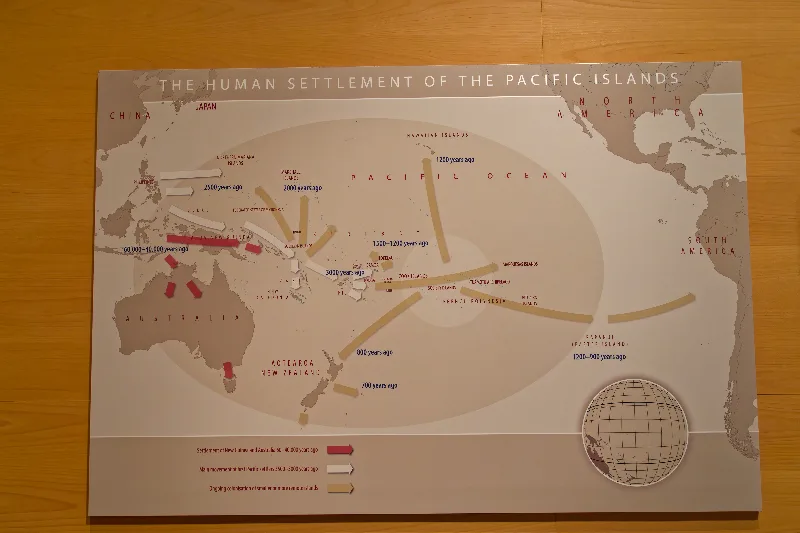
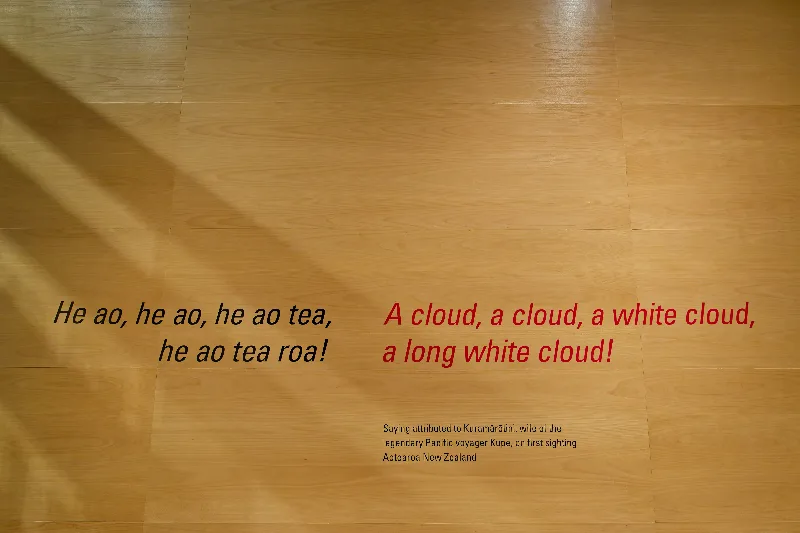
"A cloud, a cloud, a white cloud, a long white cloud" — the words attributed to Kuramārōtini, wife of the voyager Kupe, on first sighting Aotearoa, set into Te Papa's floor.
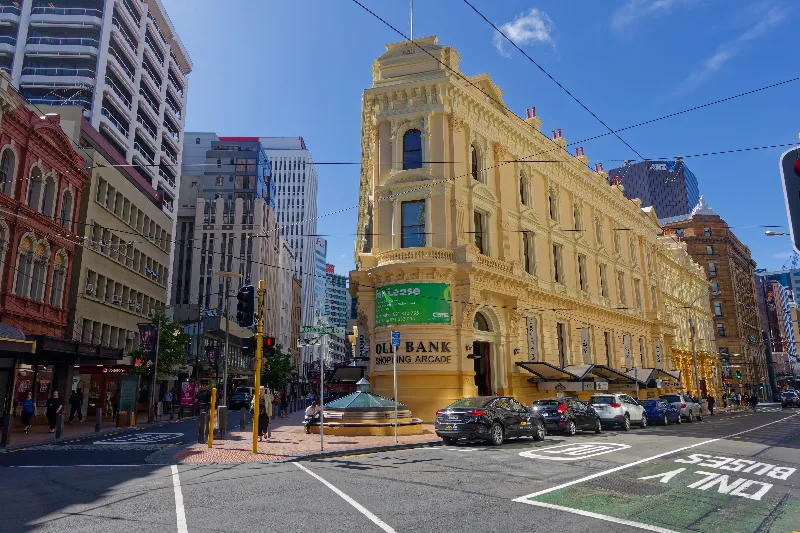
The Old Bank Shopping Arcade, a restored Victorian building on the corner of Customhouse Quay and Hunter Street.
Decent weather in the morning, turning to light rain by evening. At Wellington Station by 10:15, on the free shuttle bus to Zealandia by 10:30.
Zealandia is a former reservoir valley, now a fenced, predator-free sanctuary with more than 30 km of track inside it — walked around 5 km of that. Back into town after, up the cable car to the Botanic Garden and the Carter Observatory for the view over the harbour, then down to Te Papa again for the Gallipoli exhibition.
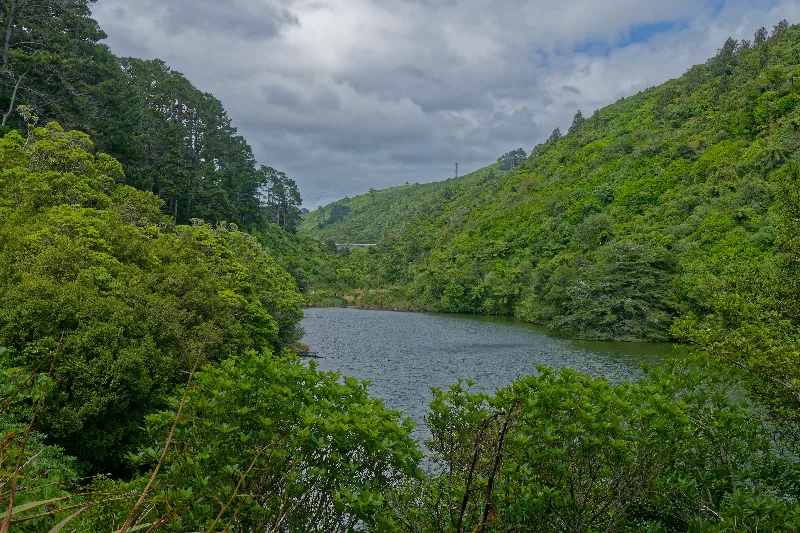
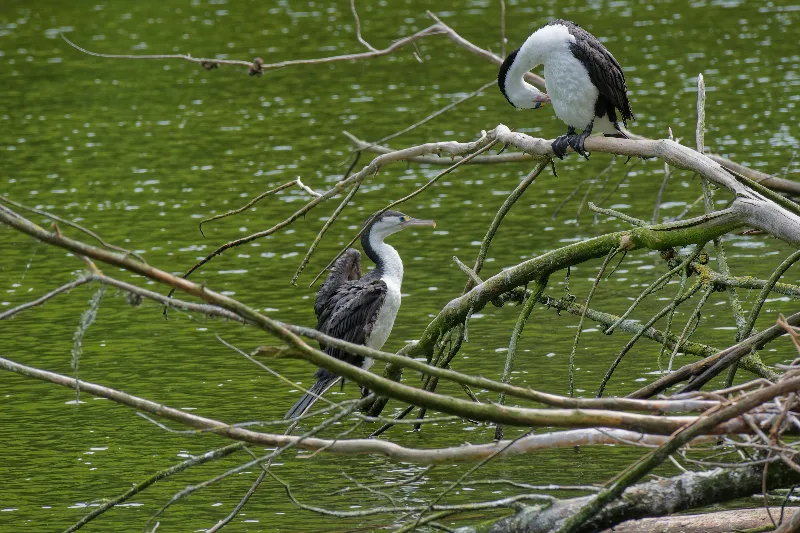
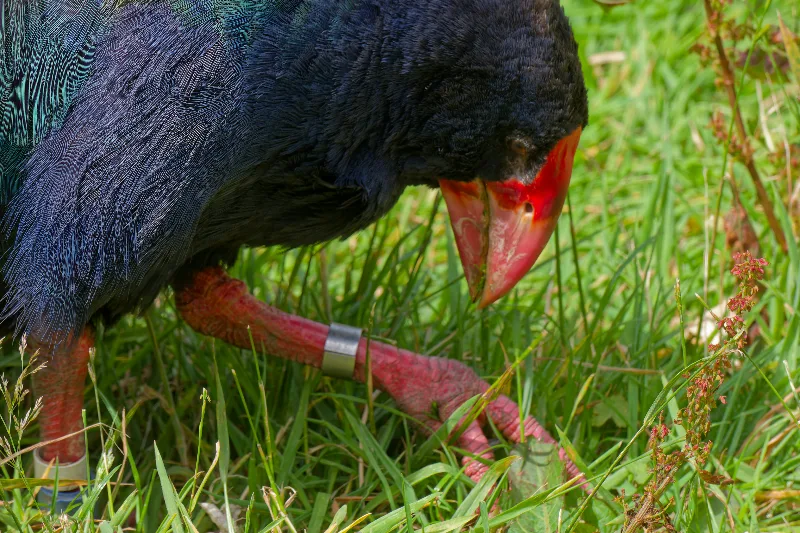
A takahē, close up — bright red bill and legs, one leg banded for tracking as part of the species' ongoing recovery programme.
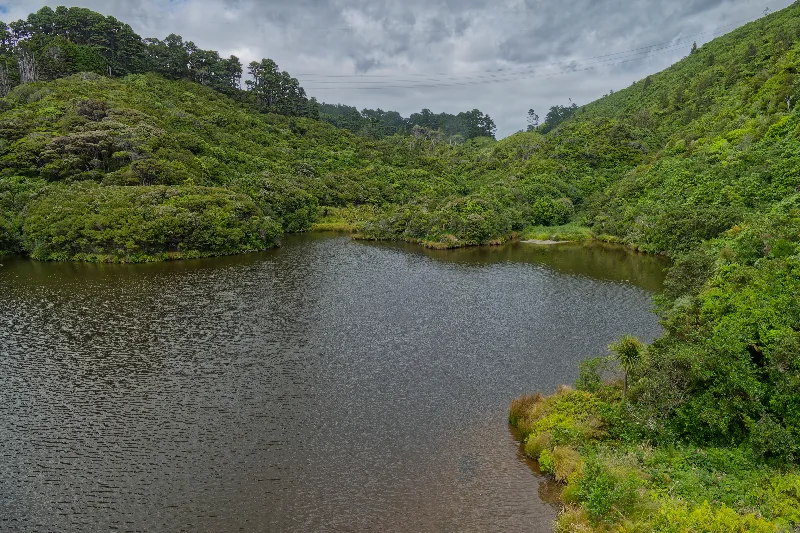
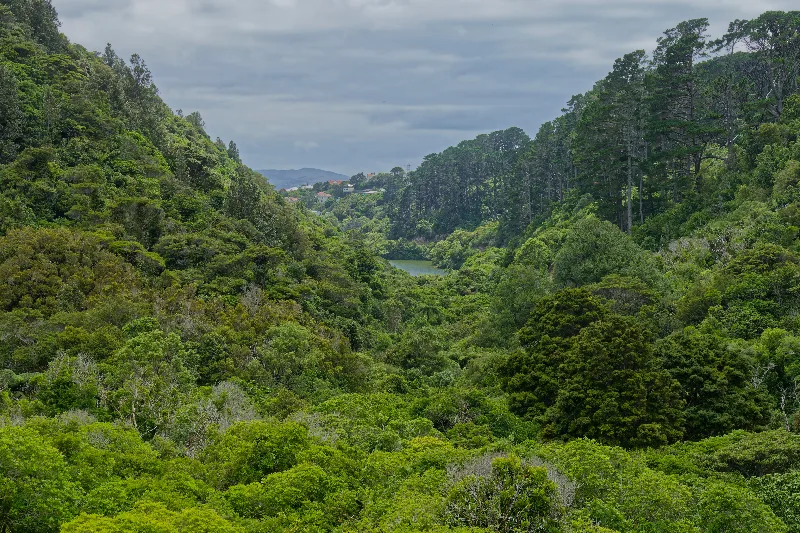
Looking down the valley toward the city — rooftops visible just beyond the tree line, a reminder of how close Zealandia sits to central Wellington.
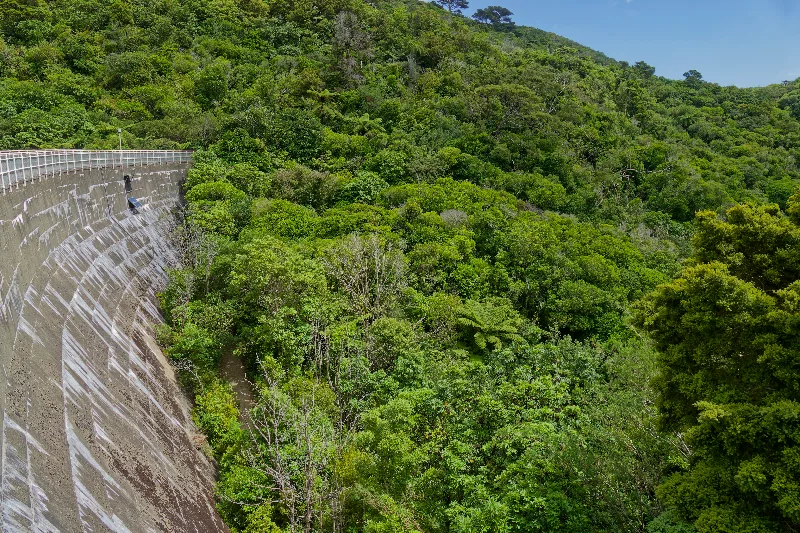
One of Zealandia's two original reservoir dams, still standing and now part of the walking track network.
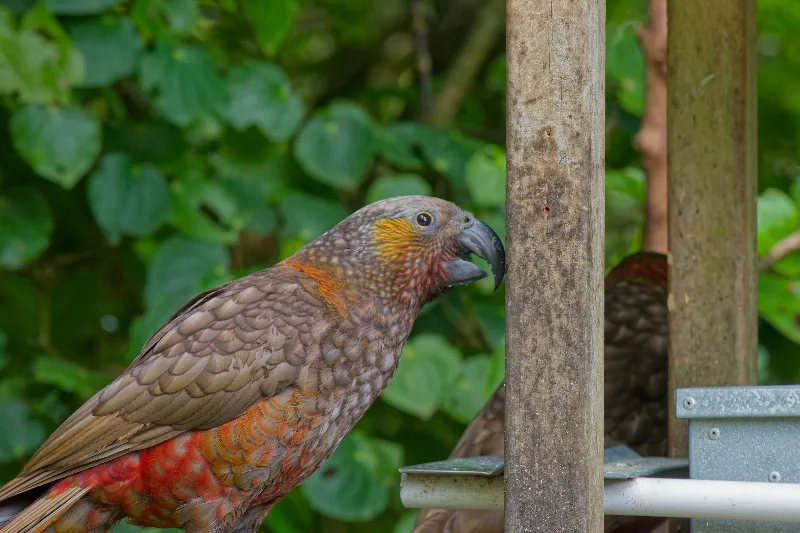
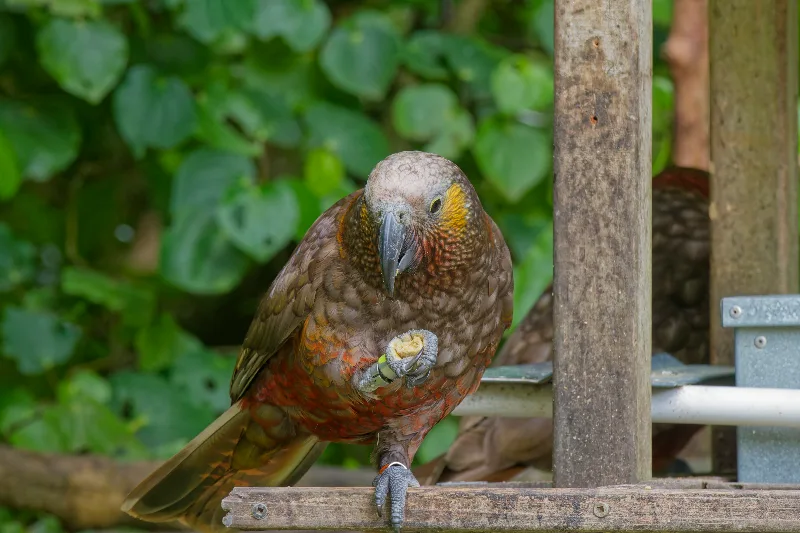
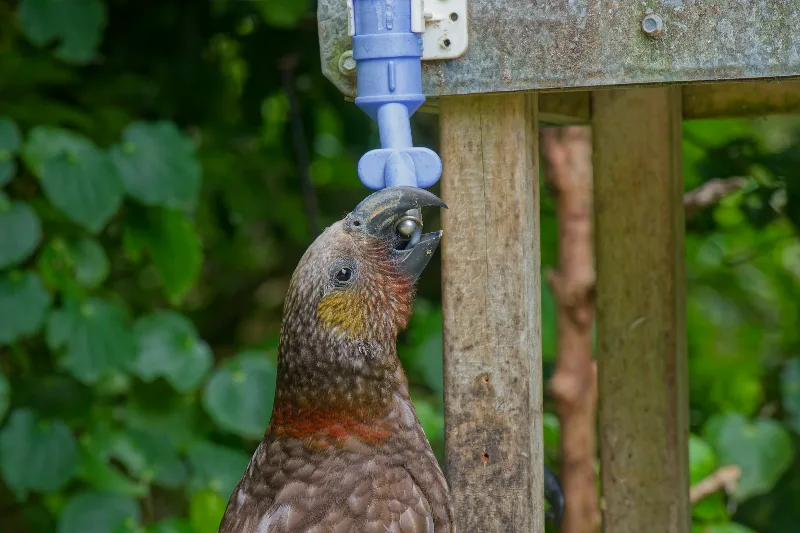
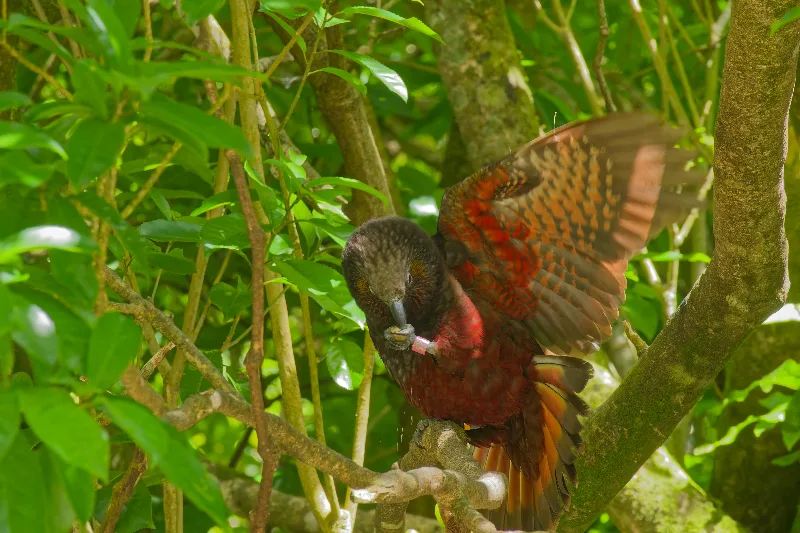
A kākā with wings spread, showing the flash of red and orange usually hidden under its otherwise dull plumage.
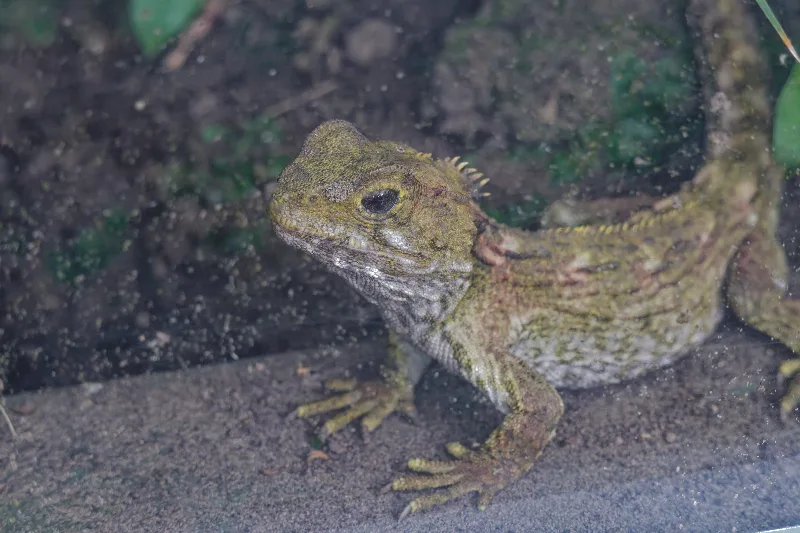
A tuatara behind glass — a living relic of a reptile lineage otherwise extinct for around 60 million years.
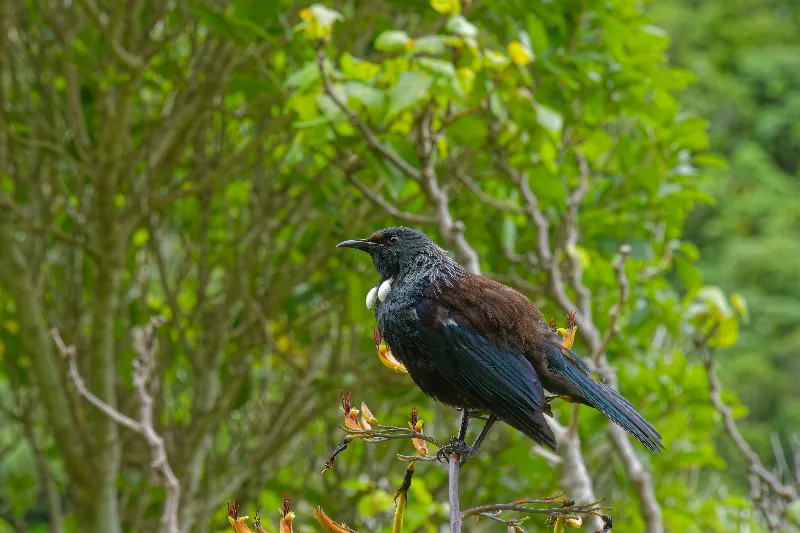
A tūī perched on a flax stalk, the white throat tuft unmistakable even at a distance.
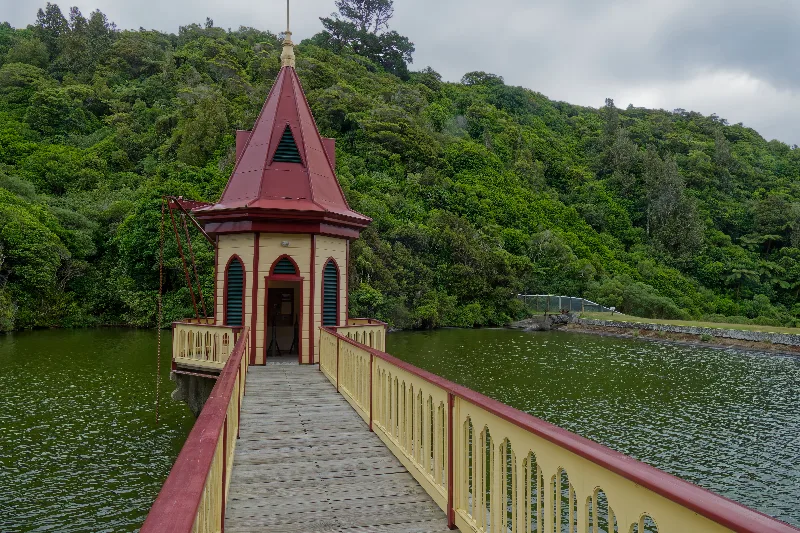
The old valve tower on the lower dam, its ornate turret roof an unexpectedly decorative touch on a piece of water infrastructure.
Zealandia
Zealandia occupies a steep, forested valley just two kilometres from central Wellington, once the site of two reservoirs built in the 1870s and 1900s to supply the city's drinking water. When the dams were decommissioned, the valley was reborn instead as a wildlife sanctuary, enclosed since 1999 by an 8.6-km predator-proof fence around roughly 225 hectares — one of the first projects of its kind anywhere in the world, and a model since followed by similar fenced sanctuaries across New Zealand.
Inside the fence, species that had vanished from mainland New Zealand altogether have been reintroduced, including takahē, hihi (stitchbird), kākā and tuatara, alongside kiwi and a long list of other native birds, reptiles and invertebrates. The valley's two original reservoir dams are still standing and form part of the walking network, a reminder of the site's earlier life as infrastructure rather than habitat.
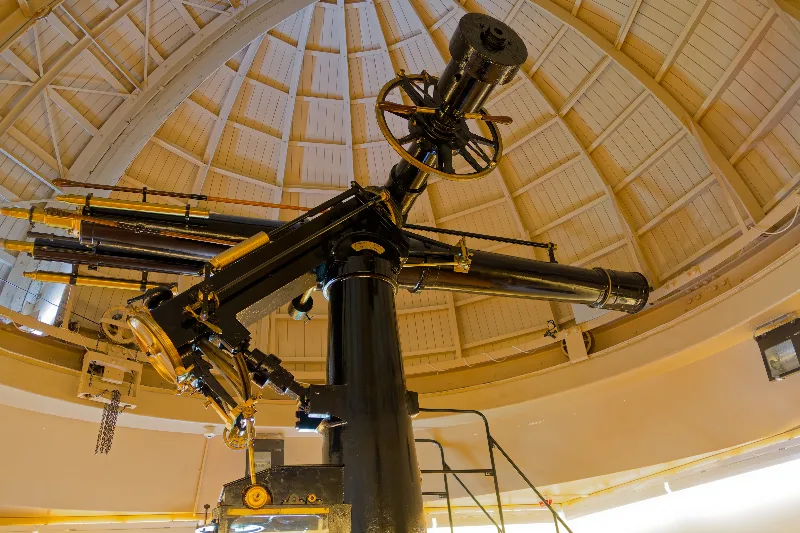
The old refracting telescope inside the Carter Observatory dome, up above the Botanic Garden.
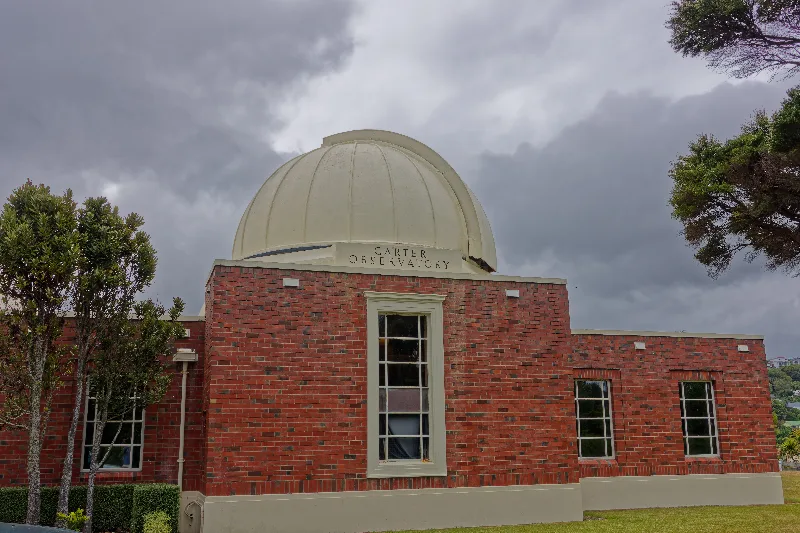
The Carter Observatory building itself, its dome visible above the Botanic Garden.
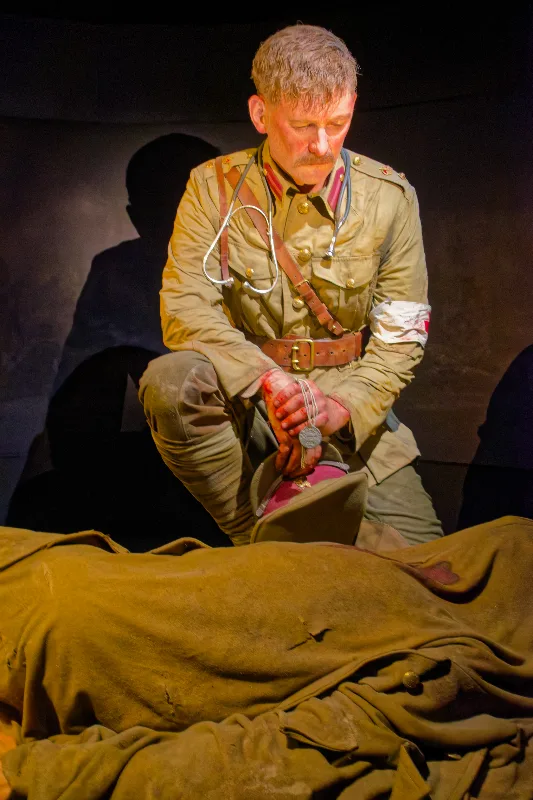
One of Weta Workshop's hyper-realistic 2.4x-scale figures: a medic tending a fallen soldier, modelled on a real man from the campaign.
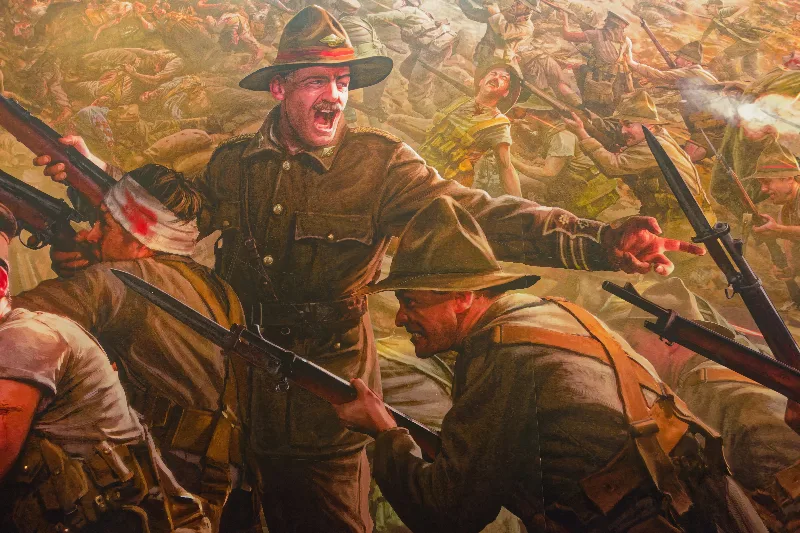
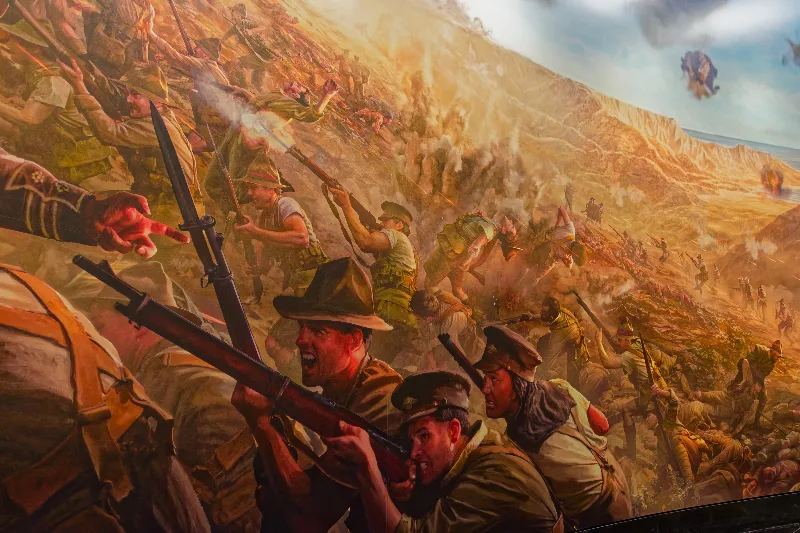
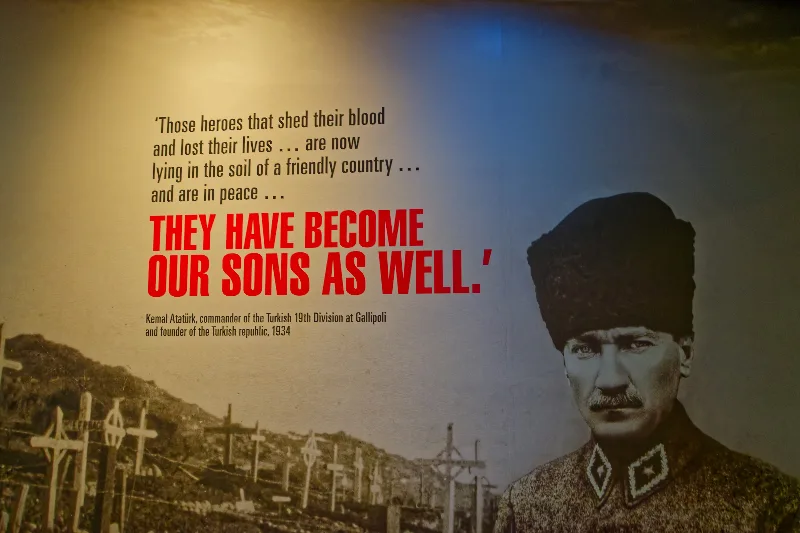
The exhibition's closing panel: Atatürk's 1934 words to the Allied mothers who lost sons at Gallipoli, over a photograph of the peninsula's war graves.
Te Papa and the Gallipoli Exhibition
Te Papa Tongarewa — "the place of treasures" — is New Zealand's national museum, opened in its current waterfront building in 1998 and combining natural history, Māori taonga, social history and art under one roof, with free general admission. It is known for a deliberately bicultural approach, presenting Māori and Pākehā perspectives side by side rather than treating one as the default narrative.
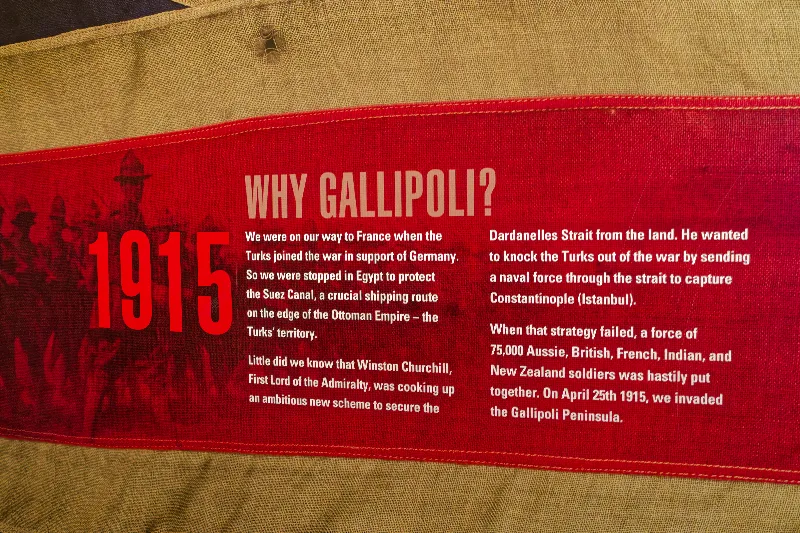
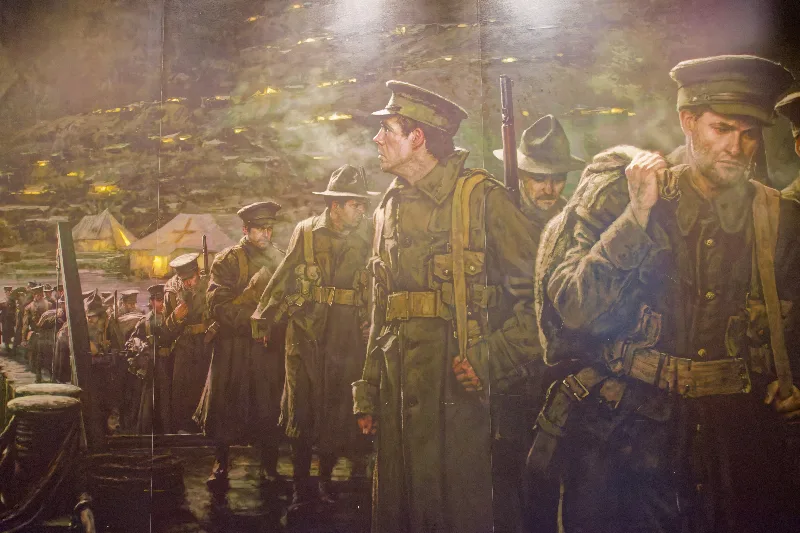
Gallipoli: The Scale of Our War, which opened in 2015 for the centenary of the WWI campaign, was developed in partnership with Sir Peter Jackson's Weta Workshop. Its centrepiece is a series of hyper-realistic human figures built at 2.4 times life size, each modelled on a real soldier or nurse from the campaign, paired with personal letters, diaries and objects — a deliberately cinematic, immersive style of exhibition design that has since become one of Te Papa's best-known drawcards.