Waitomo, Marokopa and Raglan
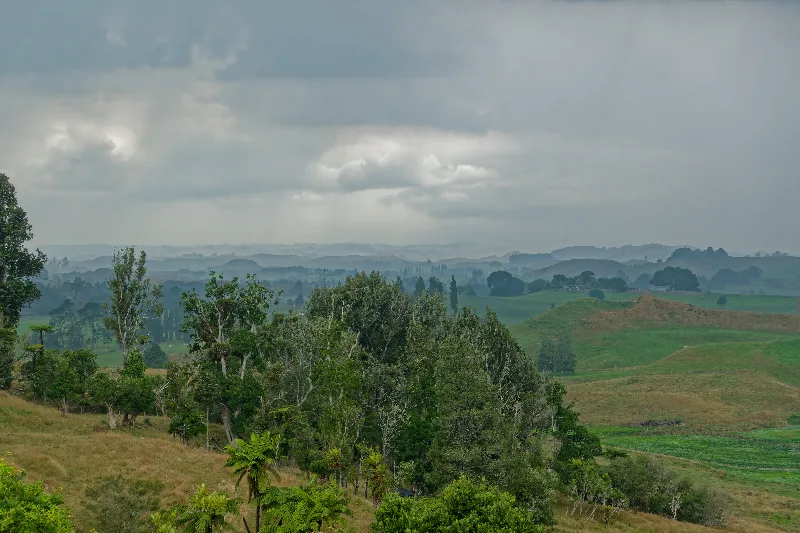
The last of the Forgotten World Highway's grind gave way to easier country here — a few days spent underground at Waitomo, on the karst back roads to Marokopa and Raglan, and then east again toward the Coromandel to close the loop back to Auckland.
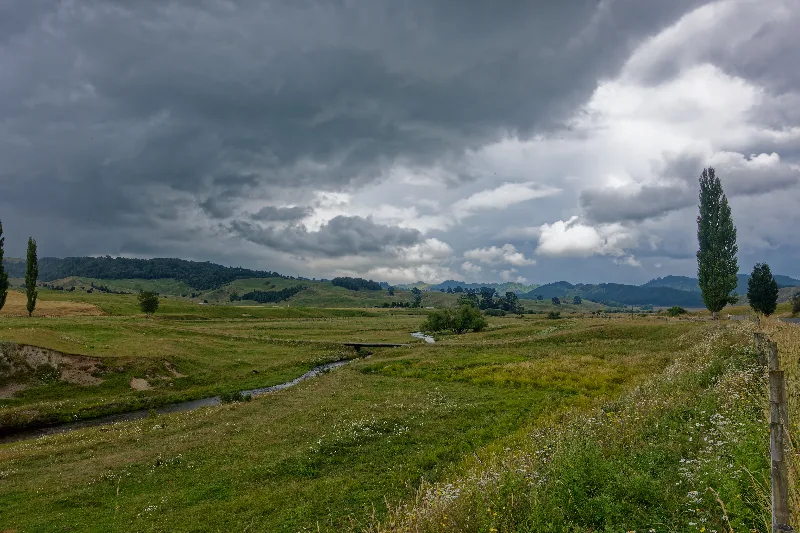
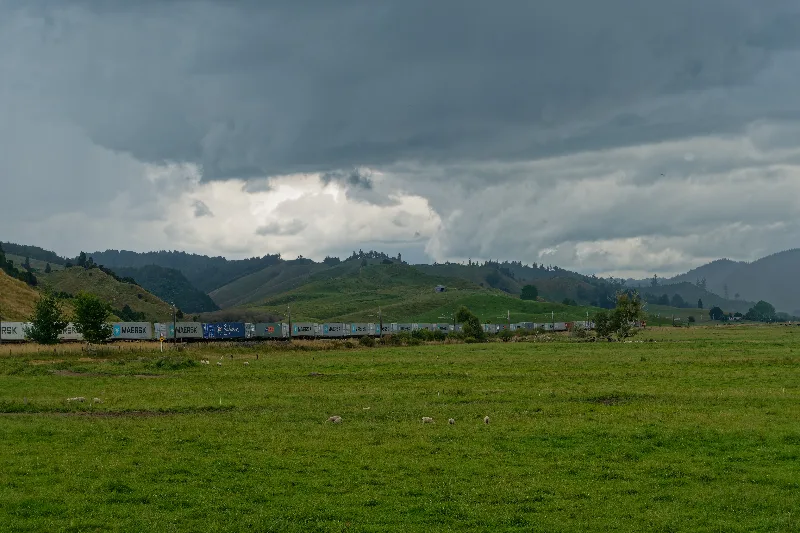
A freight train and an unconcerned flock of sheep, somewhere between Taupo and Te Kūiti as the rain closed in.
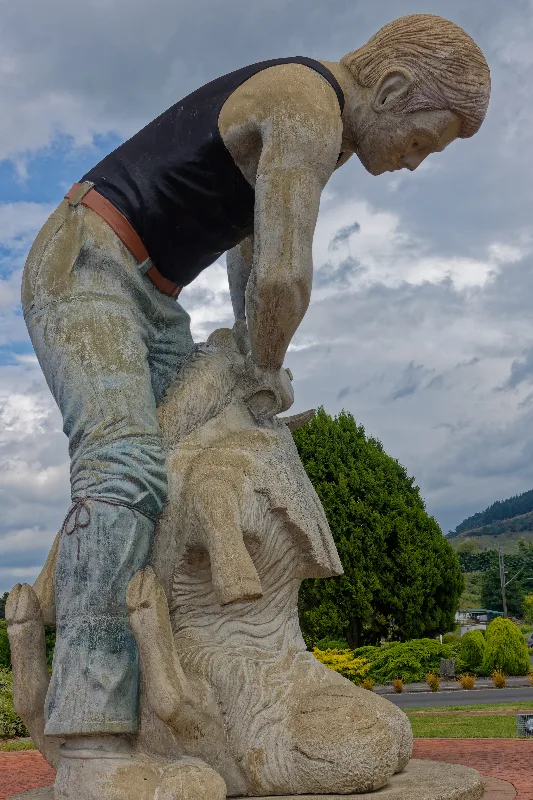
Te Kūiti calls itself the Shearing Capital of the World, and makes sure you know it at the town entrance.
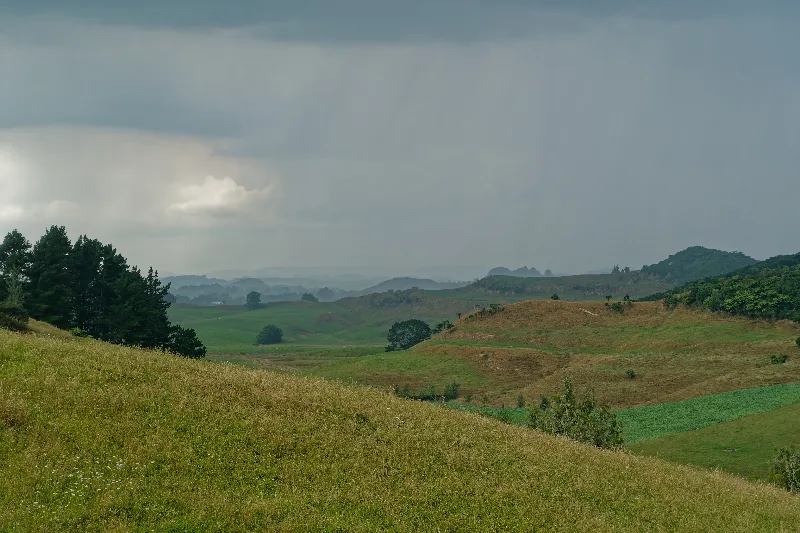
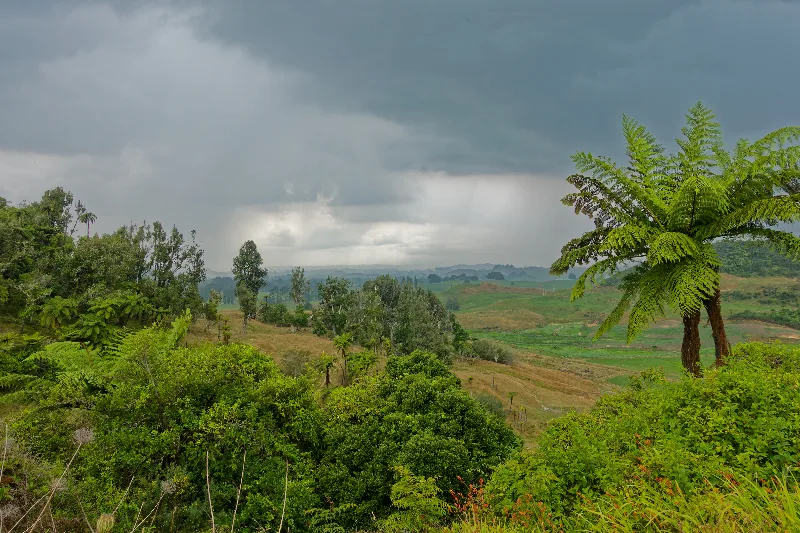
All three of Waitomo's show caves between 9am and 3pm, including the famous Glowworm Cave — lucky to be in a small group of just three, with two older Germans along. The guide, a descendant of the Māori family that first explored the cave in 1887, told the discovery story well. The other two caves had plenty of stalactites and stalagmites — pleasant, if not quite as memorable. The Glowworm Cave's underground boat ride was the highlight, gliding in silence under what looks for all the world like a proper night sky.
Met a family in the third cave, six months into a round-the-world trip via the US, Hawaii and Australia, and had a good chat with the father back at the campsite's hot pool that evening. The cabin next to the tent had its roof cave in overnight from the rain. Hardly any kilometres covered on the bike today.
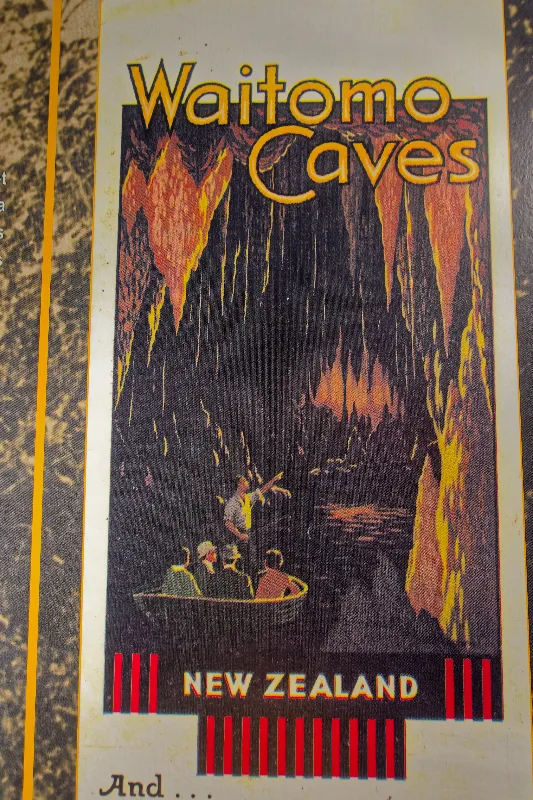
An old Waitomo Caves tourism poster on display at the visitor centre — the caves have been drawing travellers since the 1900s.
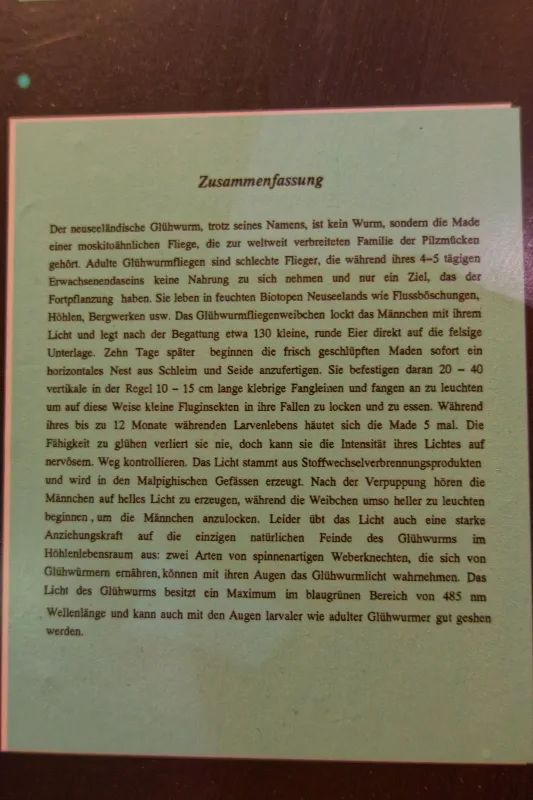
New Zealand Glowworms
Despite the name, the New Zealand glowworm isn't a worm at all — it's the larva of Arachnocampa luminosa, a fly related to the fungus gnats. The adult flies are poor fliers that live only four or five days, eat nothing at all, and exist purely to mate. They favour damp habitats: riverbanks, mineshafts, and caves like these.
A female lays around 130 eggs directly onto a mossy surface. Ten days later the larvae hatch and build a horizontal nest of silk and mucus, hanging 20 to 40 sticky fishing lines, typically 10-15cm long, to snare small flying insects drawn in by the glow. Over up to twelve months as a larva it moults five times, and while it never fully loses the ability to glow, it can dim the light when disturbed. The light itself comes from a chemical reaction in the larva's excretory organs, peaking at a blue-green wavelength around 485nm — visible to the larvae and adults themselves, and unfortunately also to their only real predator down here, a cave-dwelling harvestman that hunts by the very same glow.
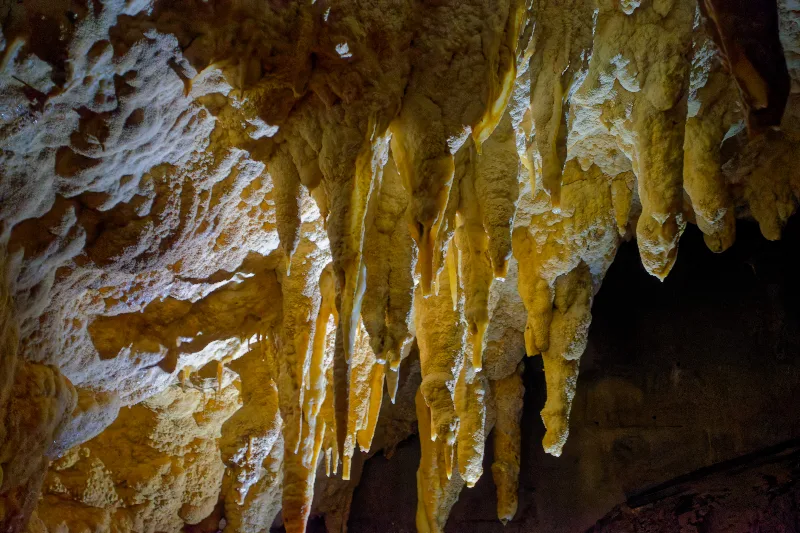
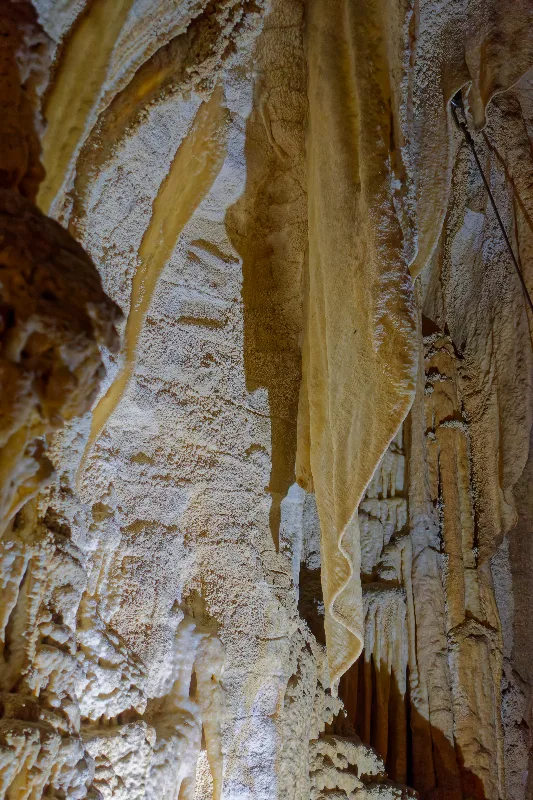
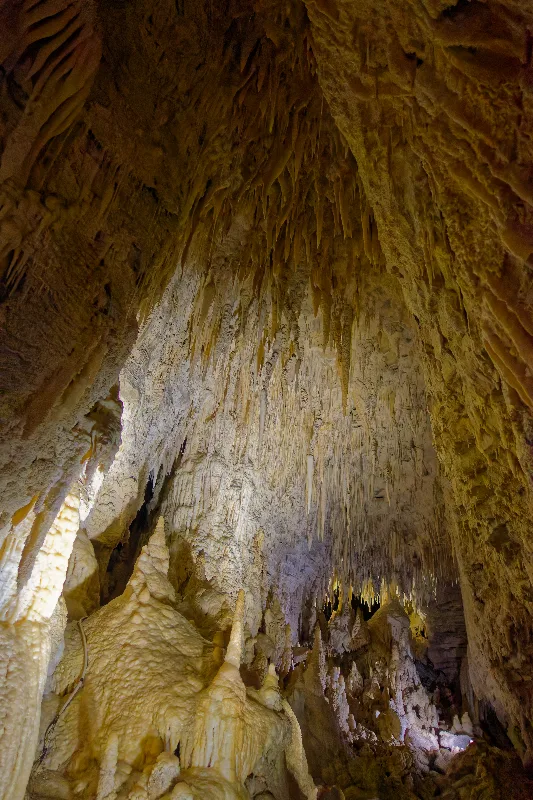
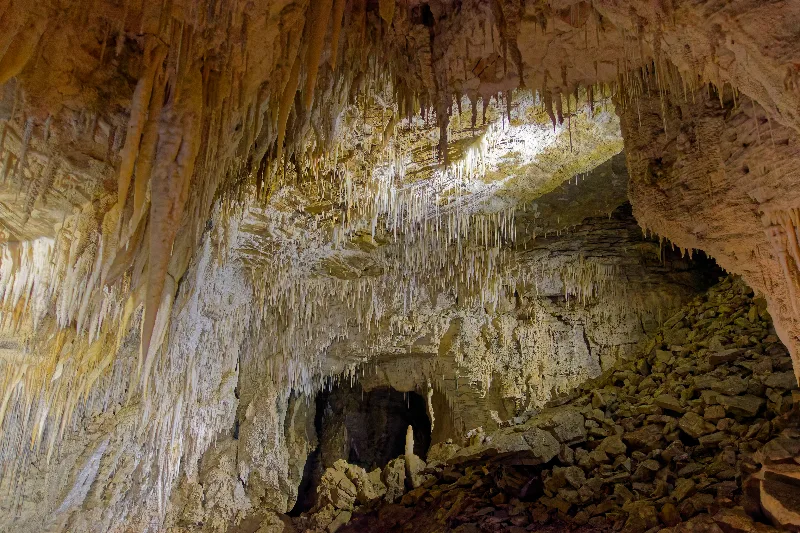
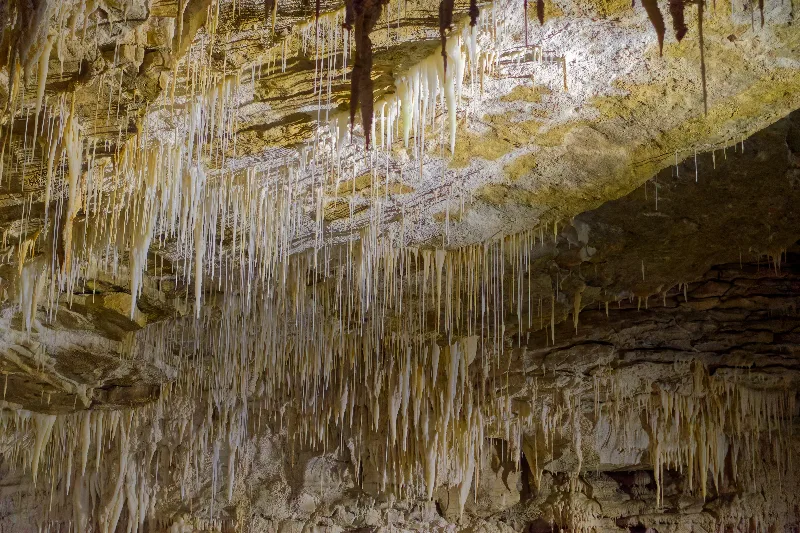
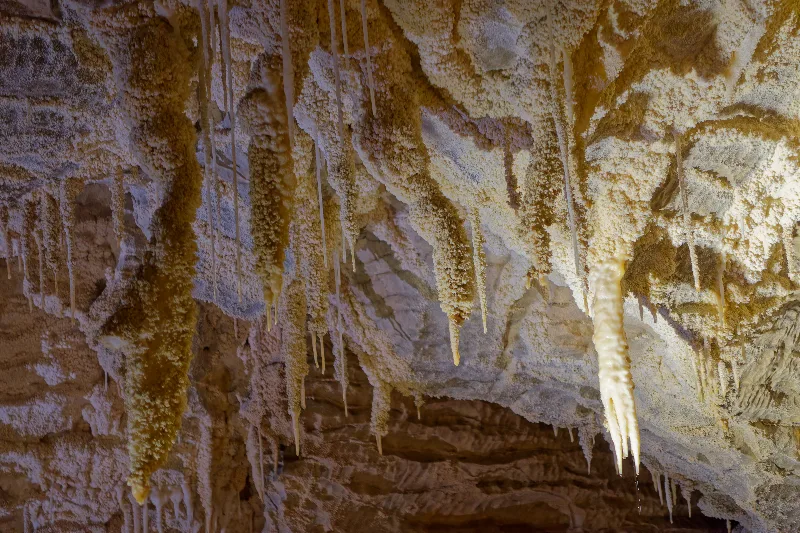
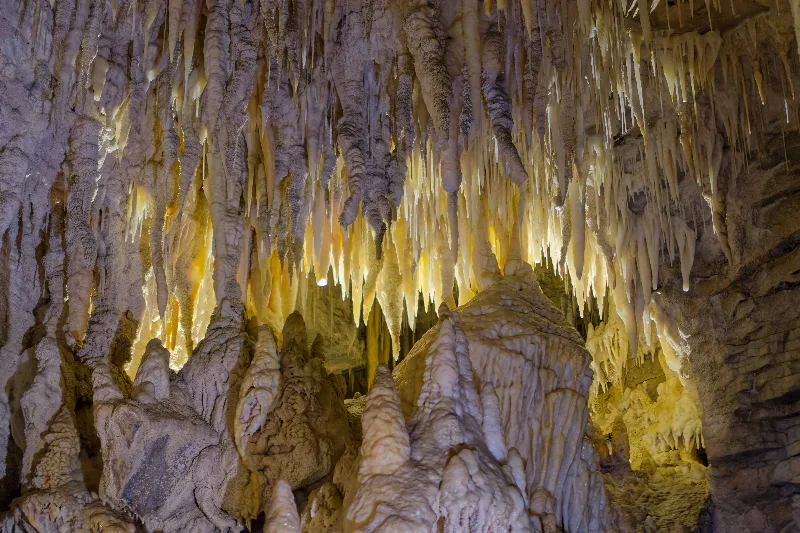
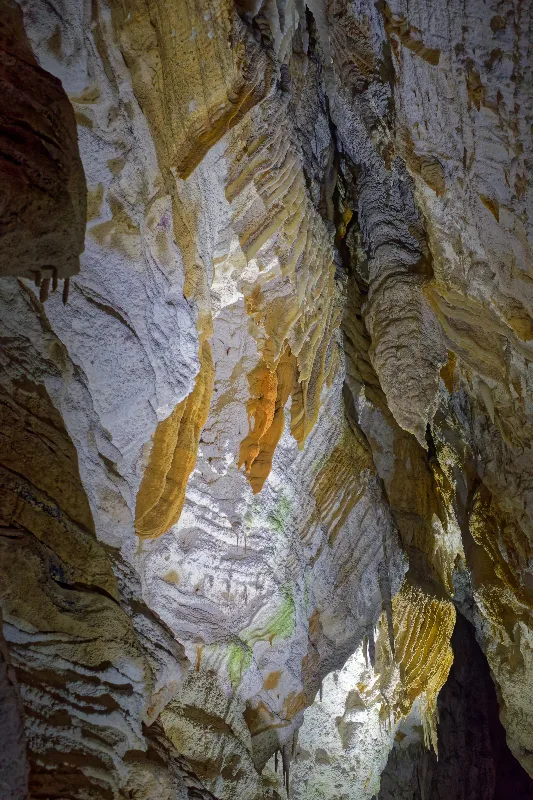
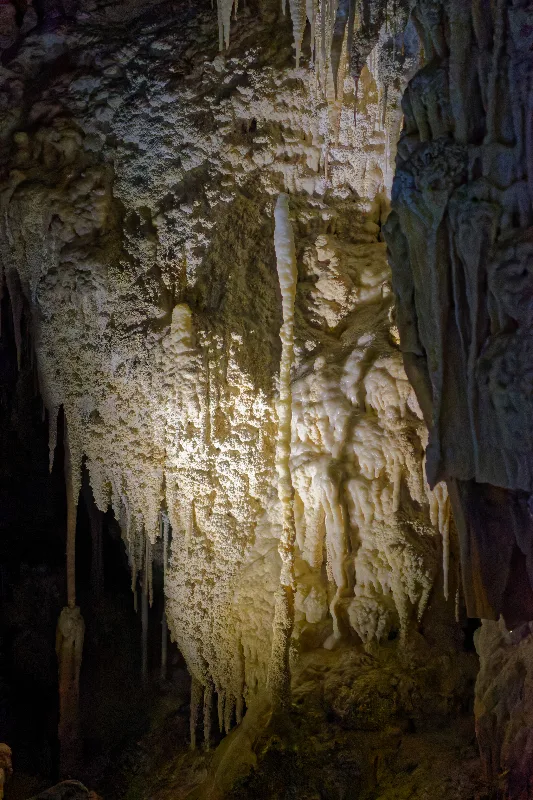
Deep inside one of Waitomo's show caves, formations built up over many thousands of years.
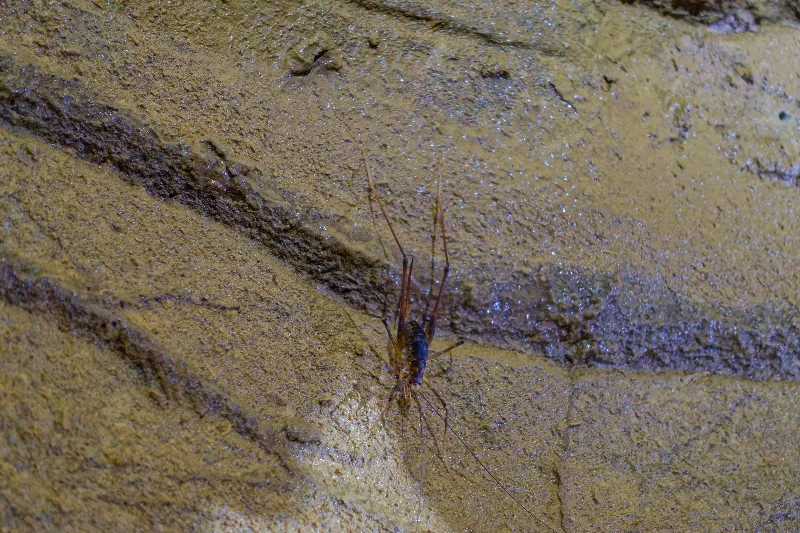
A cave weta, one of the caves' permanent residents — a spiky, harmless relative of the cricket found only in New Zealand.
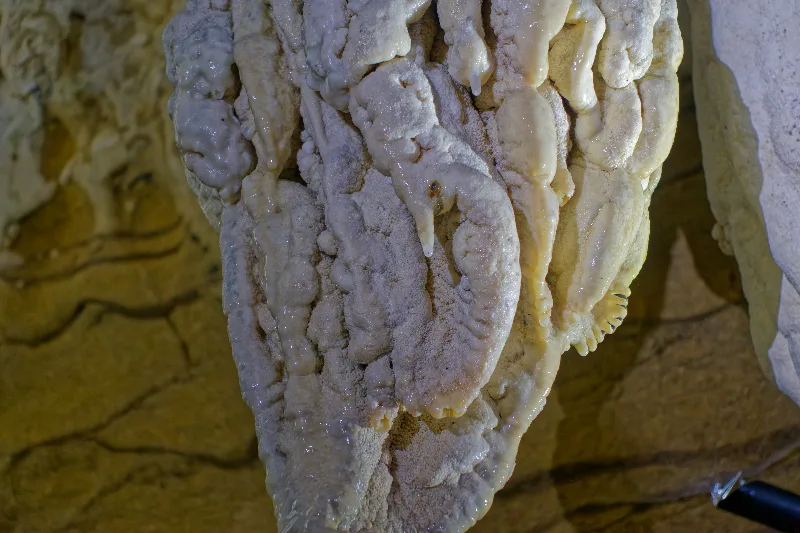
An unusually folded flowstone formation, built up drip by drip over thousands of years.
From Waitomo via the Mangapohue Natural Bridge and the Marokopa Falls, on toward Kawhia, then back up to Raglan. Skipped the Bridal Veil Falls this time and swam in the sea at Raglan instead — though with so many people around, the "endless summer" feeling was hard to find. A huge campsite; had planned on two nights there, but the traffic on the last few kilometres into town made it clear one night would do. 9200km covered since the start of the trip.
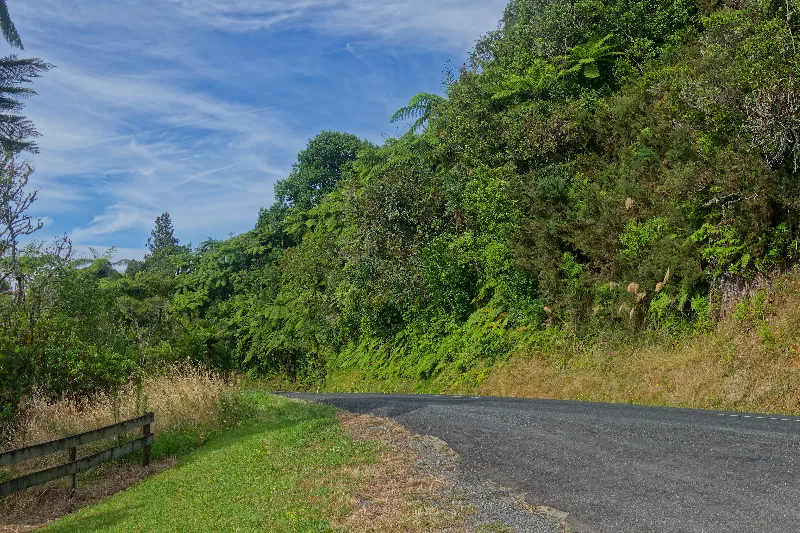
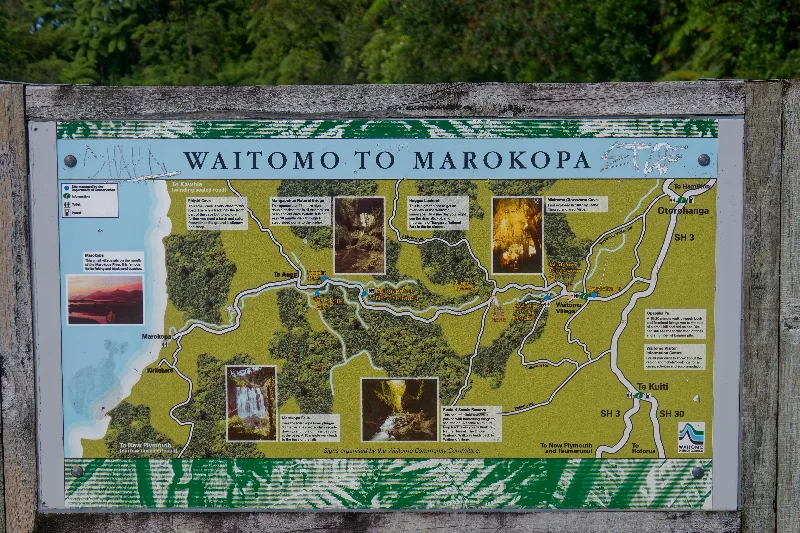
The signposted route from Waitomo to Marokopa, past caves, waterfalls and the natural bridge along the way.
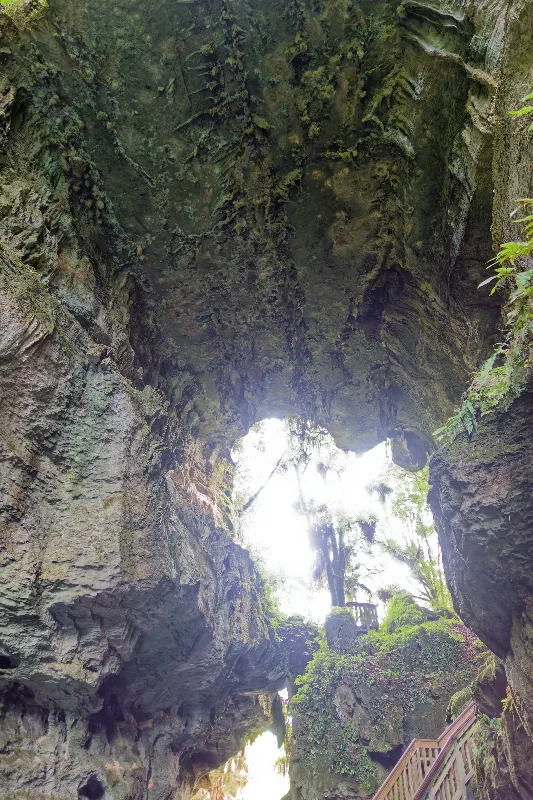
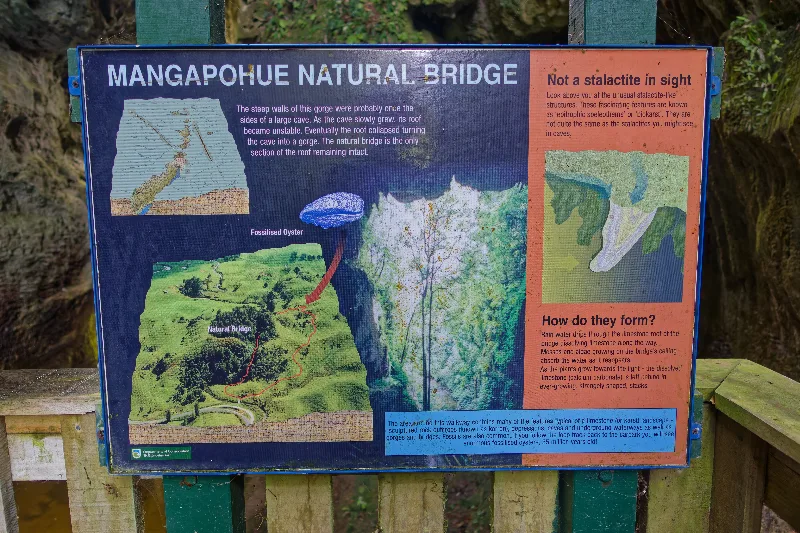
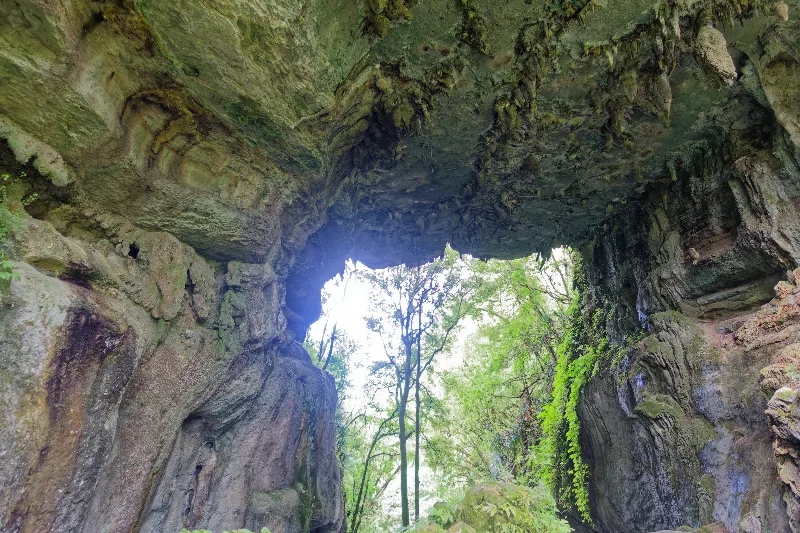
Looking up through the Mangapohue Natural Bridge — the last intact section of the roof of a much larger cave that collapsed long ago.
Mangapohue Natural Bridge
This gorge's steep limestone walls were once the sides of a large cave. As the cave slowly grew, its roof became unstable and eventually collapsed, leaving the gorge open to the sky — the natural bridge overhead is the only section of that original roof still standing. The formations on the bridge itself aren't true stalactites either, despite the resemblance: they're speleothems, mineral deposits built up as water drips through the limestone, which just happen to keep forming here in the open rather than underground.
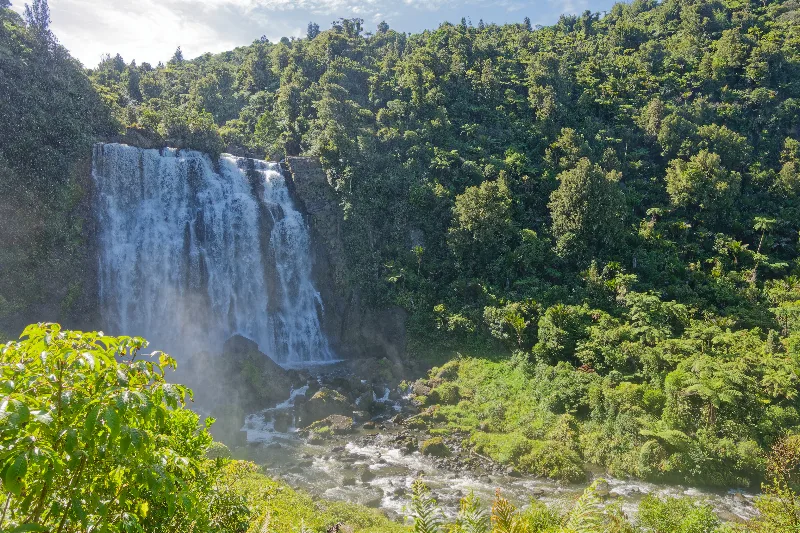
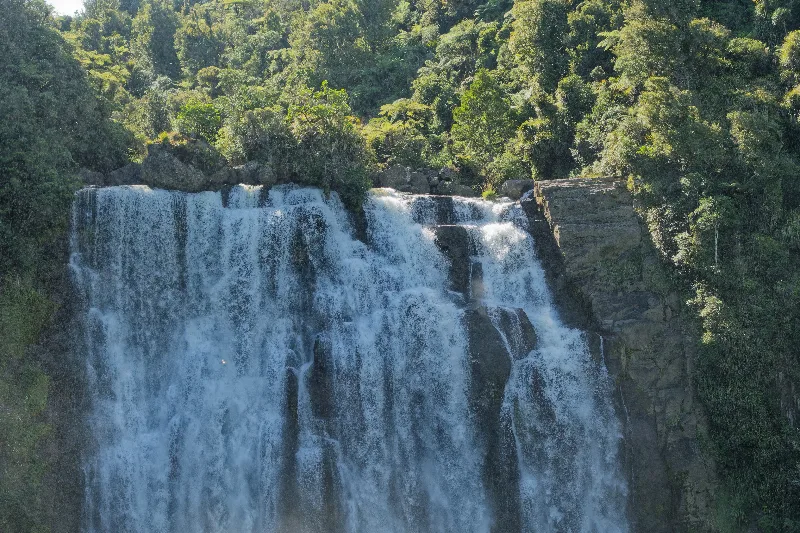
The Marokopa Falls, one of the largest and most accessible waterfalls in the region.
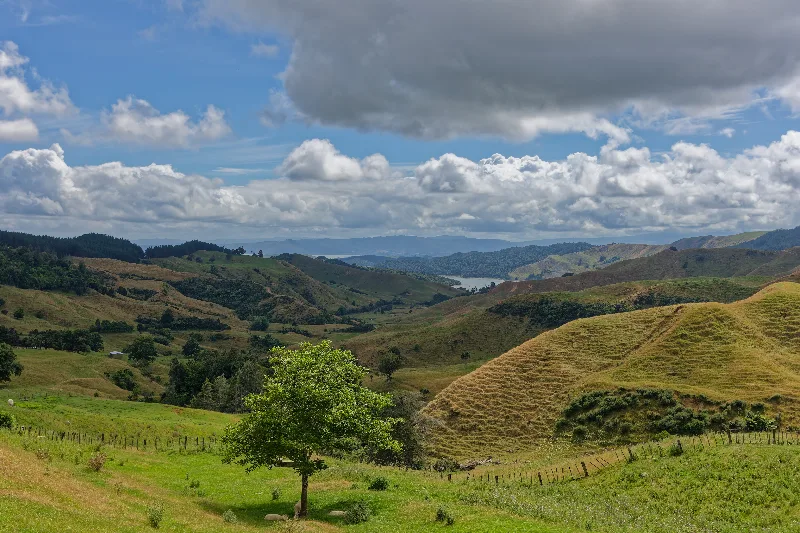
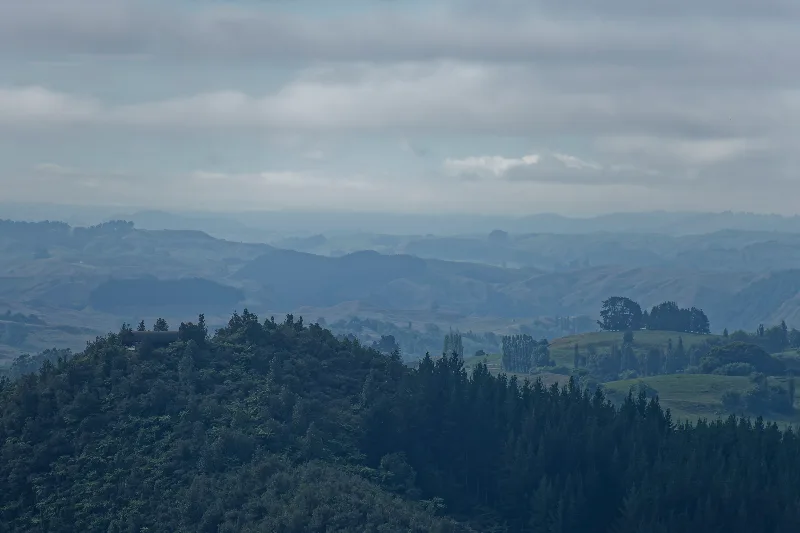
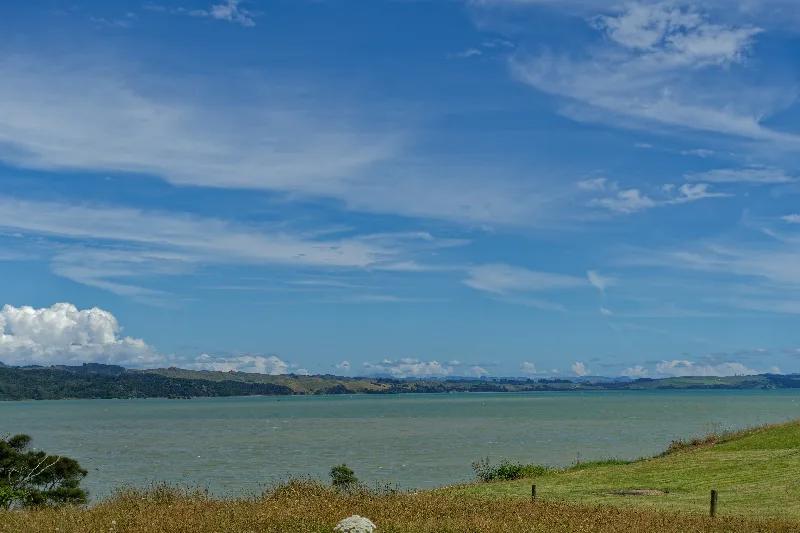
Farmland dropping away toward Kawhia Harbour on the back roads south of Marokopa.
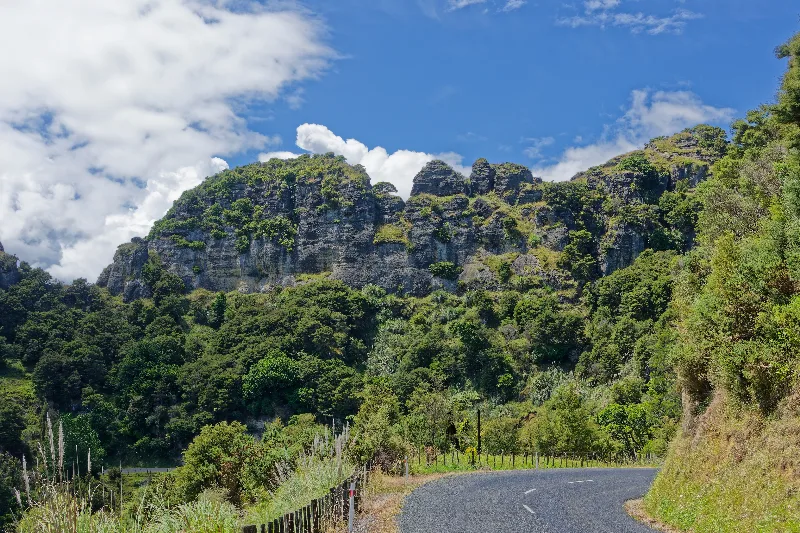
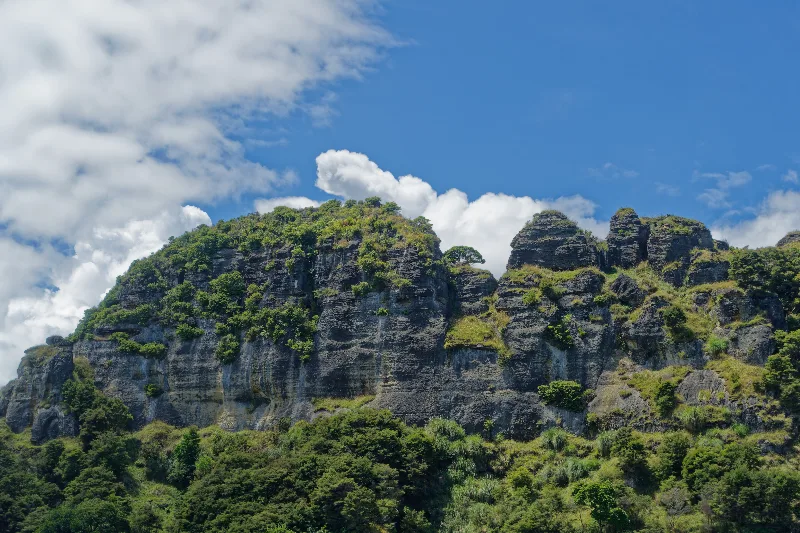
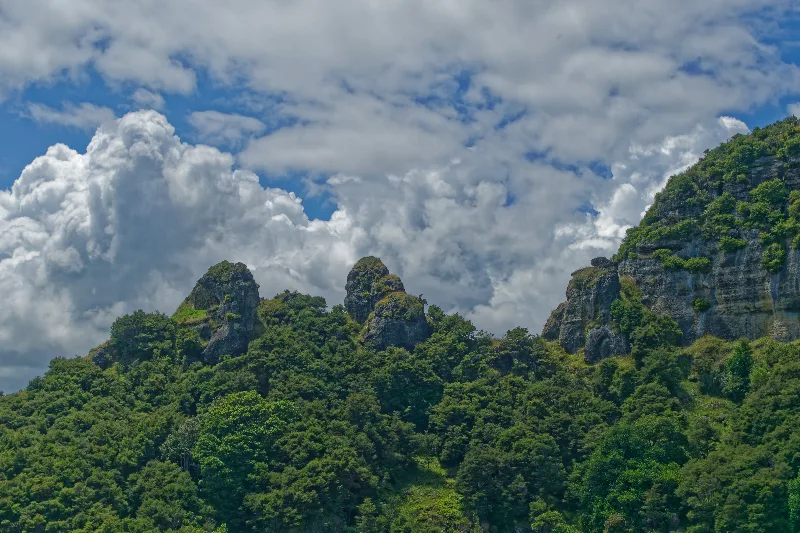
Limestone karst outcrops above the road — the same rock that riddles this whole area with caves.
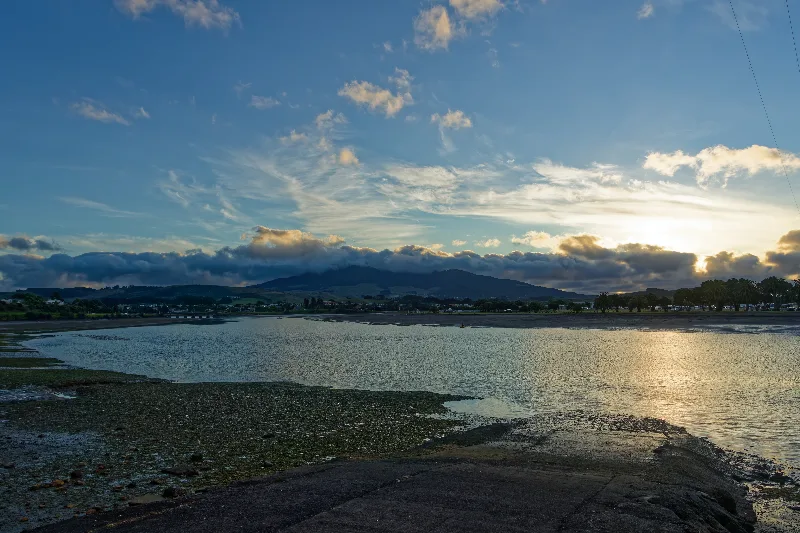
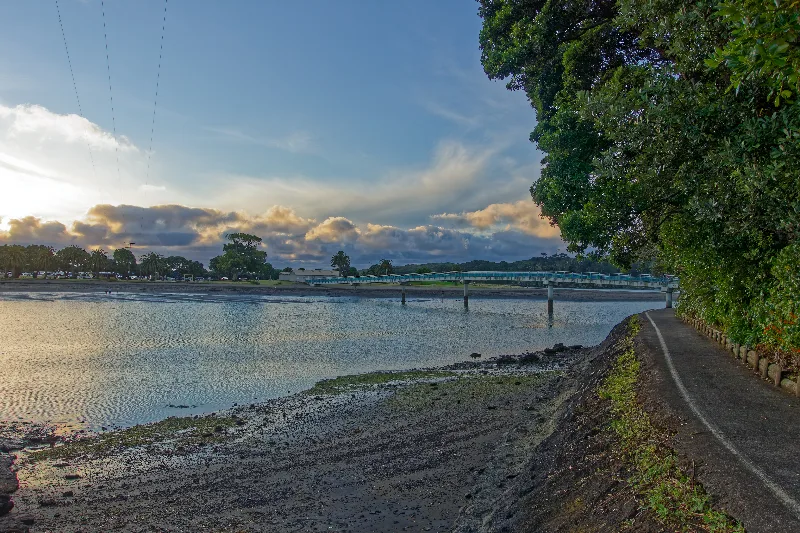
Evening over the Raglan estuary, the footbridge into town catching the last of the light.
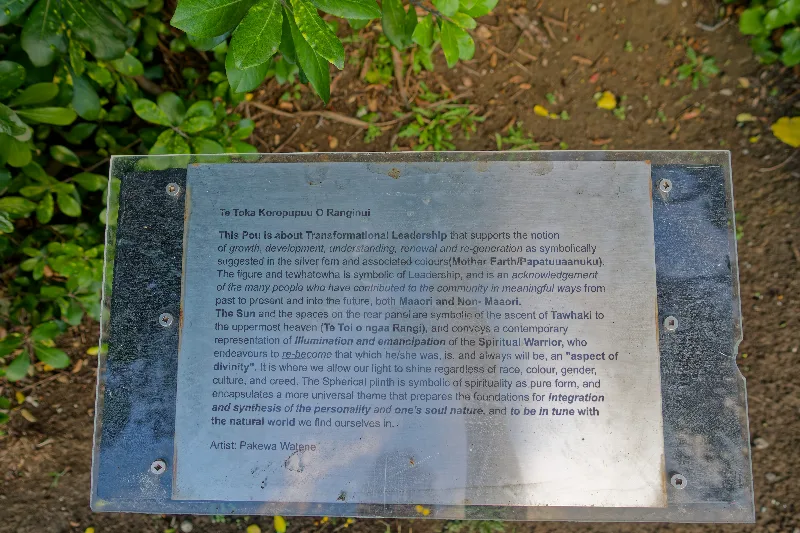
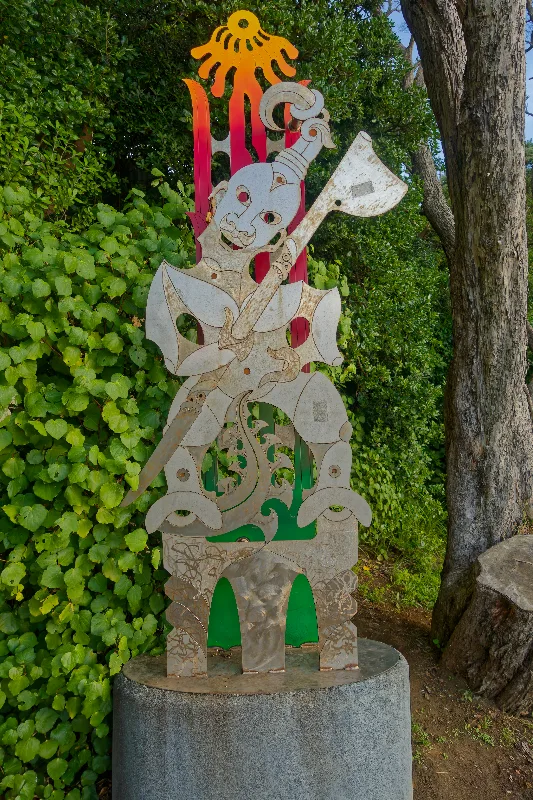
A pou, a carved Māori post, in Raglan — this one titled "Te Toka Koropupū o Ranginui" and themed on transformational leadership, by artist Pakewa Watene.
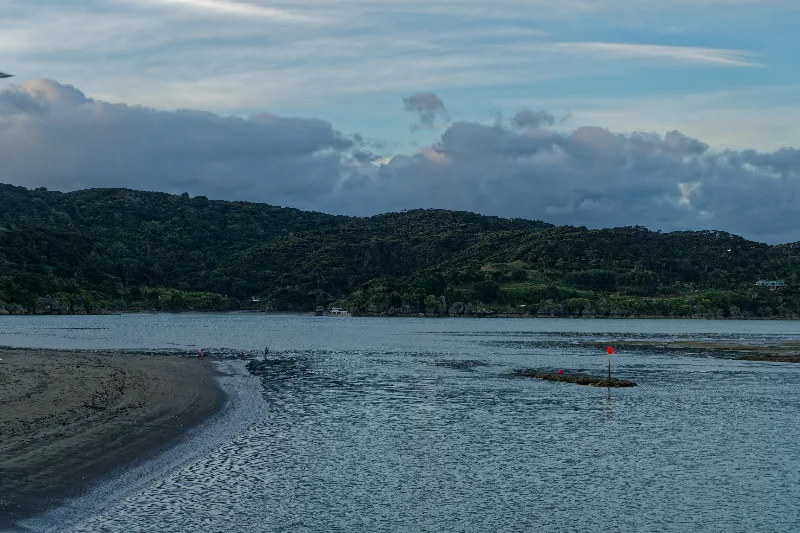
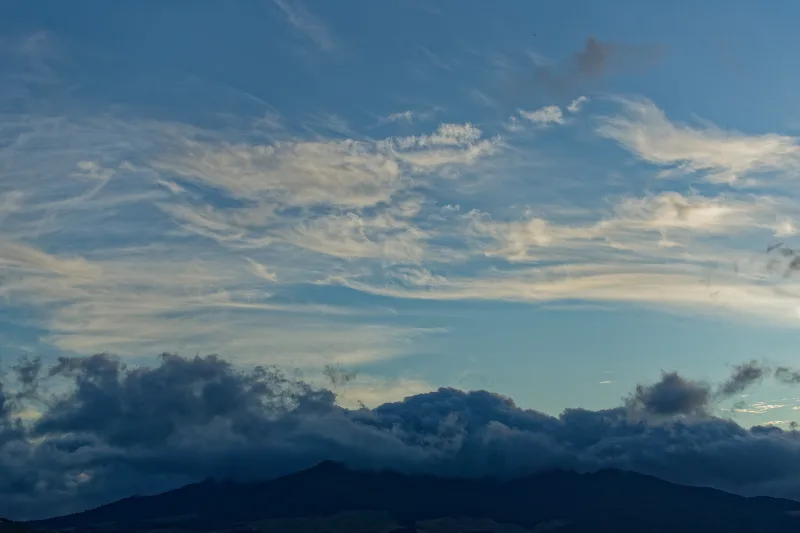
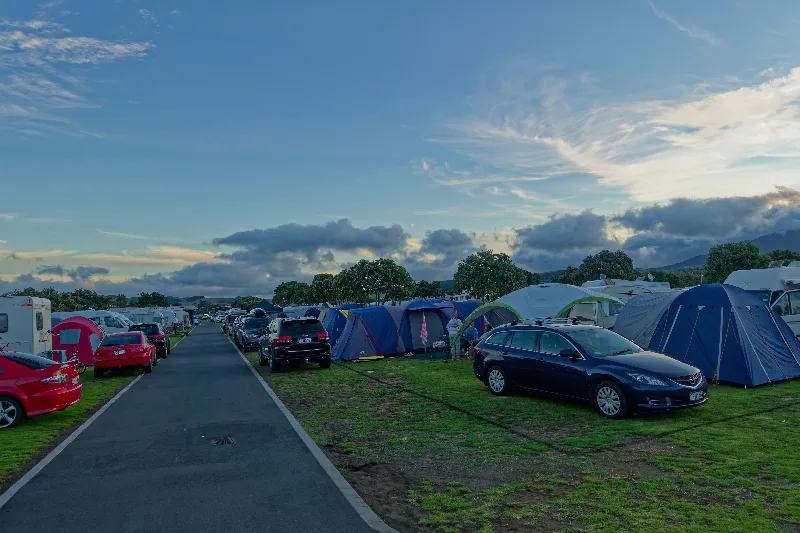
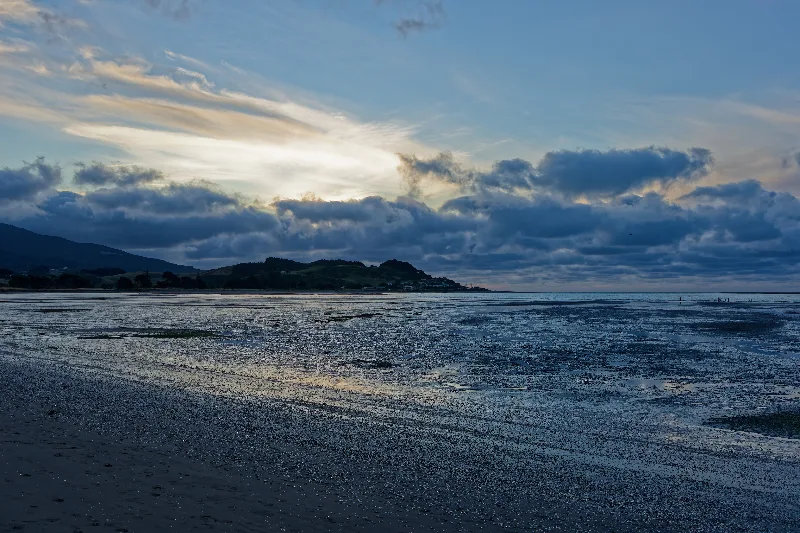
Raglan's ocean beach at dusk, the sand still holding the last of the day's warmth.
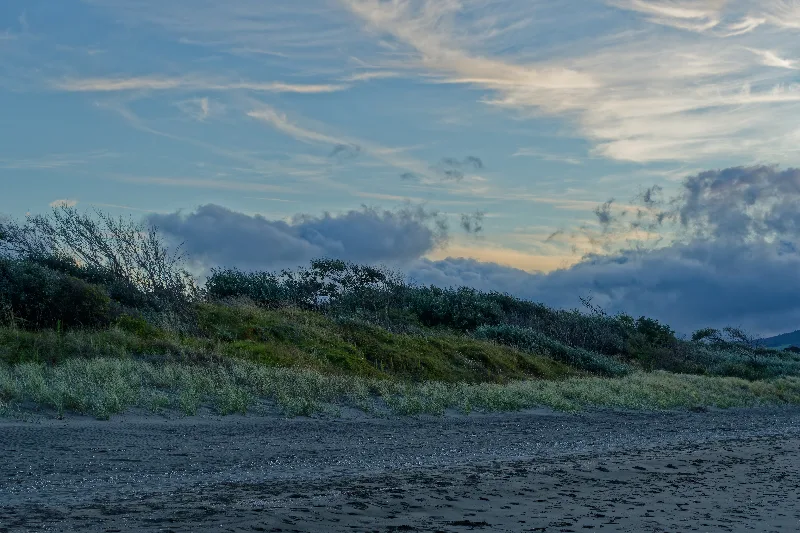
Hilly at first, then flat along the Waikato River past Huntly, partly on the main roads — heavy traffic on the last holiday weekend of the summer. Started rethinking the plan along the way: probably no time for Piha after all, and the Coromandel would be busy too, so the decision was made to arrive in Auckland a day earlier than originally planned.
Reached Miranda's hot springs in the afternoon — welcome after the ride, if crowded at the campsite; nicer than Raglan at least, though still not somewhere to linger.
From Miranda toward the Coromandel via Thames, and the Auckland ferry booked — $55 including the bike, a two-hour crossing. Set to arrive at least a day earlier than planned. 100km in 4 hours 47 minutes, with one swim in the sea under sun, then rain, and a few oysters picked up along the way as a snack. An evening pool at the campsite, and the bandage from the Taranaki fall finally came off afterward — some skin came away with it, but nothing serious; a shower sorted the rest.
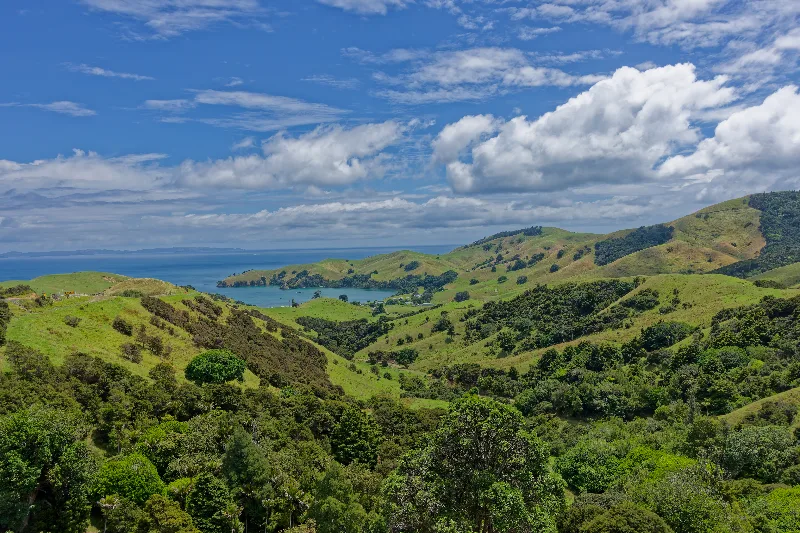
Green hills dropping to the sea on the way toward the Coromandel.
Last week of the trip now, and clouds hanging low on the Coromandel's ridgeline. Breakfast at a café from an earlier visit to this same town, coffee followed by an Earl Grey in the park next door, reading on through Karl May's "Von Bagdad nach Stambul." At lunchtime, a dozen Greenshell mussels in a sauce — a distinctive taste, not entirely to be trusted, but eaten all the same. A 500m swim at the beach before the ferry, which wasn't due until 6:50pm — a late arrival on the other side however the evening worked out.
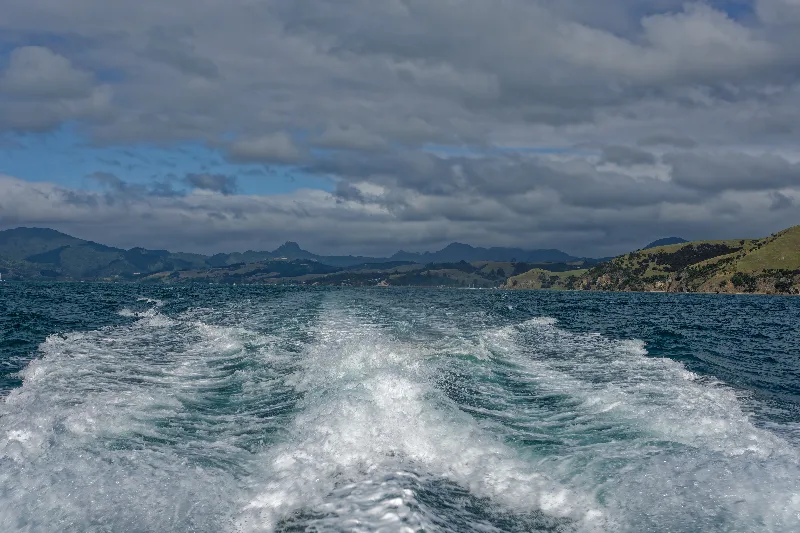
The Coromandel coast receding in the ferry's wake, on the way back to Auckland.